
A damp basement wall can look fine in dry weather and then reveal damp patches, mineral deposits, or hairline cracks after a storm. The right basement sealer depends on whether you need a clear coating, a deeper concrete treatment, or a flexible membrane for roofs, foundations, and other exterior surfaces.
These options suit homeowners tackling a small repair, DIY enthusiasts protecting multiple materials, and professionals assembling a complete sealing system. Pay attention to the surface, the source of moisture, and the number of application layers before making your choice.
Your Options, Compared

XFCA Transparent Waterproof Sealant 35 oz Clear Indoor & Outdoor Coating

baseto Transparent Waterproof Coating 12.3 oz Clear Sealant

Liquid Rubber 5-Gallon Roof Repair Kit

Liquid Rubber Black Roof Coating 1 Gallon
Liquid Rubber Geo-Textile Fabric Roll 4 x 160 ft
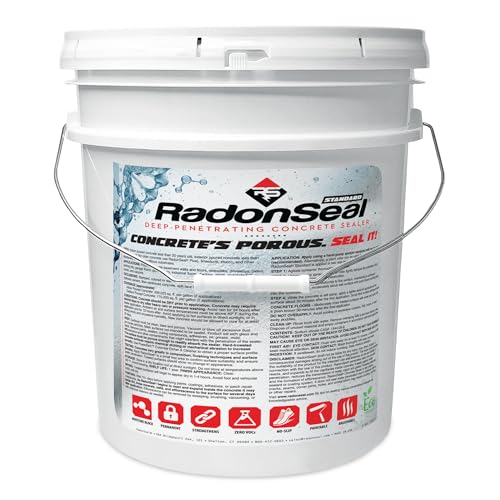
RadonSeal Deep Concrete Sealer for Basements, 5 Gallon

Black Diamond Concrete Sealer Spray
More On The Choices That Made The List
A clear coating is useful when a basement repair spans concrete, brick, wood, metal, or another listed material. The XFCA formula cures into a transparent film, so it suits finished areas where you want to preserve the existing color and texture instead of adding a surface coat.
The 35 oz container covers about 14 square feet across two or three layers, making it more manageable for a defined project than a large roofing kit. Compared with RadonSeal, XFCA is a surface coating rather than a concrete-penetrating treatment.
Well-Handled Touches
- Works across concrete, brick, metal, wood, roofs, walls, and gutters.
- The clear finish leaves the substrate visible after curing.
- Self-leveling application helps fill small gaps and fine cracks up to 1 mm.
- The 14-square-foot coverage rate makes project sizing straightforward.
Small Caveats
- Application requires temperatures above 50°F, and colder conditions slow curing.
- Wider structural cracks need separate attention rather than direct coating alone.
Feature Snapshot
Made For
DIYers handling small, mixed-material repairs where preserving the visible surface matters.
Where Another Pick Suits Better
RadonSeal Deep Concrete Sealer for Basements suits you better when the goal is to penetrate and strengthen a large concrete floor or foundation wall.
For a tight corner or a small wall section, container size can matter more than maximum coverage. The baseto 12.3 oz package provides a compact amount of clear, water-based coating for indoor or outdoor surfaces such as roofs, walls, gardens, and terraces.
Its multi-layer approach is intended to create a transparent waterproof membrane after curing. Compared with XFCA Transparent Waterproof Sealant 35 oz Clear Indoor & Outdoor Coating, this option takes up less space, although its smaller container may suit targeted work better than broad coverage.
Strengths Worth Knowing
- The water-based formula is suitable for indoor and outdoor projects.
- A transparent finish reduces visual changes to the treated surface.
- The compact container simplifies storage and smaller application jobs.
Practical Considerations
- Multiple applications are needed to form the stated membrane.
- No coverage area is listed, so a larger project requires a careful quantity check.
At A Glance
Who Will Love This
Homeowners who want a manageable clear coating for a small patch, terrace, or garden surface.
Consider Something Else When
XFCA Transparent Waterproof Sealant 35 oz Clear Indoor & Outdoor Coating suits you better when a listed coverage area and broader surface compatibility help with planning.
Large projects need more than a coating container. Liquid Rubber includes five gallons of black sealant, four 10.2-ounce tubes of white caulk, and a 4-inch by 50-foot roll of seam tape, giving you the main materials for a coordinated membrane application.
The stated elongation of more than 1,000% describes how far the cured membrane can stretch without losing adhesion. That flexibility suits foundations, basements, roofs, sheds, and concrete surfaces that may shift slightly, unlike the smaller clear coatings in the first two options.
What Works In Its Favor
- Includes sealant, caulk, and seam tape in one coordinated kit.
- The rubber membrane stretches to accommodate movement and temperature changes.
- The water-based formula contains no solvents or volatile organic compounds.
- Vertical surfaces receive about 30 square feet of coverage per gallon.
Points To Note
- Flat or ponding surfaces require four or five heavy coats for the stated membrane thickness.
- Five gallons creates a substantial storage and handling commitment for a small repair.
The Right Fit
Professionals or experienced DIYers managing an extensive foundation, roof, or basement membrane system benefit most.
A Better Fit Elsewhere
Liquid Rubber Black Roof Coating 1 Gallon suits you better for a smaller roof or gutter project that does not need the bundled seam reinforcement.
A black bitumen coating gives a straightforward option for flat roofs, low-slope roofs, gutters, foundations, concrete, and planter boxes. Its rubberized finish forms a continuous membrane designed to resist cracking, peeling, and ultraviolet damage while accommodating building movement.
Compared with the five-gallon Liquid Rubber 5-Gallon Roof Repair Kit, this one-gallon container provides a smaller starting quantity without bundled caulk or seam tape. That makes it more direct for a contained foundation or gutter section.
Advantages To Know
- One container covers several important exterior surfaces.
- More than 950% elongation supports adhesion through movement and temperature changes.
- The black finish suits roof and gutter applications where color does not matter.
Trade Offs
- The black coating visibly changes the finish of concrete or a foundation wall.
- Separate seam tape and caulk are not included for a complete joint-treatment system.
Key Specs
Built With In Mind
Homeowners protecting gutters, low-slope roofs, or dark exterior concrete benefit from this focused option.
Another Choice May Suit
RadonSeal Deep Concrete Sealer for Basements suits you better when you want the treatment to penetrate a bare basement floor rather than form a black surface membrane.
Sealant handles the protective layer, while reinforcement fabric handles vulnerable transitions. Liquid Rubber Geo-Textile is a stitch-bonded polyester fabric designed to bridge gaps, cracks, joints, seams, vents, and skylights when combined with a compatible waterproof coating.
The 4-inch width and 160-foot length make it practical for linear details around a foundation or roof. Unlike the complete five-gallon kit, though, this roll is an accessory rather than a standalone basement sealer.
Benefits That Matter
- Reinforces joints and seams before the coating is applied.
- The polyester fabric supports layered membrane construction over irregular details.
- The long roll can cover multiple joints without frequent piece changes.
Where It May Fall Short
- The fabric does not waterproof a surface without a compatible coating.
- A four-inch width may require overlapping strips for broader reinforced areas.
Quick Facts
Whose Shelf It Belongs On
Experienced DIYers and tradespeople building a multi-step waterproofing system benefit from this reinforcement roll.
Look Elsewhere When
Black Diamond Concrete Sealer Spray suits you better for a standalone clear treatment on patios, pavers, or driveways without a fabric reinforcement stage.
Dampness inside concrete calls for a different approach from adding a film on top. RadonSeal penetrates into concrete and works within the material, reducing water penetration, moisture movement, and the white mineral deposits known as efflorescence.
That inside-the-concrete approach is especially relevant for basement floors and foundation walls. Unlike XFCA Transparent Waterproof Sealant 35 oz Clear Indoor & Outdoor Coating, this product is designed for concrete rather than a broad collection of materials, so its narrower application keeps the decision straightforward.
Standout Benefits
- Works inside concrete instead of forming a surface coating that can peel or flake.
- Allows moisture vapor to escape through the concrete.
- Densifies and hardens the material to reduce dusting and surface wear.
- Helps limit moisture movement associated with hydrostatic pressure.
Factors To Consider
- The five-gallon quantity is intended for larger floor or foundation areas.
- Moisture treatment does not replace repair of active or structural cracks.
Who Should Grab It
Homeowners with bare concrete basement floors or foundation walls affected by dampness, dusting, or efflorescence benefit most.
Swap It Out When
baseto Transparent Waterproof Coating 12.3 oz Clear Sealant suits you better for a small, visibly clear application across a mixed indoor or outdoor surface.
Spray application changes the pace of a concrete project. The Black Diamond one-quart container applies with a sprayer or roller and is aimed at driveways, patios, pavers, brick, grout, stucco, and natural stone, giving outdoor homeowners a convenient way to protect several porous surfaces.
The water-based formula reduces moisture intrusion that can contribute to cracking, spalling, stains, salt damage, and weather-related surface breakdown. Compared with RadonSeal Deep Concrete Sealer for Basements, this option is more strongly associated with exterior slabs and landscaping areas.
Features That Help
- Spray and roller application suits detailed outdoor concrete work.
- The clear finish preserves the visible appearance of the treated material.
- The low-odor formula is suitable for areas near plants and household spaces.
- One quart is manageable for patios, steps, and smaller paved sections.
Details To Watch
- The listed applications lean toward exterior flatwork rather than foundation walls.
- Surface preparation and uniform application remain important for even coverage.
Technical Highlights
Best Suited To
Outdoor homeowners protecting patios, pavers, driveways, masonry, or natural stone benefit most.
Reach For A Different Pick When
RadonSeal Deep Concrete Sealer for Basements suits you better for penetrating a damp basement floor and reducing moisture within the concrete.
Matching Sealers to Basement Conditions
Start With the Moisture Source
A surface coating addresses water reaching a material from outside, while a penetrating treatment works within porous concrete. Inspect your basement after rain and note whether dampness appears along walls, across the floor, or around joints. The pattern helps narrow the product type without assuming that every dark patch has the same cause.
Match the Product to the Surface
Concrete floors and foundation walls suit penetrating sealers, while roofs, gutters, and exterior masonry may call for a liquid membrane. Clear coatings work well on surfaces where you want to retain the existing appearance. Black coatings reduce visual distraction on roofs but create a noticeable finish on walls and slabs.
Check Application Demands
Coverage figures are useful only when the surface type and application method match the listed conditions. A product needing several heavy coats takes more time than a thin protective treatment, and a reinforcement fabric requires a separate coating stage. Temperature requirements, storage space, and access to the work area deserve attention before opening a large container.
Plan for More Than One Step
Cracks, open joints, and transitions often need separate attention before the main coating goes on. The Liquid Rubber kit includes caulk and seam tape for that purpose, while other options focus on the surface membrane alone. Using fewer materials can simplify a small job, but a complex assembly may need more components rather than fewer.
Common Mistakes Worth Avoiding
Mistakes Worth Dodging
Applying a clear coating without checking the listed surface compatibility can waste material and time. Avoid using a foundation membrane on a surface it was not designed for, and do not treat a larger structural crack as a small sealing detail. Account for temperature limits, cure time, and the number of coats before starting.
What The Higher Tier Buys
A larger kit may provide more coating, joint sealer, and reinforcement fabric in one coordinated package. That added material can suit broad projects with many transitions, while a smaller container may make more sense for a limited area. The upgrade matters when application layers and reinforcing components are genuinely needed, not merely because the package is larger.
Frequently Asked Questions for Basement Sealer
Can a basement sealer stop every source of moisture?
No. A sealer can reduce water or moisture movement through the treated material, but drainage, exterior grading, groundwater, and structural leaks may require separate correction.
Should I use a coating or a penetrating concrete sealer?
Use a penetrating treatment for bare concrete floors and foundation walls where moisture needs to move through the material. A liquid membrane works well when you need a protective surface layer over roofs, gutters, concrete, or other listed substrates.
Does a clear waterproof coating change the concrete’s appearance?
A clear coating is designed to retain the visible color and texture of the surface, although wet or uneven application can affect consistency. Test an inconspicuous area before covering the full project.
How many coats should I apply?
The required number depends on the product and surface. XFCA calls for two or three layers, while the five-gallon Liquid Rubber system calls for three to four heavy coats on vertical surfaces and four to five on flat or ponding areas.
Can one sealer cover every basement surface?
Most products have a defined list of compatible materials. A broad coating may handle several substrates, while products such as RadonSeal are designed specifically for concrete and are better kept out of unrelated applications.
Closing Remarks
Choose RadonSeal for a damp concrete basement floor, XFCA for a small clear repair spanning several materials, and Liquid Rubber when the project needs a flexible membrane system. A patio or driveway calls for a different surface treatment, so match the sealer to the material and the area you actually plan to protect.