
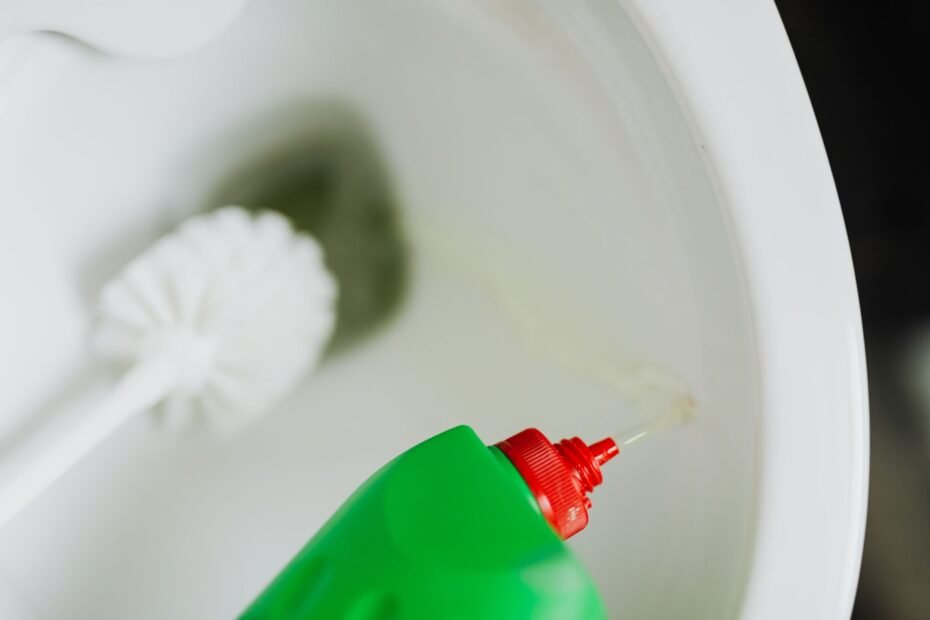
A 15- to 30-minute soak with white vinegar, citric acid, or a toilet-safe rust remover loosens orange-brown iron deposits before gentle brushing. Your goal is to dissolve the deposit, not scour the porcelain, because harsh abrasion can leave the glazed surface dull or scratched.
You’ll learn how to identify the mark, lower bowl water safely, select a cleaner, protect your toilet bowl porcelain, and address the water or hardware source behind recurring stains.
Orange-Brown Marks Point to Iron Deposits
Marks near the waterline or beneath the rim that appear orange, reddish-brown, or brown usually indicate iron deposits rather than rusting porcelain. Iron in your water oxidizes, settles on the glazed surface, and leaves a colored ring as water evaporates.
Your toilet bowl porcelain does not rust. Iron-rich well water, trace iron in municipal water, a corroded tank bolt, or a rusting supply component can send particles into the bowl and leave a stubborn stain behind.
Stain Color and Texture Identify the Source
| What you see | Likely source | What it means for you |
|---|---|---|
| Orange or reddish-brown ring | Iron deposits | Start with an acidic cleaner and inspect your water source. |
| White, gray, chalky crust | Hard-water minerals | Use a mineral-scale cleaner rather than a rust-focused product. |
| Pink or salmon film | Moisture-loving biofilm | Brush the area and clean beneath the rim more regularly. |
| Black marks or specks | Mineral staining, mold, or worn glaze | Check the surface texture before moving to a stronger cleaner. |
| Rough, dull, gray patch | Etched or worn porcelain enamel | Scrubbing will not restore a smooth glazed finish. |
Run a gloved fingertip across a dry mark after flushing. A raised or gritty spot suggests a deposit that you can loosen, while a smooth but dull patch points toward etched porcelain enamel or worn glazing.
A narrow orange trail beginning beneath one tank bolt can signal corroded hardware. A full ring at the waterline points more strongly to iron in your incoming water, and that difference affects the cleaner and follow-up work you choose.
Start With the Least-Aggressive Rust Treatment
A raised stain needs contact time before it needs force. Start with white vinegar or citric acid for light marks, then move to a toilet-bowl cleaner labeled for rust removal after a mild product has had enough time to work.
Acid Loosens Iron From Glazed Porcelain
Light-to-moderate iron staining responds to white vinegar and citric acid because acid breaks the bond between mineral residue and glazed porcelain. Cleaner poured into standing bowl water becomes diluted, so your results improve once the stained area is mostly exposed.
Citric-acid powder mixed with water creates a paste that clings better than kitchen vinegar on a vertical streak. Spread the paste with a gloved hand or disposable applicator, then follow the product directions for contact time before brushing.
Vinegar can remove light rust stains from porcelain, but it has limits. A dark ring that stays unchanged after one or two careful rounds needs a toilet-safe cleaner with an ingredient suited to iron deposits.
Commercial Rust Removers Suit Darker Deposits
| Stain condition | Suitable starting method | Next action |
|---|---|---|
| Light orange film | White vinegar or citric acid | Move to a rust remover after one or two unsuccessful rounds. |
| Dark waterline ring | Toilet-safe rust remover | Use wet pumice only after chemical cleaning leaves raised residue. |
| Thick brown crust below water | Lower bowl water and use labeled rust cleaner | Stop scrubbing once the surface feels smooth but stays discolored. |
Oxalic-acid toilet cleaners can dissolve stubborn iron marks without relying on abrasive grit. Iron OUT Rust Stain Remover is made for rust deposits, while CLR Calcium, Lime & Rust Remover, Lime-A-Way, The Works, and Zep products use different formulas, so your label directions control contact time and surface limits.
Never begin with a scouring powder. A toilet-bowl cleaner labeled for rust removal is less likely to grind mineral grit across the glaze.
Bar Keepers Friend contains oxalic acid in some formulas, but powdered cleaners are not suited to every toilet surface. Use a product only where its label permits toilet-bowl use, especially on specialty coatings or colored porcelain.
Safe preparation keeps the cleaner concentrated on the stain and reduces contact with surfaces it could harm.
Prepare the Bowl Before Applying Acidic Cleaner
Cleaner cannot work well on a submerged ring while bowl water keeps diluting it. Lowering the water level exposes stains below the waterline and lets your chosen product stay against the iron deposit.
Ventilation and Product Separation Protect You
- Open the door. Ventilate the bathroom before using an acidic cleaner, especially in a small room with limited airflow.
- Wear protective gloves. Nitrile or rubber gloves protect your skin from acidic splashes and old residue.
- Remove bleach tablets. Take automatic bleach tablets from the toilet tank before adding vinegar, citric acid, CLR, or rust remover.
- Flush between products. Rinse the bowl fully before switching cleaners, even after a mild product.
- Follow septic guidance. Check the label directions where your home uses septic systems.
Bleach and acidic cleaners can form hazardous gases. Never mix bleach with white vinegar, citric acid, ammonia, CLR Calcium, Lime & Rust Remover, Iron OUT Rust Stain Remover, or another acidic rust cleaner.
Keep product changes simple. Flush thoroughly, rinse your brush, and wait until no prior cleaner remains in the bowl before placing another product on the porcelain.
Lower Bowl Water for Better Contact
Turn the water shutoff valve behind the toilet clockwise, then flush once. Push remaining water toward the drain opening with a toilet brush, or remove a small amount with a container reserved for bathroom cleaning.
Your target is a mostly drained bowl, not a bone-dry trap. Leave enough moisture to keep the porcelain damp, then place cleaner directly on the visible ring instead of pouring a large amount into the bottom.
Water below the normal line can hide the heaviest staining. Exposing that area gives vinegar, citric acid, or a labeled rust remover a better chance to loosen the deposit before you brush.
Remove Light and Moderate Stains in Controlled Steps
A fresh acidic treatment should make a true iron stain fade around its edges before the whole mark lifts. That visible change shows that the cleaner is reaching mineral residue rather than scraping at the porcelain surface.
- Clear bleach residue. Flush the bowl twice and rinse your scrub brush before adding an acidic cleaner.
- Expose the stain. Lower the water level for rings beneath the normal waterline.
- Coat the mark. Place vinegar, citric-acid solution, or toilet-safe rust remover directly onto the stained area.
- Wait as directed. Give the cleaner its stated contact time rather than scrubbing straight away.
- Brush gently. Work with a nonabrasive toilet brush using short circles along the ring.
- Flush and inspect. Rinse away loosened residue, then repeat one round where the mark looks lighter.
You can use baking soda after acid has loosened the deposit, but baking soda is not the main rust remover. Its mild grit can lift remaining film, while mixing it into vinegar at the start causes fizzing that uses up the acid before it works on the stain.
For a light orange line beneath the rim, soak folded paper towels in white vinegar and press them against the porcelain for the stated contact period. The towels keep liquid from running into the bowl and leave less residue for your brush.
Flush thoroughly after cleaning, then rinse your brush, container, and gloves with clean water before storage. Cleaner residue can transfer onto nearby bathroom surfaces.
Use the same sequence to remove hard water stains from a toilet bowl where iron and scale appear together. Acidic cleaner loosens mineral buildup, while careful brushing removes the softened film without damaging the glaze.
Escalate Stubborn Rings Without Damaging Porcelain
Dark rings that remain after two careful acid-cleaning rounds call for a more focused product, not more pressure. A toilet-safe rust remover with oxalic acid can dissolve deeper iron staining while protecting the glazed surface beneath it.
Use Commercial Cleaner According to Its Label
Place the product on the stain for its full labeled contact period, then brush and flush. Do not add vinegar, bleach, ammonia, or another cleaner to speed the process, because mixed products can create fumes and make the reaction harder to control.
CLR is suitable in a toilet bowl only where the exact bottle label permits that use. Some CLR formulas have surface limits, so your specific product label matters more than the brand name on the bottle.
Your choice between vinegar and a commercial rust remover depends on the stain’s response. Fading around the edges supports another mild round, while a dark ring with little change points toward a labeled rust formula.
Wet Pumice Requires Light Pressure
A pumice stone can remove a stubborn toilet ring from suitable glazed porcelain, but it works through abrasion. Keep both the stone and bowl wet, use feather-light pressure, and work in short passes no wider than two inches.
Stop right away once your fingertips feel roughness, the stone drags sharply, or the area turns dull. That change means the glaze may be wearing, and more rubbing will not help you remove rust stains from a toilet bowl safely.
Old marks that do not lighten after proper chemical contact can be etched glaze or discoloration beneath the finish. A corroded flapper chain, tank bolt, or fill-valve part needs replacement too, because bowl cleaning cannot stop a continuing source of iron.
Address the Source to Stop New Rust Rings
Fresh orange streaks after cleaning point back to the water or hardware above the bowl. Lift the toilet tank lid and inspect bolts, the flapper chain, the fill valve, and supply connections for brown corrosion or loose metal flakes.
Water Sources Leave Different Clues
Iron-rich well water can stain every toilet, sink, and tub in your home. Municipal water can carry iron too, while aging galvanized plumbing can release rust particles closer to a single bathroom fixture.
Your staining pattern narrows the next step. Marks at one toilet point toward tank hardware or a nearby supply component; stains across several fixtures point toward a water test and a discussion about filtration with a qualified local water professional.
Rusting tank bolts and corroded internal parts can leave a narrow trail beneath the tank opening. Replacing damaged hardware stops new particles from reaching the bowl, while repeated scrubbing only removes what has already settled.
Routine Care Limits New Buildup
- Brush fresh marks. Remove new discoloration before it hardens into a waterline ring.
- Choose soft tools. A nonabrasive toilet brush protects your porcelain enamel during routine cleaning.
- Inspect tank hardware. Check bolts, chain hardware, and the fill valve during bathroom cleaning.
- Watch supply fittings. Contact a plumber for rusty water, recurring corrosion, or moisture around supply connections.
- Store products apart. Keep bleach cleaners away from acidic rust removers to avoid an unsafe mix.
Rust can return within days where water carries iron or tank parts shed corrosion. Cleaning removes the visible deposit; correcting the source protects your bowl from another brown ring.
Final Thoughts on Rust-Stained Toilet Bowls
The safest path starts with stain identification, then moves from mild acid to a labeled rust cleaner. Wet pumice belongs at the end of that sequence and only on sound glazed porcelain that stays smooth during gentle rubbing.
Your bowl should feel smooth after cleaning. A smooth surface that remains discolored points to etched porcelain, damaged glazing, or staining below the finish, and harder scrubbing will not restore that surface.
FAQ
What causes rust stains in a toilet bowl?
Iron particles in the water or corroded toilet parts create these stains, while the porcelain itself does not rust. Your well water, municipal supply, tank bolts, flapper-chain hardware, fill valve, or supply connection can introduce iron that settles in the bowl.
How do you remove rust stains from a toilet bowl with household products?
White vinegar or citric acid can loosen light iron deposits from glazed porcelain. Lower the bowl water, place the cleaner directly on the mark, wait for the directed contact period, brush gently, and flush away the loosened residue.
Will vinegar and baking soda remove toilet rust stains?
Vinegar can loosen light rust staining, while baking soda works better as a follow-up abrasive after the acid has done its work. Mixing them together at the start creates fizzing that weakens the acid before it can work on iron deposits.
Can a pumice stone scratch a porcelain toilet bowl?
Excess pressure or use on a dry surface can let a pumice stone scratch porcelain or wear down a specialty coating. Keep your stone and bowl wet, use very light pressure, and stop where the finish feels rough or looks dull.
Which commercial rust remover works on stubborn toilet stains?
A toilet-safe cleaner labeled for rust removal is the suitable choice for dark stains that remain after vinegar or citric acid. Oxalic-acid formulas can work on iron deposits, but your product label determines whether the cleaner suits your toilet bowl surface.
Is it safe to use CLR or Iron OUT in a toilet bowl?
Product-label directions and the toilet’s surface determine whether CLR or Iron OUT is safe to use. Use either product only where its label permits toilet-bowl application, ventilate the room, wear gloves, and flush away bleach residue before the cleaner touches the bowl.