
A small roof leak becomes a much larger problem when water reaches cabinets, insulation, or wiring. RV roof coating can seal seams, tears, and mounting areas, but the right choice depends on your roof material, the size of the repair, and whether you need a simple sealant or a complete kit. These options suit weekend maintenance, full-roof restoration, and multi-vehicle projects.
How The Shortlist Stacks Up

DEHCO 16-44128-4 Roof Coating

baseto White Waterproof Reflective RV Roof Coating 1 Gallon

HENG’S White 1-Gallon 6-Pack
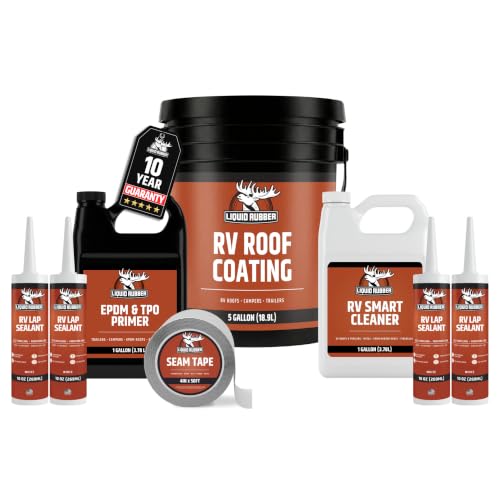
Liquid Rubber 30-Ft RV Roof Kit

Liquid Rubber EPDM/TPO Primer

Liquid Rubber White RV Roof Coating

CUKWUYBY White RV Roof Sealant

CUKWUYBY 3-in-1 RV Repair Kit
More Details on the Top Picks
Rubber roofs put constant movement on every seam, tear, and roof-mounted fitting. DEHCO 16-44128-4 Roof Coating is designed specifically for those surfaces, including seams, tears, vents, and air-conditioning mounting areas.
Its flexibility matters on an RV that flexes during travel and changes temperature between storage and the road. The manufacturer also states that adhesion is 40 percent greater than its own comparison baseline, making surface preparation and compatibility worth checking before application.
Practical Advantages
- Targets rubber roofs and common leak-entry points
- Expands and contracts with roof movement
- Ultraviolet resistance helps limit sun-related wear
- One-gallon format suits a focused repair
Trade-Offs To Consider
- Its listed applications center on rubber roofing, not metal or wood
- Confirm the roof material and follow the manufacturer’s preparation instructions
Key Specs
Right Fit For
This option suits RV owners repairing seams, tears, or mounting areas on a rubber roof without replacing the entire membrane.
A Better Fit Elsewhere
baseto White Waterproof Reflective RV Roof Coating 1 Gallon suits owners who need a sealant listed for several roof and building materials.
Unlike the rubber-focused DEHCO coating, baseto White Waterproof Reflective RV Roof Coating 1 Gallon is listed for campers, trailers, motorhomes, metal buildings, gutters, foundations, wood, concrete, and stucco. That wider range makes it useful for a mixed-property maintenance shelf.
The white finish is solar reflective and UV resistant, while a flexible membrane helps the coating move with temperature-related expansion. Coverage planning calls for one gallon per 50 square feet per coat, with two or three heavy coats, and the manufacturer says one pail can cover an RV up to 30 feet.
What Pays Off
- Solar-reflective white finish supports cooler roof surfaces
- Applies with a brush, roller, or paint sprayer
- Works across several listed roofing materials
- Flexible membrane resists adhesion failure during movement
- Coverage figures make gallon planning straightforward
Small Caveats
- Multiple heavy coats require more preparation and drying time
- Check the listed material compatibility before treating a different roof type
Feature Snapshot
Made For
This coating fits DIYers maintaining an RV, trailer, metal building, or flat surface that appears on its compatibility list.
Consider Something Else When
DEHCO 16-44128-4 Roof Coating is the more focused choice for a rubber RV roof with seams, tears, or mounting-point repairs.
One gallon suits a single repair, while six one-gallon units cover larger fleets or repeated maintenance across several rubber roofs. HENG’S White 1-Gallon 6-Pack is built around that volume advantage rather than a small-project format.
The white coating is intended for rubber roofs, including seams, tears, vents, and air-conditioning areas. Like the DEHCO option, it is designed to expand and contract with the roof and resist ultraviolet exposure, making it a practical bulk supply for owners working on multiple RVs.
Notable Upsides
- Six-gallon format supports fleet or multi-RV work
- Targets seams, tears, vents, and air-conditioning mounts
- Flexible behavior follows roof expansion and contraction
- UV resistance suits exposed roof surfaces
Practical Considerations
- Six gallons may be excessive for one small leak
- Stored coatings need protection from temperature extremes and material aging
Who Will Love This
Campground operators, rental-fleet managers, and families maintaining several RVs benefit most from the six-gallon supply.
Another Choice May Suit
baseto White Waterproof Reflective RV Roof Coating 1 Gallon offers a more practical starting point for a single camper or a repair involving several listed materials.
A 30-foot kit shifts the decision from gallons to the physical size of the camper or trailer. Liquid Rubber 30-Ft RV Roof Kit is aimed at travel trailers, campers, and pop-up campers that need a flexible waterproof membrane over a substantial roof area.
The membrane is designed to remain flexible across temperature changes, which matters as a parked RV heats up and cools overnight. It also has heat-reflective properties, making the kit more relevant to owners planning broad roof protection rather than a single puncture repair.
Advantages To Know
- Designed around a 30-foot RV roof
- Flexible waterproof membrane supports moving roofs
- Heat-reflective coating reduces solar heat exposure
- Suitable for several common RV and trailer types
Points To Keep In Mind
- Confirm that the roof length matches the kit designation
- A roof-sized kit may exceed your needs for a small isolated leak
Technical Highlights
Built With In Mind
This kit fits owners of 30-foot campers and trailers who want roof-sized protection rather than a small spot repair.
Swap It Out When
Liquid Rubber White RV Roof Coating fits DIYers who prefer a standalone one-gallon container for a smaller repair area.
Primer handles a different stage of the repair process. Liquid Rubber EPDM/TPO Primer prepares a clean rubber surface before a roof coating is applied, with adhesion, meaning the coating’s ability to remain attached, as the main practical concern.
EPDM is a synthetic rubber roofing material, while TPO is a thermoplastic membrane commonly used on roofs. This water-based primer is intended to improve adhesion on EPDM surfaces and can be applied with a brush, roller, or spray-delivery system.
The Upside
- Creates a prepared surface for subsequent roof coating
- Supports stronger coating adhesion on EPDM
- Works with brush, roller, or spray equipment
Factors To Consider
- This is a preparatory product rather than the final waterproof coating
- Your roof material and coating system must be compatible with the application plan
The Right Fit
This primer suits careful DIYers and professional restorers preparing EPDM or TPO roofs for a compatible coating system.
Where A Sibling Pick Shines
Liquid Rubber 30-Ft RV Roof Kit is the more direct option for owners seeking a roof-sized waterproof membrane without a separate primer stage.
Liquid Rubber White RV Roof Coating provides a straightforward gallon-sized format for campers, travel trailers, and pop-up campers. Compared with the 30-foot Liquid Rubber kit, it gives you more control over the amount used on a small area without committing to a roof-sized package.
The coating forms a flexible waterproof membrane that remains pliable through temperature changes. Heat-reflective properties and a white finish add value for exposed roofs, although the coating process and the roof’s condition still determine how much preparation the job requires.
Where It Helps
- Flexible waterproof membrane supports roof movement
- One-gallon container fits localized repairs well
- Heat-reflective white finish limits solar heat buildup
- Works for several common RV and trailer configurations
Worth Noting
- Surface preparation remains an important part of the application
- Owners seeking separate tape and sealant components need a bundled kit instead
At A Glance
Whose Shelf It Belongs On
RV owners performing a focused repair or maintaining a single camper benefit most from this container size.
Reach For A Different Pick When
CUKWUYBY 3-in-1 RV Repair Kit suits owners wanting coating, self-leveling sealant, and RV tape in one package.
CUKWUYBY White RV Roof Sealant focuses on staying flexible after it cures. Elongation describes how far a material can stretch, so a high-elongation sealant can accommodate movement around seams and roof fittings without quickly becoming rigid.
The one-gallon, white container includes a 3-in-1 roof kit configuration and is positioned for RV leak repairs. Its reflective finish and resistance to cracking, peeling, and ultraviolet degradation make it a practical option for owners focused on maintaining a flexible roof surface.
Notable Gains
- High elongation supports movement around seams
- Designed to resist cracking and peeling
- White reflective finish helps deflect solar heat
- UV resistance supports longer roof-surface protection
Less-Strong Areas
- Check the included components and roof compatibility before ordering
- A gallon of material may be more than a small repair requires
Best Suited To
This sealant fits DIYers repairing flexible RV roof areas that regularly expand, contract, or flex during travel.
Look Elsewhere When
DEHCO 16-44128-4 Roof Coating is a more focused option for rubber roofs with tears, seams, vents, and air-conditioning mounting sites.
A broad roof repair rarely involves only one material. CUKWUYBY 3-in-1 RV Repair Kit brings together one gallon of white waterproof coating, two 10.5-ounce tubes of self-leveling sealant, and a 4-inch by 50-foot roll of RV tape.
Self-leveling sealant flows into low areas before setting, while tape provides a separate membrane for seams and shaped roof components. The coating adds broad surface coverage, so the kit gives you different tools for patching details and protecting larger areas without assembling a full repair setup yourself.
Useful Strengths
- Coating, sealant, and tape cover several repair tasks
- Two 10.5-ounce sealant tubes support detail work
- Fifty-foot tape roll handles extended seams
- One gallon of white coating supports broader coverage
- Flexible sealant resists cracking and peeling
Details To Watch
- The one-gallon coating may exceed a small patch’s requirements
- Confirm roof material compatibility before applying each component
Feature Rundown
Who Should Grab It
This kit suits RV owners addressing a mix of broad surface wear, small leaks, and seam repairs with separate materials for each task.
Not Your Match When
Liquid Rubber White RV Roof Coating is a simpler fit for a single localized area where a complete multi-component kit would add unnecessary materials.
What to Check Before Coating Your RV
Match The Roof Material
Start with the material your RV actually uses. DEHCO and HENG’S focus on rubber roofs, while baseto lists a wider collection of surfaces. A sealant that sounds suitable still needs a clear compatibility match, especially on metal, wood, concrete, or stucco.
Separate Primer, Sealant, And Coating
Primer prepares a surface, sealant targets joints and shaped areas, and coating protects broader sections. Liquid Rubber EPDM/TPO Primer serves the preparation stage, while the CUKWUYBY 3-in-1 RV Repair Kit combines a sealant with coating and tape.
Plan By Roof Size
A localized leak may need only a small quantity, while broad restoration calls for enough material to build the required layer. The baseto product provides specific planning figures of one gallon per 50 square feet per coat, and Liquid Rubber 30-Ft RV Roof Kit is organized around a 30-foot roof.
Account For The Work Area
A brush, roller, or sprayer gives you different control over edges and broad surfaces. Multiple heavy coats also require room for application and curing materials, so check your workspace and follow the listed instructions before opening a container.
Avoiding Costly Roof Coating Errors
Mistakes Worth Dodging
Choosing by color alone can hide a compatibility problem. Match the product to the roof material, measure the repair area, and confirm whether a primer belongs in your application plan. Thick coats also need proper preparation, so rushing the surface can undermine the seal.
What The Higher Tier Buys
A larger gallon count supports whole-roof coverage, while a kit adds tools for seams and detailed repairs. The added material is most useful for broad restoration or several vehicles. A small leak generally needs less equipment, making a focused one-gallon coating the more sensible starting point.
Frequently Asked Questions
Can RV Roof Coating Be Used on Rubber Roofs?
Yes, DEHCO 16-44128-4 Roof Coating and HENG’S White 1-Gallon 6-Pack are specifically listed for rubber roofs. They can address seams, tears, vents, and air-conditioning mounting areas on compatible rubber surfaces.
Do I Need Primer Before Applying RV Roof Coating?
A primer can be appropriate as part of a compatible coating system, particularly on EPDM surfaces. Liquid Rubber EPDM/TPO Primer prepares the roof to improve coating adhesion, so follow the complete application instructions for your chosen system.
How Much Roof Coating Does One Gallon Cover?
The baseto product lists one gallon per 50 square feet per coat and recommends two or three heavy coats. Other coatings require different quantities based on their application method, roof condition, and the layer being applied.
Can RV Roof Coating Be Used on Metal Buildings?
Yes, baseto White Waterproof Reflective RV Roof Coating 1 Gallon is listed for metal buildings and several other surfaces. Check the complete compatibility list before applying it to wood, concrete, stucco, or another material.
What Is The Difference Between Primer, Sealant, And Coating?
Primer prepares the surface, sealant fills joints and detailed areas, and coating forms a broader protective layer. A multi-part repair kit can combine all three approaches, while standalone products usually serve one stage of the process.
Final Verdict
Your best match starts with the roof material and the size of the repair. Rubber-roof owners can focus on DEHCO or HENG’S, campers needing broad material compatibility can consider baseto, and multi-part repairs are easier with the CUKWUYBY 3-in-1 RV Repair Kit. Match the format to the job, prepare the surface properly, and follow the product’s application instructions.