
A toilet has to fit your bathroom’s plumbing, available space, and daily routine. A standard one-piece model suits most conventional bathrooms, while a macerating system can make a basement or other below-grade space practical. The right choice depends on accessibility, fixture connections, and how far wastewater must travel.
The Shortlist At A Glance

DeerValley DV-1F0437 ADA Toilet
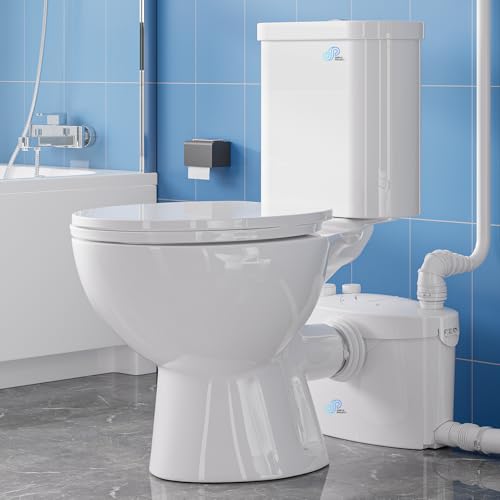
Simple Project 750W PRO Macerator

Simple Project 600W Macerator
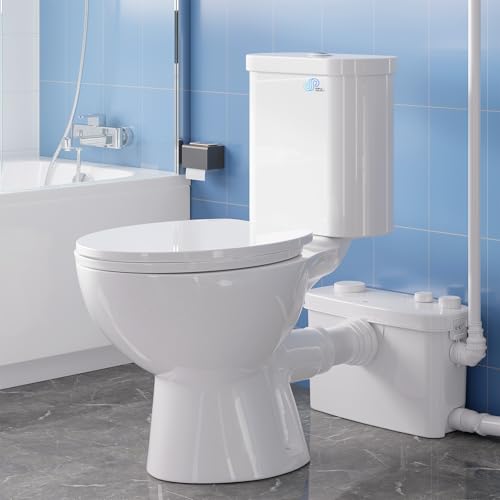
Simple Project 500W 4-Inlet System

Simple Project 1000W Macerator System

Simple Project 600W Pump System
A Breakdown Of The Leading Choices
The DeerValley DV-1F0437 ADA Toilet brings a raised seat and a streamlined one-piece profile to an ordinary bathroom. Its rimless bowl removes the usual visible rim, while the glossy ceramic body keeps the design visually tidy.
A 17.5-inch seat height can make sitting and standing more comfortable, especially for taller users or anyone adapting to a higher toilet. Unlike the macerating systems below, this model relies on a standard 12-inch rough-in, the distance from the finished wall to the toilet’s drain centerline.
Benefits That Matter
- The 17.5-inch ADA-compliant seat height supports easier transfers and everyday comfort.
- Dual-flush operation uses either 1 or 1.28 gallons per flush, giving you a practical water-saving choice.
- A 1000 gMaP flush rating indicates a strong flushing specification for an efficient one-piece design.
- The soft-close, quick-release seat lowers gently and removes easily for cleaning.
- Its 26.77-inch depth suits many bathrooms without the bulk of a two-piece model.
Points To Keep In Mind
- Confirm your bathroom has the required 12-inch rough-in before ordering.
- This raised-height design may feel higher than a standard chair-height toilet.
Key Specs
Who It Suits Best
This model fits households needing an accessible-height toilet in a conventional bathroom with a 12-inch rough-in.
Another Choice May Suit
The Simple Project 750W PRO Macerator suits basements where gravity drainage cannot reach the main waste line.
A macerating toilet grinds waste and pumps it through a small pipe, making the Simple Project 750W PRO Macerator relevant where conventional gravity plumbing is inconvenient. The 750W motor and stainless-steel cutting blades support demanding waste routes in basements, attics, and similar additions.
Its four inlet ports can gather wastewater from several fixtures rather than limiting the installation to the toilet alone. That makes it more useful for a complete bathroom than a single-fixture solution, provided each connection can be routed correctly.
A Few Highlights
- The pump is rated for wastewater movement up to 360 feet horizontally and 36 feet vertically.
- Four inlets let a shower, sink, or other suitable fixture share the waste system.
- The 750W motor gives you a more substantial power rating than several lower-wattage alternatives.
- Two-piece construction separates the ceramic body from the pumping hardware for easier placement.
Trade Offs
- The four-inlet configuration needs careful planning around the bathroom fixture layout.
- Published pump distances represent maximum routing figures, so actual pipe runs and turns still matter.
Quick Facts
Built With In Mind
This system suits a basement renovation with several fixtures and a sufficiently long, properly planned waste route.
A Better Fit Elsewhere
The DeerValley DV-1F0437 ADA Toilet fits a standard bathroom where no pumped system is needed.
The Simple Project 600W Macerator takes a quieter approach to a pump toilet, which matters in a finished basement where the bathroom sits close to living space. Its rear outlet and two-piece design also make it easier to think about as a practical fixture rather than a space-hungry appliance.
Four water inlets offer the useful part of macerator flexibility. You can connect suitable bathroom fixtures, including a shower, laundry outlet, or wash basin, so the installation can serve more than just the toilet.
Positive Points
- The design is presented as a quieter macerating option for finished living areas.
- Four inlets suit a bathroom plan that combines the toilet with other wastewater fixtures.
- The 600W pump provides a defined motor rating for a compact waste-moving system.
- Rear outlet placement supports below-grade bathroom layouts.
Minor Gripes
- The 600W rating sits below the 750W option, so do not assume the two can handle identical routes.
- Confirm the locations of all four fixture connections before ordering.
Made For
This model suits a finished below-grade bathroom where quiet operation and several fixture connections are the main priorities.
Reach For A Different Pick When
The Simple Project 750W PRO Macerator is the stronger option for a layout requiring a greater published pumping reach.
The Simple Project 500W 4-Inlet System combines a macerating toilet, extension pipe, and four fixture inlets in one basement-focused package. That bundled approach can simplify planning compared with assembling the toilet, pipework, and compatible fixture connections separately.
The system is also marked as a quiet version and uses a 500W macerator motor. It offers a 1.6-gallon flush volume, giving you one defined flushing setting rather than the dual-flush choice found on the DeerValley model.
Positive Takeaways
- Four inlets support a basement bath with multiple wastewater fixtures.
- The included extension pipe adds routing flexibility for connecting the system.
- The 500W macerator is presented as a quieter operating configuration.
- A 1.6 GPF flush gives you a straightforward water-usage setting.
Possible Compromises
- The 500W motor is lower in output than the 600W and 750W selections.
- Its single 1.6 GPF flush uses more water per full flush than the DeerValley’s 1-gallon setting.
Feature Facts
The Right Fit
This system suits a compact basement bathroom that needs four inlets, an extension pipe, and a defined 1.6 GPF flush.
Where A Sibling Pick Shines
The Simple Project 600W Pump System fits a simpler below-grade layout that needs three inlets rather than four.
The Simple Project 1000W Macerator System carries the highest motor rating in this group, which makes it worth considering for a basement route with a meaningful lift or several turns. The manufacturer lists pumping performance up to 40 feet and includes an extension pipe with the system.
Four water inlets preserve the flexibility seen in the 750W PRO Macerator, while the 1000W motor provides additional power. The system is also described as a quieter alternative to standard macerating toilets, a useful distinction for rooms near household activity.
Good Reasons To Consider
- The 1000W motor offers the highest stated power rating among these systems.
- Pumping performance is listed at up to 40 feet for suitable waste routes.
- An extension pipe is included to help create a workable connection path.
- Four inlets support a multi-fixture basement bathroom.
- The quieter operation is a sensible consideration near bedrooms or living areas.
Things That May Matter
- Do not equate motor wattage with a guaranteed installation outcome; pipe length, elevation, and turns still count.
- Four inlets may be more than a small powder room needs.
Who Should Grab It
This system fits a basement project with an elevated waste route and a clear need for a high-output macerator.
Not Your Match When
The Simple Project 500W 4-Inlet System is more proportionate to a shorter, simpler basement route.
The Simple Project 600W Pump System is the most compact-looking configuration here, using a one-piece body rather than the two-piece arrangement used by the other macerating models. That distinction can simplify the fixture’s overall shape in a tight basement bathroom.
Its 600W pump has a listed horizontal reach of 295 feet and vertical reach of 30 feet. Three water inlets cover several common fixture arrangements, though the count is one less than the four-inlet alternatives.
Points In Its Favor
- The one-piece body suits a compact fixture footprint.
- The pump is listed for horizontal travel up to 295 feet.
- Vertical pumping capability extends up to 30 feet.
- Three inlets can serve a toilet and other suitable bathroom fixtures.
Room For Improvement
- Its published reach is slightly below the Simple Project 750W PRO Macerator.
- Projects with four fixture connections require the four-inlet versions instead.
Core Details
Right Fit For
This model suits a compact basement bathroom with a toilet and up to two additional fixture connections.
Another Choice May Suit
The Simple Project 1000W Macerator System is a closer fit for a route requiring a higher motor output and greater listed lift.
What Actually Matters When Selecting a Toilet
Plumbing layout comes before appearance
A conventional bathroom usually starts with the drain location and rough-in measurement. The DeerValley DV-1F0437 ADA Toilet requires a 12-inch rough-in, so its raised seat and streamlined bowl matter only after that basic fit is confirmed. Measure the finished wall and locate the drain center before ordering.
Below-grade rooms call for a different system
A macerating toilet uses a motor-driven pump to move wastewater where gravity flow is impractical. Basement projects need to account for the vertical rise, total horizontal run, number of turns, and connected fixtures. The Simple Project 750W PRO Macerator offers the largest published horizontal reach here, while the Simple Project 1000W Macerator System has the highest motor rating.
Accessibility changes the daily experience
Seat height affects how comfortably a person sits down and stands up. The DeerValley model’s 17.5-inch ADA-compliant height is the relevant feature for accessibility-focused bathrooms. Its dual-flush choices also let you reduce water use without settling for one fixed flush volume.
Inlet count reflects the whole bathroom
Three or four inlets can connect suitable fixtures to the same waste system. More inlets offer flexibility for showers, sinks, or laundry equipment, but unused ports add nothing to the installation. Count the fixtures that truly need to share the system before choosing the toilet or macerator model.
Two Details That Prevent Costly Mistakes
Common Shopping Slip Ups
The most common mistake is choosing a toilet before measuring the room and waste route. A macerating system’s maximum pumping distance does not remove the need to plan pipe runs, and a four-inlet model does not guarantee compatibility with every fixture. Check the rough-in, inlet layout, outlet position, and available space before the walls close.
What The Higher Tier Buys
A higher motor rating gives a macerating system more power for demanding waste routes, while an extension pipe provides additional routing flexibility. The Simple Project 1000W Macerator System is worth the step up when elevation or pipe length leaves little margin. For a short route with only two connected fixtures, a lower-power configuration may be more proportionate.
Frequently Asked Questions
What type of toilet works best in a basement?
A macerating toilet works well when the waste line sits above the basement floor or outside the available gravity-drain path. You still need a properly sized pipe route and enough room for the pump assembly.
Are macerating toilets suitable for every bathroom?
No. They are most useful where gravity drainage is difficult, while a conventional toilet remains simpler in a bathroom with a compatible drain connection. Installation complexity generally increases with added fixtures and longer pipe runs.
What does a dual-flush toilet do?
A dual-flush toilet provides two flush-volume choices for different needs. The DeerValley DV-1F0437 ADA Toilet uses either 1 or 1.28 gallons per flush.
How many fixtures can share a macerating toilet system?
It depends on the number of usable inlets and the fixture configuration. The Simple Project 500W 4-Inlet System and Simple Project 750W PRO Macerator each provide four ports, while the Simple Project 600W Pump System provides three.
What does an ADA toilet height mean?
ADA toilet height refers to a seat positioned to support more accessible use, rather than simply a decorative comfort feature. The DeerValley DV-1F0437 ADA Toilet has a 17.5-inch seat height.
Final Verdict
Start with the plumbing, not the fixture styling. The DeerValley DV-1F0437 ADA Toilet fits conventional bathrooms with a 12-inch rough-in, while the Simple Project macerating systems address basement layouts that need pumped waste. Match the system’s reach, inlet count, and flush arrangement to the actual room, and you can choose with greater confidence.