
A smoky kitchen, a dusty bedroom, or a room that never quite feels fresh can make everyday air quality harder to ignore. You need equipment that suits the contaminant, room size, and level of control you actually want. These air scrubbers and HEPA air purifiers cover everything from compact bedrooms to restoration projects, with filters, sensors, and automation designed for different homes.
How The Shortlist Stacks Up

PuroAir 400 HEPA Air Purifier
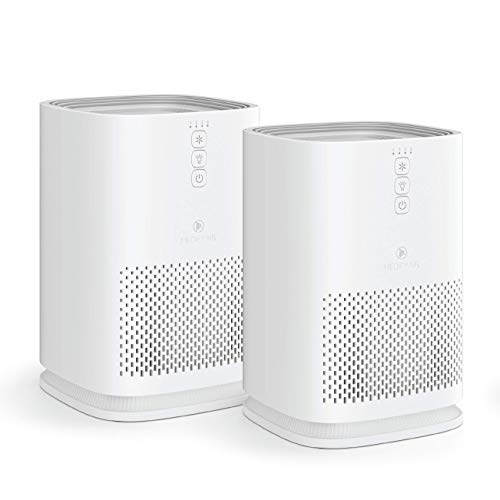
Medify MA-14 HEPA Air Purifier, Smoke, Odor, Pet, White 2-Pack

COWAY Airmega 300 HEPA Air Purifier, 2,512 ft², Washable Pre-Filter

PuroAir 240 HEPA Air Purifier

GoveeLife Smart Air Purifier

PuroAir 240 HEPA Air Purifier for Pets, 1,000 ft², 3-Layer CarbonTech Filter

CADPXS Shield-550 Air Scrubber, 550 CFM, 3-Stage HEPA Filtration, Blue
What Each Pick Brings To The Table
HEPA, short for high-efficiency particulate air, is the filter class that matters most in a busy living space. The PuroAir 400 pairs that filtration with a stated one-hour cleaning capacity for rooms up to 2,000 square feet, giving you more headroom than the 470-square-foot-per-hour Medify MA-14 covered next.
A built-in particle sensor adjusts output as airborne conditions change, while sleep mode suits a bedroom where a louder fan would be distracting. The bundle also includes two replacement filters, a practical advantage for a high-capacity unit intended for regular use.
What Helps Most
- Large stated coverage handles open living areas and spacious bedrooms.
- Automatic sensor adjustment reduces the need for constant manual control.
- Sleep mode supports quieter overnight placement.
- Two replacement filters help cover future filter changes.
Practical Considerations
- The 2,000-square-foot figure is a sizing target, so smaller rooms may not need this much capacity.
- Placing one unit in an open-plan home may suit your layout better than spreading several units across separate rooms.
Key Specs
Who It Suits Best
You benefit most from the PuroAir 400 in a large home with an open living area, especially when quiet overnight automation matters.
Where Another Pick Suits Better
The Medify MA-14 fits a smaller bedroom better when you prefer two focused units over one high-capacity purifier.
Two compact units give you a straightforward way to treat separate bedrooms, an office, and a room where pets spend time. The MA-14 uses an H13 HEPA filter and lists particle removal down to 0.3 microns, a finer threshold than you need to understand for most everyday dust, pollen, and pet dander decisions.
Its stated 470-square-foot-per-hour airflow suits smaller rooms, so it makes less sense as the sole purifier for a large open floor plan. You get three fan speeds, including a low setting for quieter rooms, while the two-pack gives you placement flexibility.
Bright Spots
- The two-pack can serve two rooms independently.
- H13 HEPA filtration targets fine airborne particles.
- Three fan speeds suit daytime and nighttime use.
- A maximum sound level of 55 dB gives you a useful noise reference.
Worth Noting
- Its stated airflow rate is considerably lower than the PuroAir 400.
- Two separate units require enough outlets and floor space for each placement.
- The listed 470-square-foot coverage fits medium rooms better than expansive living areas.
Quick Facts
Made For
You get the most from this two-pack in a pet home needing focused filtration in multiple medium-sized rooms.
Consider Something Else When
The PuroAir 400 suits you better when one open-plan area needs more airflow than this pair can provide.
The Airmega 300 combines the largest stated room coverage in this group with a washable pre-filter, giving you a practical balance of capacity and maintenance. Its 2,512-square-foot rating far exceeds the PuroAir 240’s 1,000-square-foot target, although coverage figures work best as sizing guides rather than universal promises.
Smoke, pollen, pet dander, and odors are among the airborne concerns addressed by its filtration system. Auto and sleep modes simplify daily operation, while AQI monitoring and a timer give you more control over when the unit runs.
What Earns Its Place
- Broad stated coverage suits large residential rooms.
- The washable pre-filter adds a hands-on maintenance benefit.
- HEPA filtration handles several common household pollutants.
- Auto and sleep modes reduce daily adjustment.
- AQI monitoring and timer add useful control options.
Small Caveats
- Very large rooms may still need more than one unit for stronger control.
- Performance can vary with a room’s layout and typical ventilation rate.
Right Fit For
You benefit most from the Airmega 300 in a large family home that combines mixed pollutants with a preference for low-maintenance filter care.
Not Your Match When
The Medify MA-14 is a neater fit for compact rooms where two separate units matter more than maximum stated coverage.
The PuroAir 240 lands in the practical middle of this group, with stated coverage for rooms up to 1,000 square feet in one hour. That is half the PuroAir 400’s target, yet it should still suit many bedrooms, offices, and medium living rooms without pretending to handle a much larger space.
A smart particle sensor adjusts the fan as air conditions change, and sleep mode keeps nighttime operation quieter. The bundle’s two replacement filters add convenience, while the 240 model remains a simpler starting point than the two-unit Medify MA-14 package.
Useful Highlights
- Automatic sensing reduces manual fan adjustments.
- Quiet sleep mode suits bedrooms and evening use.
- Two replacement filters support future filter changes.
Trade Offs
- Its 1,000-square-foot target is smaller than the Airmega 300’s stated coverage.
- One unit offers less placement flexibility than the Medify MA-14 two-pack.
- Large, open-plan rooms may require supplemental coverage.
At A Glance
Best Suited To
You get a strong fit in a bedroom or home office where sensor control and quiet sleep mode matter more than maximum capacity.
Look Elsewhere When
The PuroAir 400 suits you better for a much larger living space needing a higher stated coverage target.
Connected control is the GoveeLife’s defining feature, giving you app-based operation in a home office or living room you already manage from your phone. Its CADR, or clean air delivery rate, is listed at 135 CFM, where CFM means cubic feet of filtered air moved per minute.
The stated 1,046-square-foot coverage applies to one air change per hour; for two changes per hour, the suggested area falls to 523 square feet. That distinction matters when the same room handles cooking odors, dust, and pet dander on a regular basis.
Strengths Worth Knowing
- App control adds convenient remote operation.
- The 135 CFM CADR supports substantial room coverage.
- A 1,046-square-foot target fits many large living areas.
- Smart controls suit connected-home routines.
Areas To Watch
- Two hourly air changes call for a room no larger than 523 square feet.
- App-based operation adds a setup step compared with basic local controls.
Who Will Love This
You will appreciate this model most in a connected home where app access and a generous airflow rate shape your daily setup.
A Better Fit Elsewhere
The PuroAir 240 fits a simpler bedroom setup where automatic sensing is enough and phone control adds little value.
CarbonTech adds an activated-carbon-style stage for odor-focused filtration, making this two-pack more relevant to a pet household than a basic particle-only setup. The 1,000-square-foot rating matches the PuroAir 240 bundle, but the two included units give you more room to place filtration where it is needed.
Its three-layer filter combines particle and odor treatment, while an automatic air-quality sensor and sleep mode round out the control set. You may find the pair especially useful in a bedroom and living room, provided you have enough outlet and floor space for both units.
Advantages To Know
- CarbonTech targets odor alongside airborne particles.
- The two-pack supports filtration in separate rooms.
- A three-layer design provides broader filtration stages.
- Automatic sensing reduces manual adjustments.
- Sleep mode suits quieter nighttime operation.
Less Ideal Details
- Two units require more placement space than a single purifier.
- The odor-focused stage adds complexity compared with a standard HEPA configuration.
Feature Snapshot
Built With In Mind
You get the best fit in a pet home with separate sleeping and living spaces that both face persistent odors.
Skip It When
The GoveeLife Smart Air Purifier suits you better when one connected unit and app control matter more than dual placement.
Remediation work changes the scale of the cleanup. The Shield-550 is a negative air machine, meaning it draws air through filtration and exhausts it away from the occupied area, making it more relevant after water damage, construction debris, or heavy dust than a bedroom-oriented purifier.
Its 550 CFM airflow rating and three-stage filtration target airborne smoke, paint fumes, sawdust, pollen, pet dander, and construction particles. Stackability supports multi-unit restoration setups, although the scale and noise make this a task-specific choice rather than a quiet household routine.
Positive Takeaways
- The 550 CFM rating supports substantial airflow demand.
- Three stages address varied airborne contaminants.
- Stackability allows more than one machine to work together.
- The negative-air configuration suits restoration environments.
Some Limits To Know
- Its commercial focus is unnecessary for many ordinary bedrooms.
- You need suitable placement and an exhaust path for the negative-air setup.
- Multiple stacked units require a stable area and planning.
Technical Reference
The Right Fit
You need this machine for renovation cleanup, water-damage restoration, or another space containing heavy airborne construction debris.
Another Choice May Suit
The COWAY Airmega 300 fits daily household use better when you need quiet automation rather than a portable negative-air setup.
What To Prioritize Before Buying
Match The Machine To The Mess
A bedroom filled with pet dander calls for a residential purifier with manageable sound and automatic controls. A renovation site carrying sawdust, paint fumes, or water-damage debris needs a much more substantial negative air machine. Start with the contaminant and the room’s use, not merely the filter label.
Read Coverage Rates In Context
Coverage numbers usually assume a particular number of air changes per hour and typical residential ventilation. The GoveeLife lists 1,046 square feet for one hourly change and 523 square feet for two, which gives you a more honest way to compare it with other room-sized models.
Look Beyond The HEPA Label
HEPA filtration handles fine particles, but a pre-filter captures larger dust before it reaches the finer media. Carbon layers, washable components, replacement-filter bundles, and app controls can matter just as much once the machine is running in your space.
Key Details That Shape Your Decision
Common Shopping Slip Ups
A large headline coverage number does not guarantee the same result in every room. Account for open doors, high outdoor pollution, cooking activity, and the number of air changes you actually need. Also check where the unit will sit and whether your outlets and exhaust path support the installation.
What Separates Premium From Basic
Additional airflow, extra filtration stages, smarter controls, and included replacement filters usually account for the difference. A larger or more specialized unit earns its place when your space has persistent dust, odors, or restoration debris. For a smaller room, a simpler purifier may handle the job with less equipment.
Frequently Asked Questions for Air Scrubbers For Home
Are air purifiers and air scrubbers the same?
An air purifier circulates and filters air within a room, while a negative air scrubber draws contaminated air through filtration and exhausts it away. The second format suits restoration work, while residential purifiers suit routine indoor air maintenance.
Which option is best for a small bedroom?
The Medify MA-14 fits smaller rooms well because its stated 470-square-foot-per-hour coverage is more proportionate to the space. You can place its two units in separate bedrooms, provided quiet operation and independent placement matter to you.
Do I need a carbon filter for odors?
A carbon-style stage adds value when cooking, pets, or smoke create persistent odors that particle filtration does not specifically target. The PuroAir 240 three-layer model with CarbonTech is one option, but the size of the odor source still matters.
How much room coverage do I need?
Measure the room and account for the desired air changes per hour. The GoveeLife illustrates the distinction clearly by listing 1,046 square feet for one hourly change and 523 square feet for two.
Is a restoration air scrubber useful in a normal home?
Only when your situation involves substantial airborne debris, renovation dust, smoke, or water-damage cleanup. For routine bedrooms and living rooms, a quieter residential purifier is usually easier to operate and better matched to the space.
Final Verdict
The right air scrubber for your home depends on the mess, the room, and how much control you need. PuroAir 400 offers high stated coverage, the Airmega 300 balances capacity with a washable pre-filter, and the CADPXS Shield-550 tackles restoration work at a different scale. Match the equipment to the job rather than simply choosing the largest capacity.