
You’re clearing a shelf, measuring the wall, and trying to decide where the television belongs without crowding the room. An articulating mount can turn that screen toward a sofa, an adjacent desk, or a different seating area, while fixed and studless options suit simpler layouts.
The right fit depends on your television’s VESA pattern, weight, the wall construction, and how far the screen needs to move. Seven options cover everything from a close-to-the-wall setup to a long arm that reaches around a corner.
The Lineup, Simplified

Perlegear Full Motion TV Mount, 42-97 Inches, 132 lbs

Perlegear Sliding TV Mount, 42-95 Inches, 150 lbs

Pipishell Full Motion TV Mount, 42-85 Inches, 132 lbs

ELG Fixed TV Mount, 1.14-Inch Profile, 40-86 Inches

KAMIWI No Drill TV Wall Mount
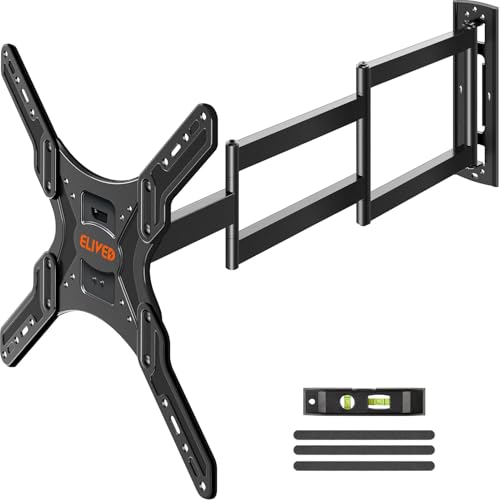
ELIVED 37.4-Inch Long Arm TV Mount

Perlegear Ultra Slim Full Motion TV Mount, 42-90 Inches
Why These Options Stand Out
A 65-inch television rarely stays in one viewing position in a multipurpose living room. This Perlegear mount uses an articulating arm to move the screen toward a sofa, desk, or second seating area, while its broad size range extends up to 97 inches.
That combination makes it a sensible middle ground between a simple fixed bracket and the sliding design in the Perlegear Sliding TV Mount, 42-95 Inches, 150 lbs. The honest read is that most households will appreciate the added reach more than they will notice the mount’s mechanics.
The Value In It
- The 42-97 inch range covers many living-room and larger display sizes.
- A 132-pound load limit accommodates a substantial range of televisions.
- Articulating movement lets the screen face different seating positions.
- Installation options include 12- and 16-inch wood studs, concrete, and brick.
- The wide VESA range improves compatibility across many television models.
Trade Offs
- Stud spacing beyond 16 inches calls for a separate extension bracket.
- The moving arm takes more space than a fixed wall mount.
Key Specs
Who Will Love This
You will appreciate this mount in a large living room where the television serves several seating areas and can weigh up to 132 pounds.
A Better Fit Elsewhere
The ELG Fixed TV Mount, 1.14-Inch Profile, 40-86 Inches suits you better when wall clearance matters more than adjustable positioning.
Sliding movement gives this Perlegear model a different kind of flexibility from the standard arm in the first pick. The screen can travel sideways as well as swivel, which suits furniture arranged at an angle or a room with more than one useful viewing position.
It also carries up to 150 pounds and supports 12-, 16-, and 24-inch stud spacing. Cable management and tool-free tilt add practical value for a busy media corner, although a wall with no accessible studs remains outside the intended installation setup.
The Practical Payoff
- Sliding movement adds lateral reach to the swivel action.
- A 150-pound capacity covers many large televisions.
- Cable management helps keep cords gathered behind the screen.
- Tool-free tilt makes small angle changes more convenient.
Practical Considerations
- Drywall alone is not a suitable mounting surface.
- The sliding assembly requires more clearance than a fixed bracket.
- Concrete, brick, and suitable wood studs require the proper installation approach.
Feature Snapshot
Made For
This mount fits your routine best when a large television serves multiple angles and you want both sliding reach and cable control.
Where A Sibling Pick Shines
The KAMIWI No Drill TV Wall Mount is a better fit for renters who cannot drill into a stud or use a masonry installation.
A room with one main sofa and a side chair can benefit from a screen that changes direction as people move. The Pipishell mount offers full-motion movement for 42- to 85-inch screens, with hinges designed for smoother adjustment.
Compared with the Perlegear Sliding TV Mount, 42-95 Inches, 150 lbs, it favors conventional articulating movement rather than a sliding track and carries a slightly lower load limit. It still offers a practical fit for common room sizes, especially with its 8-, 12-, and 16-inch stud options.
Strong Points
- Swiveling and articulating arms help you redirect the television.
- The 132-pound capacity covers many popular screen sizes.
- Concrete and brick installation options widen the wall choices.
Things To Consider
- Drywall alone cannot support the installation.
- The maximum screen size is smaller than several full-motion models here.
Right Fit For
You will find this mount most useful in a conventional living room where the television needs to turn between nearby seating areas.
Consider Something Else When
The ELIVED 37.4-Inch Long Arm TV Mount suits you better when the screen must reach around a corner or project much farther from the wall.
Not every wall needs a moving television. For a finished fireplace wall, media niche, or narrow entertainment area, the ELG fixed mount keeps the screen just 1.14 inches from the surface, creating a much tidier profile than a projecting arm.
Its auto-lock mechanism secures the television as it is lowered into place, while pull cords release it for port access or removal. You lose sideways positioning, yet you gain a clean appearance and broad stud-spacing compatibility.
Positive Takeaways
- The 1.14-inch profile saves visual space.
- Auto-lock and pull-release simplify mounting and removal.
- The 40-86 inch range covers many television sizes.
- Support for 12-, 16-, 18-, and 24-inch studs helps with uneven layouts.
- The included hardware kit includes screws, washers, spacers, and a bubble level.
Small Caveats
- Drywall-only walls require toggle bolts that are not included.
Technical Highlights
Built With In Mind
This fixed mount suits people who want a finished look, steady positioning, and easy access to rear ports in a compact media wall.
Look Elsewhere When
The Perlegear Full Motion TV Mount, 42-97 Inches, 132 lbs suits you better when you want the television to turn toward different seating positions.
Finding a stud can be the first obstacle in a rental or an older home with inconvenient wall construction. The KAMIWI mount uses picture-hanging nails to attach directly to drywall, removing the need to locate framing or drill mounting holes.
It fits 12- to 55-inch flat-screen televisions up to 100 pounds and supports VESA patterns from 100 x 100 to 400 x 400 mm. That makes it the most practical option here for smaller screens, while large televisions still favor the heavier-duty Perlegear and ELG models.
A Few Strong Suits
- No-drill installation avoids locating wall studs.
- The compact range works well for smaller televisions.
- Drywall-only mounting simplifies installation in rental spaces.
Things That May Matter
- Drywall must be thicker than 0.3 inches.
- The maximum load is 100 pounds.
- The largest supported screen is 55 inches.
Made For
You will find this mount useful in a rental, dorm, or compact room where stud access and permanent drilling are unwanted complications.
Not Your Match When
The ELG Fixed TV Mount, 1.14-Inch Profile, 40-86 Inches fits you better for a larger screen and a stronger wall connection.
Corner placement changes the geometry of a room. The ELIVED mount can extend 37.4 inches from the wall, bringing a television into view from furniture positioned around an adjacent wall or from a separate seating area.
It retracts to about 3 inches from the wall when you want less projection. Compared with the standard articulating Perlegear models, its defining benefit is reach, though the 26- to 65-inch range and maximum 400 x 400 mm VESA pattern narrow the compatible television choices.
Well-Handled Touches
- The 37.4-inch extension reaches around corners.
- Retraction preserves a compact position near the wall.
- The arm gives unusual seating layouts more options.
- It supports 26- to 65-inch televisions.
Possible Compromises
- The television must meet the 400 x 400 mm maximum VESA pattern.
- A fully extended arm occupies a substantial part of the room.
Quick Facts
Who It Suits Best
This long-arm mount suits people arranging a television around a corner or seating that sits beyond the main wall plane.
Swap It Out When
The Pipishell Full Motion TV Mount, 42-85 Inches, 132 lbs is the better choice for standard room placement without extreme extension.
A television can offer flexible positioning without looking bulky against the wall. This Perlegear model combines a 1.1-inch low profile with dual articulating arms, swivel, and tilt, giving you movement without the oversized appearance of a long extension arm.
It supports 42- to 90-inch LCD, LED, and OLED televisions up to 132 pounds. The extendable wall plate accommodates 16- and 24-inch stud spacing, which offers more positioning flexibility than the ELG fixed mount while retaining a comparatively slim profile.
Everyday Wins
- The 1.1-inch profile preserves a streamlined appearance.
- Dual arms provide swivel and tilt adjustment.
- The size range extends to 90 inches.
- Concrete and brick installation options are included.
Less-Strong Areas
- Drywall alone is not an acceptable mounting surface.
- The load limit is lower than the Perlegear Sliding TV Mount, 42-95 Inches, 150 lbs.
Core Details
Whose Shelf It Belongs On
This mount suits you when a large television needs flexible positioning but you still want a clean, low-profile appearance.
Another Choice May Suit
The ELIVED 37.4-Inch Long Arm TV Mount fits you better when maximum extension around a corner matters more than a slim profile.
Match The Mount To Your Wall And Screen
Start with the television’s mounting pattern. VESA refers to the distance between the four attachment holes on the back of a television, and every mount must support the exact pattern and weight of your set.
Next, identify the wall itself. Wood studs, concrete, brick, steel, and unsupported drywall create very different installation requirements. Measure stud spacing before choosing hardware, and treat drywall alone as unsuitable for the heavier Perlegear, Pipishell, and ELG options.
The intended movement should guide your choice. Swivel and tilt work for changing viewing angles, sliding adds lateral travel, a fixed mount preserves a finished appearance, and a long arm reaches around corners.
Finally, look at the room rather than the bracket alone. Leave enough clearance for cables, furniture, and people walking past the television. A mount that looks impressive in isolation may crowd an everyday seating area.
Check Size And Weight First
Measure the screen and locate its VESA label before ordering. A mount that covers the correct diagonal size can still be incompatible because its load rating or hole pattern does not match.
Match The Wall Construction
Mark the wall so you can identify studs, masonry, or steel. The KAMIWI No Drill TV Wall Mount serves a different situation because it attaches to drywall using picture-hanging nails, while the other models require structural attachment.
Decide How Far It Should Move
A full-motion arm handles normal swivel and tilt, while the Perlegear Sliding TV Mount adds lateral travel. The ELG fixed design reduces visual projection, and the ELIVED long arm solves a more unusual corner-placement problem.
Include Cable Routing Early
Decide how power and signal cables will reach the mounted television before installation. Cable management or rear access works best when the cable path is planned around the mount rather than improvised afterward.
Common Mistakes Worth Dodging
Mistakes Worth Dodging
Choosing by screen size alone overlooks VESA, weight, and wall construction. Measure the television’s mounting holes, check its listed weight, and identify the wall before selecting a bracket.
What Separates Premium From Basic
Added movement, wider weight limits, longer reach, and organized cable routing account for many price differences. Pay more for an articulating or sliding model only when your room and screen genuinely benefit from that movement.
Frequently Asked Questions
Which TV wall mount suits a large television?
The Perlegear Sliding TV Mount, 42-95 Inches, 150 lbs has the highest load limit listed here. Its size, weight, and VESA limits still need to match your television.
Can a TV mount be installed on drywall alone?
The KAMIWI No Drill TV Wall Mount uses picture-hanging nails for drywall installation. The other options require suitable wood studs, concrete, brick, steel, or another suitable structural surface.
What does VESA mean on a television mount?
VESA is the spacing between a television’s mounting holes. Match the mount’s supported range with the exact VESA pattern printed in the television manual or on its rear label.
Which mount works best for corner placement?
The ELIVED 37.4-Inch Long Arm TV Mount is designed to extend around a corner. Its greater reach also means you need adequate space for the extended arm.
Do all full-motion mounts provide the same movement?
No. Standard models primarily swivel and tilt, while the Perlegear Sliding TV Mount adds horizontal travel. Check each model’s listed movement features against the positions your furniture requires.
Final Verdict
Your best match comes down to the room: choose the KAMIWI model for studless drywall, the ELG fixed mount for a slim finished wall, and the Perlegear models for flexible movement. The Pipishell offers conventional articulation, while the ELIVED handles the unusual corner layout. Measure first, then choose the movement your space actually needs.