
A cracked tile, loose stone trim, or separated wood joint can turn a small repair into a frustrating project. These adhesive cement options cover everything from household construction to demanding industrial bonding, with each formula suited to different materials, working conditions, and repair volumes. The right choice comes down to substrate compatibility, handling time, and the strength your project actually needs.
The Main Contenders

3M DP420 Off-White Epoxy, 50 mL

3M DP460NS Off-White Epoxy, 50 mL

3M DP420NS Black Epoxy, 400 mL
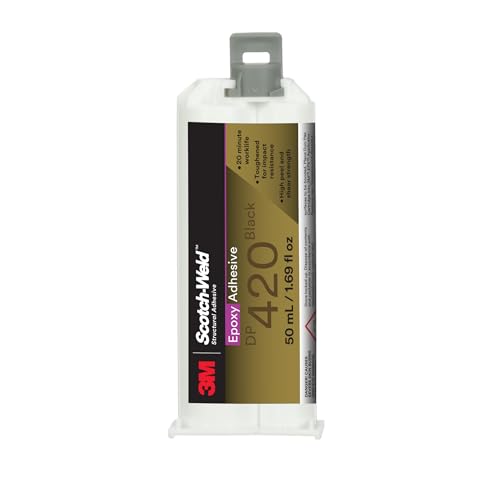
3M DP420 Black Epoxy, 50 mL

3M DP100 Plus Clear, 48.5 mL

3M DP190 Gray Epoxy, 48.5 mL

Yeardera Heavy Duty Construction Cement Glue, 7.4 oz Squeeze Tube
The Picks, Examined More Closely
This two-part epoxy adhesive gives you a compact way to bond metal, ceramic, wood, glass, composites, and many plastics. Its structural purpose suits panel work, assembly, and repair jobs where a flexible household glue would be the wrong category, making it a practical choice for home workshops and light fabrication.
The off-white formula stands apart visually from the black DP420 option, although both target similar bonding jobs. For a smaller, carefully aligned repair, the 50 mL Duo-Pak may be more manageable than the 400 mL DP420NS package.
Everyday Advantages
- Accepts several materials, reducing the need to match separate adhesives across a mixed assembly.
- High shear strength supports joints where forces run across the bonded surfaces.
- The 50 mL package suits a single project without committing to a larger volume.
- Works across joining, potting, panel bonding, and general structural applications.
Practical Considerations
- As a two-part epoxy, it requires accurate mixing before application, so a suitable dispensing setup helps maintain consistency.
- Check the visible finish against your project, especially when a lighter adhesive will blend more readily with the surrounding surface.
Key Specs
Built With In Mind
This adhesive fits mixed-material repairs handled by people with basic experience applying two-part epoxies and a metering or mixing setup.
Reach For A Different Pick When
Choose 3M DP190 Gray Epoxy instead when your project includes rubber or fiberboard and benefits from a broader material range.
Vertical assemblies and demanding fabrications benefit from the controlled application behavior of this non-sag epoxy. It bonds metals, ceramics, wood, glass, and some plastics, giving you a more specialized option than the general-purpose 3M DP420.
The 60-minute work life leaves room to position components before the adhesive begins setting, while the non-sag formulation helps it stay where applied. In a busy workshop, that combination may feel more manageable than the shorter working window offered by 3M DP420NS.
Where It Delivers
- Non-sag behavior suits vertical or overhanging components during application.
- The extended work time gives you room to align parts more carefully.
- Impact and stress resistance suit demanding construction, vehicle, and appliance repairs.
- Multiple compatible materials make it practical for mixed assemblies.
Things To Consider
- Handling strength takes about four hours, so avoid moving the assembly during that period.
- The 50 mL Duo-Pak format calls for compatible dispensing equipment to meter and mix the two components accurately.
Technical Sheet
The Right Fit
This option suits experienced repairers handling vertical assemblies, transportation components, or detailed fabrication work that benefits from additional positioning time.
Where A Sibling Pick Shines
Choose 3M DP420NS Black Epoxy instead for larger production jobs that require more adhesive and a faster 20-minute working window.
A workshop that repeats the same bonding task can use the 400 mL package more efficiently than a small cartridge. This black DP420NS adhesive combines peel and shear strength with toughening for impact and fatigue resistance, making it relevant for metal, composite, and other structural work.
You get roughly 20 minutes to position and adjust the parts, which is shorter than the 60-minute window of 3M DP460NS. That difference may favor a production setup where repeated batches are prepared efficiently.
A Few Strong Suits
- The 400 mL size supports repeated repairs or a busy assembly workflow.
- Peel and shear strength help the joint resist different directional forces.
- Impact and fatigue resistance suit demanding structural applications.
- The 20-minute work life provides a defined adjustment period.
Small Caveats
- Shortening the work life may feel restrictive for a complex first-time assembly.
- Choose your dispensing and storage space around the larger package, and confirm that your setup can meter the two-part adhesive accurately.
Workshop Pick
This adhesive fits experienced workshop operators and production hobbyists who need a larger volume for repeated structural bonding.
Consider Something Else When
Choose 3M DP460NS Off-White Epoxy instead when vertical application and a longer adjustment period matter more than package volume.
The black DP420 puts broad substrate compatibility in a manageable 50 mL package. It suits joining, panel work, potting, and general structural bonding across metals, ceramics, wood, glass, composites, and many plastics.
Compared with the off-white DP420, the main practical difference is the color of the cured bond. The black version may blend more naturally into dark finishes, while the structural capability remains closely aligned.
What Stands Out
- One formula handles several common workshop and household materials.
- High shear strength supports demanding bonded joints.
- Impact and fatigue resistance suit assemblies that may encounter movement or stress.
- The compact package works well for occasional repairs.
Points To Note
- Black adhesive is less discreet on pale or unfinished surfaces.
- Accurate component metering remains important because this is a two-part structural epoxy.
Feature Snapshot
Made For
This adhesive suits home garage hobbyists handling occasional repairs across metal, wood, glass, ceramic, and composite parts.
A Better Fit Elsewhere
Choose 3M DP100 Plus Clear instead for smaller assemblies where appearance and fast setting take priority over heavy-duty structural bonding.
A visible repair can be harder to accept, especially on glass, decorative parts, or a light-colored assembly. This clear epoxy remains transparent after curing, giving you a discreet option for bonds involving metals, ceramics, glass, and many plastics.
Its low viscosity means the adhesive can flow into fine gaps and level after application, while the fast-setting formula helps reduce waiting before handling. Compared with the black DP420, its priorities are appearance, flow, and quick assembly rather than a heavy-duty structural focus.
Notable Upsides
- The clear finish remains visually discreet after curing.
- Low viscosity supports application into narrow gaps and level surfaces.
- Fast setting suits small assemblies that need to move on quickly.
- High shear and peel strength cover common bonding demands.
Where It May Fall Short
- Fast setting leaves less time to reposition parts than the 60-minute work life of 3M DP460NS.
- A fluid, self-leveling formula may not suit every joint shape, so check the geometry before dispensing.
Core Details
Who Will Love This
This formula fits detailed hobbyists and repairers who value a clear bond line, smooth application, and quick handling in compact assemblies.
Another Choice May Suit
Choose 3M DP420 Off-White Epoxy instead when your repair needs greater structural emphasis and a less fluid application.
Rubber and fiberboard add another dimension to a repair, and 3M DP190 covers them alongside metals, ceramics, wood, glass, and many plastics. That broad range makes it useful for mixed-material household projects where a single adhesive simplifies the setup.
The gray 48.5 mL Duo-Pak is more modest in volume than 3M DP420NS, but it still gives you a properly metered two-part application. High shear and peel strength support demanding joins, while the gray color is less conspicuous than black on many neutral surfaces.
What Helps Most
- Supports an unusually broad mix of household and workshop materials.
- Rubber and fiberboard compatibility broadens its repair applications.
- High shear and peel strength address different directions of joint stress.
- The gray finish remains less stark than black on neutral surfaces.
Honest Caveats
- A Duo-Pak format works best with equipment that meters the two components accurately.
- The 48.5 mL quantity suits targeted repairs more naturally than repeated workshop production.
Whose Shelf It Belongs On
This epoxy belongs on the shelf of home repairers who regularly combine rubber, wood, metal, glass, or fiberboard in a single project.
Not Your Match When
Choose 3M DP460NS Off-White Epoxy instead when non-sag behavior and a longer positioning window are central to the assembly.
A squeeze tube makes construction adhesive easier to carry around a tile, stone, wood, or wall project than a rigid epoxy cartridge. This 7.4 oz Yeardera formula targets indoor and outdoor construction work, which gives it a different role from the two-part Scotch-Weld epoxies in this list.
Its stated operating range runs from 40°F to 104°F, making the surrounding temperature worth checking before a seasonal repair. For tile and flooring work, the tube format may be the more approachable option for a small installation.
What It Does Well
- The squeeze tube dispenses directly and stays easy to handle at the project site.
- Tile, floor, stone, wood, and wall applications cover common construction tasks.
- Both indoor and outdoor use make it relevant to seasonal projects.
- The 7.4 oz size sits between a small tube and a large cartridge.
Where It Is Less Suited
- Its construction-adhesive and contact-cement category differs from the structural epoxies above.
- Outdoor work outside the stated 40°F to 104°F range may not suit the application conditions.
Important Details
Who Should Grab It
This tube fits DIYers handling tile, stone, flooring, wood, or wall work where convenient tube application matters.
Swap It Out When
Choose 3M DP420 Black Epoxy instead when your project calls for a two-part structural formula with broader impact and fatigue resistance.
What Matters Before You Seal the Joint
Start with the materials you are joining. Epoxy works well when both surfaces are compatible, but different formulas emphasize different substrate groups, flexibility, appearance, or resistance to stress. A clean fit and accurate surface preparation matter more than choosing a broadly worded label.
Match the Formula to the Task
Two-part epoxies excel in structural work, while a construction contact adhesive may be more convenient for tile, flooring, stone, or wall installation. Consider whether the joint needs a rigid structural bond, a flexible repair, or an inconspicuous finish before narrowing the options.
Give Yourself Enough Working Time
Work life is the interval available for positioning components after mixing. A longer window can help with intricate assemblies, while a short one suits a controlled process with parts prepared in advance.
Account for the Dispensing Method
Duo-Pak packages rely on a dispenser to meter the resin and hardener accurately. The Yeardera squeeze tube offers a simpler application method, making it useful for project-based construction work where a cartridge gun would add unnecessary equipment.
Avoiding Costly Adhesive Mistakes
Common Shopping Slip Ups
A label such as “construction adhesive” does not tell you whether a formula is a contact cement or a two-part structural epoxy. Check the material list, package format, working time, and stated application conditions before purchasing, especially for a visible or weather-exposed repair.
What Separates Premium From Basic
Higher-tier epoxy options commonly add controlled dispensing, stronger impact or fatigue resistance, non-sag behavior, or broader substrate compatibility. Those features matter most in repeated assemblies, demanding joints, and projects where appearance or alignment cannot be easily corrected.
Frequently Asked Questions
What adhesive cement works best for tile?
A construction contact adhesive designed for tile is generally more practical than a general-purpose household glue. Yeardera Heavy Duty Construction Cement Glue lists tile, flooring, stone, wood, and wall applications for a project involving several construction materials.
Is epoxy adhesive suitable for wood and metal?
Yes, provided the chosen epoxy lists both materials as compatible. 3M DP420 Off-White Epoxy, 3M DP420 Black Epoxy, and 3M DP190 Gray Epoxy can bond wood and metal within their stated material ranges.
What does non-sag epoxy mean?
Non-sag epoxy is formulated to stay in place when applied to vertical or overhead surfaces. 3M DP460NS Off-White Epoxy uses this behavior for assemblies where gravity could otherwise pull the adhesive downward before it sets.
How much adhesive do I need?
Measure the joint area and select a package that covers your repair without leaving a large amount of mixed adhesive unused. The 48.5 to 50 mL packages suit targeted jobs, while the 400 mL 3M DP420NS option better fits repeated production work.
Can I use clear epoxy on visible surfaces?
A clear formula can reduce the visual prominence of a bond after curing. 3M DP100 Plus Clear is intended for discreet applications involving materials such as glass, ceramics, metals, and many plastics.
Final Thoughts
The right adhesive cement depends on the materials, joint geometry, working time, and dispensing method your project requires. 3M DP420NS offers larger-volume structural work, DP460NS handles demanding vertical applications, DP100 Plus favors a discreet clear finish, and the Yeardera tube simplifies construction-material repairs. Match the formula to the job before opening the package.