
A cracked ABS housing can turn a simple repair into a stubborn puzzle. You need an adhesive that grips this low-surface-energy plastic, cures within a workable timeframe, and leaves a finish you can sand, paint, or conceal. These options cover precise DIY fixes, vehicle trim, mixed-material assemblies, and workshop-scale bonding.
A Snapshot Of The Selections

RapidFix UV Liquid Plastic Adhesive 10 mL Twin Pack

3M MMM8061 Plastic and Emblem Adhesive

3M Super 77 Spray Adhesive 16.75 oz

3M Super 77 Clear Spray Adhesive 13.44 oz

Permatex 84115 Plastic Weld Adhesive

Magic Chems CA Glue with Activator
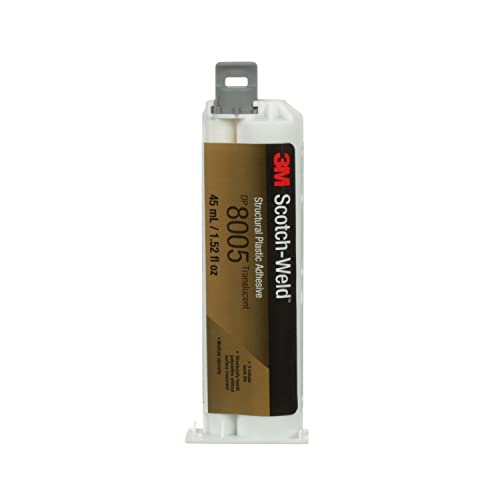
3M DP8005 Structural Plastic Adhesive Black
The Details Behind The Selections
Precision matters when a broken ABS part has several edges that must meet in the right position. RapidFix gives you time to align the pieces because the liquid remains workable until ultraviolet light reaches it and initiates curing. That makes the format appealing for small housings, clips, and model parts where clamping space is limited.
The useful difference here is control. Unlike a fast-setting liquid that grabs as soon as the parts touch, this adhesive lets you adjust the alignment before curing. You still need clean, compatible surfaces, but the UV trigger can make a fiddly repair feel much less rushed, provided light can reach the joint.
Features That Help
- UV-triggered curing gives you a generous positioning window before the joint hardens.
- The cured adhesive dries clear and can be painted or stained to blend into the repaired part.
- Two 10 mL refill bottles suit small, controlled repairs without committing to a large container.
Things To Consider
- The compatible UV LED flashlight is sold separately, so account for that extra equipment.
- UV light must penetrate the adhesive at the repair line, which can be difficult inside a deep or enclosed joint.
Key Specs
Who It Suits Best
This adhesive suits careful DIYers repairing small ABS parts where alignment control and a paintable finish matter more than an immediate cure.
Another Choice May Suit
The 3M MMM8061 Plastic and Emblem Adhesive fits vehicle trim and emblem work better than a UV-dependent repair system.
Vehicle emblems and exterior trim present a different challenge from a loose household part. The 3M MMM8061 is formulated for fully cured automotive paint and plastic, including interior and exterior applications, so it has a clearly defined place in vehicle repair work. Its 5-ounce tube also gives you more material for repeated trim or emblem jobs than a precision syringe.
Unlike RapidFix, this adhesive does not depend on a separate UV flashlight. It sets in about 15 minutes and reaches full cure in 24 hours, giving you a practical middle ground between handling the repair and moving on with your day.
The Practical Payoff
- Clear curing makes it suitable for transparent or translucent plastic components.
- Resistance to water and heat supports interior and exterior vehicle applications.
- The 24-hour full-cure period allows handling sooner without confusing set time with final strength.
- A 5-ounce tube supports larger or repeated automotive adhesive tasks.
Worth Noting
- The adhesive is specified for fully cured automotive paint and plastic, so check the condition and type of your substrate first.
- Plan around the 24-hour full-cure period rather than treating the 15-minute set as final cure.
At A Glance
Made For
This adhesive fits DIYers restoring vehicle emblems, badges, and exterior plastic trim on fully cured surfaces.
A Better Fit Elsewhere
Permatex 84115 Plastic Weld Adhesive suits mixed-material household repairs better than this automotive-focused tube.
Coverage area determines whether a spray adhesive makes sense. The larger 16.75-ounce Super 77 can is built for broad applications where a liquid applicator would be slow or awkward. That makes it more relevant to large craft layouts and workshop assembly than a narrow ABS seam, especially when the material pairing is confirmed as compatible.
The spray format creates a different repair rhythm from the 3M MMM8061 tube. You work across a surface rather than depositing a bead at one point, so controlling overspray and protecting nearby materials matters. The listing also identifies Super 77 as a low-VOC option, which may suit a ventilated craft workspace.
Bright Spots
- Spray application covers broad areas more evenly than a narrow liquid bead.
- The larger can supports repeated craft and assembly tasks without frequent refills.
- A low-VOC designation fits workshops where reduced solvent emissions are useful.
Trade Offs
- Confirm that a spray adhesive is appropriate for the specific ABS grade and the second material before application.
- Protect surrounding surfaces and work with ventilation because overspray can affect nearby materials.
Technical Sheet
Right Fit For
This can fits crafters and workshop users handling broad areas of compatible materials rather than tiny, highly visible ABS joints.
Reach For A Different Pick When
3M DP8005 Structural Plastic Adhesive Black fits controlled low-surface-energy plastic fabrication better than a broad spray format.
Visibility can matter as much as holding strength. The clear 13.44-ounce Super 77 can shares the multipurpose spray approach of the larger can, but its transparent adhesive is less distracting on visible assemblies. That makes it a thoughtful option for decorative parts, display models, and projects where a colored bead would interrupt the appearance.
As with the 16.75-ounce version, the deciding issue is compatibility rather than container size. Spray coverage is convenient across broad surfaces, yet a small ABS repair may need a more targeted adhesive. Check the material pairing and test the application method on a hidden area before committing the visible part.
Everyday Wins
- Clear adhesive reduces visual interruption on translucent or decorated assemblies.
- The 13.44-ounce can offers a manageable size for routine projects without the bulk of the larger option.
Points To Note
- The listing identifies Super 77 as low VOC, so use a ventilated workspace and allow spray to settle before handling.
- A broad spray pattern is less precise for hairline ABS seams and tiny components.
- Confirm compatibility with both the ABS grade and the second bonded material before use.
Who Will Love This
This adhesive fits model makers and crafters who value an inconspicuous spray bond across compatible, broad surfaces.
Swap It Out When
Magic Chems CA Glue with Activator suits a small assembly needing rapid placement better than a broad spray can.
Some household repairs combine several materials, such as plastic attached to wood or ceramic. Permatex 84115 is designed for that mixed-material scope, forming a tough structural bond across plastics, composites, ceramics, and wood in different combinations. It brings welcome simplicity because you do not need a separate primer before assembly.
The five-minute room-temperature set is a practical advantage over longer curing schedules. Unlike RapidFix, it does not depend on ultraviolet access, so it works in an enclosed joint or shaded workspace. The honest catch is that five minutes describes setting time, not necessarily the point at which the joint has reached its final structural strength.
What Makes Sense
- No primer requirement simplifies preparation and reduces one extra step.
- The five-minute set lets you complete a small assembly without waiting through a long cure.
- A structural formulation suits repairs where the joined parts need more than a light-duty hold.
- Compatibility across several material categories helps with household mixed-material projects.
Practical Considerations
- Allow the joint to cure beyond the initial set before placing it under meaningful stress.
- The 0.84-ounce quantity suits localized repairs, while larger assemblies may require careful planning.
Core Details
Best Suited To
This adhesive suits beginners handling small household repairs that combine ABS or another plastic with wood, ceramic, or composite material.
Where A Sibling Pick Shines
3M DP8005 Structural Plastic Adhesive Black is the stronger fit for demanding low-surface-energy plastic joins and workshop fabrication.
A cyanoacrylate glue and separate activator offer a different pace from the five-minute Permatex system. Magic Chems pairs the adhesive with an activator spray to speed curing, making it appealing for small assemblies where parts must be held together quickly. The two-part approach is straightforward once you understand that the glue and activator work together.
For ABS work, material compatibility deserves careful attention. The product is intended for acrylic and other compatible materials, but that does not automatically establish suitability for every plastic grade. You also need to exclude polyethylene and nonstick surfaces, as those are specifically outside the recommended applications.
Practical Advantages
- The activator shortens the waiting period for a small, precisely positioned assembly.
- Separate glue and activator give you control over how quickly the joint cures.
- The two-part package suits repeated assembly tasks involving compatible acrylic and similar materials.
Small Caveats
- Do not use the system on polyethylene or nonstick structures.
- Fast curing leaves little time to reposition parts, so align the joint before applying the activator.
- Use the cyanoacrylate in a ventilated area and keep the activator away from unintended surfaces.
The Right Fit
This two-part system fits experienced DIYers making small, fast-setting assemblies from acrylic and other confirmed compatible materials.
Look Elsewhere When
Permatex 84115 Plastic Weld Adhesive offers a more forgiving five-minute setting window for mixed-material household projects.
Low-surface-energy plastics can be difficult to bond because their surfaces offer less chemical engagement than porous materials. The 3M DP8005 targets that challenge directly, creating structural bonds on low-surface-energy plastics without chemical etching, plasma, flame, corona treatment, or priming. That reduces both preparation time and the need for specialized surface treatment.
The Duo-Pak format introduces a workshop-style tradeoff. It contains two components that require accurate metering, mixing, and dispensing, and the manufacturer points toward 3M dispensing equipment for consistent results. A 45 mL package and black adhesive suit fabrication work where appearance and repeatable application matter more than a casual squeeze-out repair.
Standout Benefits
- Targets low-surface-energy plastics without specialized etching, plasma, flame, or corona treatment.
- Eliminates the primer step for supported plastic bonding applications.
- The Duo-Pak format supports repeatable mixing and dispensing in workshop workflows.
- A 45 mL package provides useful volume for fabrication rather than one tiny repair.
- Isopropanol cleaning helps remove mold-release agents before joining.
Possible Compromises
- Accurate metering and mixing are essential, so the format is less casual than a premixed tube.
- Dispensing equipment adds a setup step for small household repairs.
Feature Facts
Whose Shelf It Belongs On
This adhesive belongs in a workshop where you fabricate ABS or another confirmed low-surface-energy plastic part and value repeatable application.
Consider Something Else When
3M Super 77 Clear Spray Adhesive 13.44 oz fits a broad decorative craft project better than a mixed structural adhesive system.
Match The Adhesive To The Repair
Confirm the Plastic First
ABS has a smooth, relatively low-energy surface, so a strong-looking adhesive can still disappoint when the grade, texture, or second material is wrong. Start with the manufacturer’s compatibility guidance, then check whether the application is cosmetic or structural. RapidFix, Permatex, and DP8005 each emphasize different plastic applications, but none should be treated as a universal ABS answer without that check.
Consider the Curing Method
UV curing gives you positioning time but requires light access. Cyanoacrylate with an activator cures rapidly but leaves little room for adjustment. Room-temperature structural adhesive falls between those approaches, while a spray adhesive favors broad coverage over precise seams.
Think Beyond the Bond
A repair may need a clear surface, a paintable joint, a black industrial finish, or resistance to water and heat. Surface finish, joint design, expected load, and available application equipment matter as much as the adhesive’s general strength. Always plan how you will support the parts while the chosen formula cures.
Specialized Formulas and Smarter Choices
Mistakes Worth Dodging
Do not choose by the word “plastic” alone, since plastic grades can behave differently. Also avoid judging a adhesive by its set time without considering the full cure, the joint design, and whether the repair will be painted afterward.
The Upgrade Payoff
Higher-cost options often add a UV tool, activator, mixer, or dispensing equipment. Those additions earn their place when alignment, repeatable mixing, or low-surface-energy bonding matters more than a quick squeeze-out repair.
Frequently Asked Questions for Adhesive For ABS Plastic
What adhesive works best for ABS plastic?
The best fit depends on the repair, load, surface finish, and application method. UV-curing, cyanoacrylate, structural, and spray options each handle different jobs, so compatibility comes before a general ranking.
Do all these adhesives bond ABS plastic?
No, and each listing has a different material scope. Confirm the specific ABS grade and the second material with the manufacturer, then make a small test on a hidden area.
Can I paint an ABS repair after bonding?
RapidFix UV Liquid Plastic Adhesive dries clear and can be painted or stained after curing. For every other option, allow full cure and follow the product instructions for finishing the joined surfaces.
Is spray adhesive suitable for a small ABS repair?
A spray adhesive can cover a broader area efficiently, though a small seam may need more precise placement. Check compatibility and avoid spraying directly onto a visible ABS part before testing the finish.
Should I use cyanoacrylate glue with an activator for ABS?
Only after confirming the ABS grade is compatible with the adhesive. The Magic Chems system cures rapidly, so accurate alignment and good ventilation are essential during application.
Final Verdict
Start with the repair rather than the adhesive name. Choose UV curing for alignment control, the 3M tube for vehicle trim, Permatex for mixed household materials, and DP8005 for demanding low-energy plastic fabrication. The right choice is the one whose compatibility, curing method, and finish match the joint you actually need.