
A stuffy attic can turn a summer afternoon into a house-wide heat problem, while a garage or shed may collect dust and trapped heat even faster. The right ventilation setup depends on the room, airflow path, control method, and electrical access. These picks range from compact wall-mounted exhaust fans to high-output roof vents and whole-house circulation equipment.
The Lineup, Simplified

iLIVING 14-Inch Wall-Mounted Shutter Exhaust Fan, 3 Speeds, Silver

Big Ass Fans Mammoth 84-Inch Outdoor Ceiling Fan with LED, Black

Big Ass Fans Mammoth 60-Inch Outdoor Ceiling Fan with LED, Black

Big Ass Fans Mammoth 84-Inch Outdoor Ceiling Fan, Smart WiFi, Black

GAF Master Flow Adjustable Power Vent Thermostat PT6 for Fans
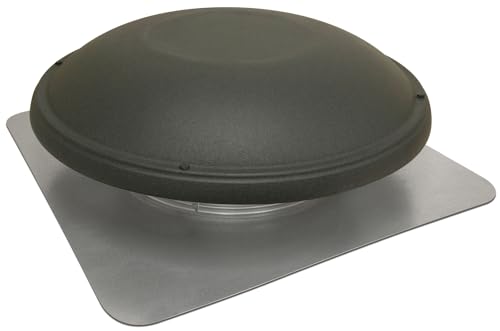
Master Flow GAF 1500 CFM Roof-Mount Attic Fan with Thermostat Controller
Master Flow GAF 24-Inch Whole House Fan WHFS24M
The Strengths Of Each Pick
A garage that bakes in summer or an attic that holds onto warm air calls for a direct exhaust path, and this 14-inch shutter fan provides one without requiring a roof opening. Its 850 CFM airflow rating suits spaces up to 1,300 square feet, depending on the building, ducting, and existing ventilation.
For daily use, the built-in thermostat and three fan speeds make it more adaptable than a basic fixed-speed vent. The aluminum shutters and enclosed motor housing suit humid utility spaces, although you still need a suitable outlet and a clear wall opening.
The Helpful Details
- Thermostat control spans a stated 32 to 130 degrees Fahrenheit.
- Three speeds let you match ventilation to changing room temperatures.
- The 850 CFM rating targets moderately sized attics, garages, and sheds.
- Aluminum shutters provide useful moisture and heat resistance.
Practical Considerations
- The included six-foot cord limits where an accessible outlet can be placed.
- Wall placement requires a suitable opening and adequate exterior clearance.
Key Specs
Made For Flexible Spaces
You benefit most from this fan when you need straightforward wall ventilation for a garage, shed, or modest attic without a permanent roof installation.
Another Choice May Suit
The Master Flow GAF 1500 CFM Roof-Mount Attic Fan suits you better when a dedicated roof vent and greater airflow are required.
Large patios, covered decks, and open-air entertaining spaces need more than a gentle breeze, and this 84-inch fan delivers up to 15,683 CFM. That scale suits broad outdoor areas, though it operates as a ceiling circulator rather than a direct attic exhaust fan.
Unlike the compact iLIVING wall unit, this model moves air across the room with six blades and an efficient ECM motor. For your outdoor setup, the integrated 16-watt LED, remote, app, and voice-control options add convenience without requiring another fixture.
A Strong Showing
- High airflow suits expansive patios and covered gathering areas.
- The built-in LED supplies warm 2700K downward light.
- Remote, app, and voice controls simplify daily adjustments.
- The wet-rated housing is intended for outdoor exposure.
- The ECM motor operates below 35 decibels.
Worth Noting
- The 84-inch span requires substantial ceiling support and clearance.
Feature Snapshot
Built With Large Patios In Mind
You get the most from this fan in a large covered patio, pavilion, or similar outdoor area where a ceiling structure can support its 84-inch span.
Look Elsewhere When
The iLIVING 14-Inch Wall-Mounted Shutter Exhaust Fan makes more sense when you need to pull stale air directly outdoors from an attic, garage, or shed.
A covered porch with less ceiling span than a pavilion can still benefit from serious air movement, and the 60-inch version balances footprint with output. Its listed airflow of 7,918 CFM suits patios, porches, and similar outdoor gathering areas.
Compared with the 84-inch Mammoth, this model gives you a shorter blade span and lower airflow while retaining the LED, smart controls, and weather-oriented construction. It remains an outdoor circulator, so you would still need a separate exhaust route for an enclosed attic.
The Value In It
- The 60-inch span fits more moderately sized outdoor structures.
- Remote, app, and voice controls provide flexible operation.
- The warm 16-watt LED adds useful nighttime illumination.
Trade Offs
- Its airflow is lower than the 84-inch Mammoth model.
- Wet-rated construction does not make it an attic exhaust system.
- The six-blade span still needs a secure mounting structure.
Right Fit For Medium Outdoor Areas
This fan suits you when a porch or patio has enough clearance for 60-inch blades but not the mounting demands of an 84-inch unit.
Where A Sibling Pick Shines
The Big Ass Fans Mammoth 84-Inch Outdoor Ceiling Fan with LED serves you better when maximum outdoor circulation and a larger illuminated area are priorities.
The 84-inch Mammoth without an integrated light gives you the same high-output outdoor circulation in a simpler configuration. Its six blades and ECM motor can move up to 15,683 CFM, making it relevant for large covered decks, patios, and pavilions.
Smart Wi-Fi, a mobile app, voice-control compatibility, and the included remote handle speed changes from several locations. Unlike the illuminated 84-inch model, you would need separate outdoor lighting where this fan is installed.
Everyday Perks
- Up to 15,683 CFM supports air movement across large outdoor spaces.
- Smart and remote controls simplify speed adjustment.
Points To Note
- No built-in light is included, so plan separate illumination.
- The 84-inch diameter needs a substantial and level mounting area.
Quick Facts
Who Will Love This
You benefit most from this model when you want powerful outdoor circulation and smart controls but prefer to supply lighting separately.
Another Choice May Suit
The Big Ass Fans Mammoth 84-Inch Outdoor Ceiling Fan with LED suits you better when one fixture should handle both high-volume airflow and nighttime lighting.
A power vent that runs continuously can remove attic moisture, but temperature control makes its operation more responsive. This PT6 thermostat activates compatible single-speed power vents according to an adjustable temperature setting.
Its practical value is the retrofit path. You can add automated control to an existing power vent without replacing the entire fan assembly, provided the wiring and vent system are compatible.
Where It Delivers
- Temperature activation supports automated attic ventilation.
- The adjustable setting lets you adapt operation across changing conditions.
- Universal fit includes common Master Flow power-vent systems.
- It offers a practical upgrade for an existing single-speed vent.
Details To Watch
- It controls a fan rather than supplying the fan itself.
- Compatibility is limited to single-speed power-vent systems.
- Proper wiring remains necessary for installation.
Who Should Grab It
This thermostat suits you when you already have a compatible power vent and want to add temperature-based operation without replacing the entire assembly.
Consider Something Else When
The Master Flow GAF 1500 CFM Roof-Mount Attic Fan with Thermostat Controller suits you better when you need a complete roof-mounted ventilation system.
Dedicated attic ventilation requires more than an open gable vent because wind-driven rain and debris can enter the space. This roof-mounted fan uses a 1,500 CFM capacity, a galvanized steel housing, a built-in screen, and a thermostat controller for controlled ventilation.
Compared with the iLIVING wall unit, this model moves more air but requires a roof penetration and more involved installation. Its stated suitability extends to attic spaces up to 2,800 square feet, making it a stronger choice for a dedicated whole-home ventilation project.
A Few Highlights
- Up to 1,500 CFM provides high airflow for attic spaces.
- The thermostat controller supports demand-based operation.
- A built-in screen helps keep insects and debris outside the vent.
- Galvanized steel suits exposed roof installation.
Factors To Consider
- Roof installation is more involved than plugging in a wall fan.
Made For Serious Attic Ventilation
This roof vent suits you when your attic needs dedicated high-volume exhaust, controlled operation, and protection from outdoor debris.
Swap It Out When
The iLIVING 14-Inch Wall-Mounted Shutter Exhaust Fan makes more sense for a garage or shed where a simple wall opening and accessible outlet are preferable.
Whole-house ventilation works on a different principle from an attic vent. This 24-inch direct-drive fan pulls air through the home and exhausts it through central openings, moving air between rooms and toward the attic whenever a suitable opening exists.
The included aluminum ceiling shutter, mounting hardware, plenum boards, and installation instructions support a central installation. It uses a PSC motor and two speeds, making it a practical whole-home circulation project rather than a substitute for a weatherproof attic roof vent.
Positive Takeaways
- The 24-inch blade moves air throughout a central living space.
- Two-speed operation offers different circulation levels.
- An included shutter helps close the ceiling opening when needed.
- Plenum boards support a more complete central installation.
- Direct-drive operation suits whole-house air exchange.
Less-Strong Areas
- Central installation requires planning around attic access and structural openings.
- It circulates indoor air rather than serving as a dedicated roof vent.
Technical Highlights
Whose Shelf It Belongs On
This fan suits you when your goal is moving conditioned indoor air through the living spaces and toward a central attic exhaust opening.
Reach For A Different Pick When
The Master Flow GAF 1500 CFM Roof-Mount Attic Fan with Thermostat Controller suits you better when the primary goal is dedicated roof-level attic ventilation.
Plan Your Ventilation Setup
Start With the Airflow Path
CFM means cubic feet per minute, the volume of air a fan moves each minute. Start with the space you need to ventilate and the path air can follow, especially in a garage with equipment, a shed with stored materials, or an attic without existing intake openings.
Match Control to Your Routine
A thermostat helps a vent respond to changing temperatures rather than run continuously. Manual controls can work for a lightly used room, while automatic control becomes more useful in spaces that experience substantial daytime heat.
Check the Installation Conditions
Wall-mounted fans need a suitable opening, exterior clearance, and nearby outlet. Roof vents require a weatherproof installation, while whole-house fans need a central ceiling location and planned intake and exhaust routes.
Compare the Purpose, Not Just the Airflow
The Mammoth fans circulate air across outdoor living areas, while the iLIVING and Master Flow attic products exhaust air. The WHFS24M handles whole-house circulation, so matching the equipment to its actual job prevents a costly mismatch.
Two Checks Before You Order
Mistakes Worth Dodging
Do not select a fan solely from its CFM figure, since the room volume, duct route, and available intake affect actual performance. Also, outdoor ceiling fans need a weatherproof ceiling structure, while a roof vent needs proper flashing and a secure opening.
What Separates Premium From Basic
Additional speed settings, integrated lighting, and app or voice controls improve convenience rather than airflow. You gain the most when these features match your daily routine, not simply because a model includes more controls.
Frequently Asked Questions
Do Attic Vent Fans Work Year-Round?
Temperature-controlled models can support ventilation as attic temperatures change throughout the day. The thermostat setting and local conditions determine when the fan activates.
Can a Whole House Fan Replace an Attic Fan?
A whole-house fan circulates indoor air toward central attic openings, so it performs a different task from a dedicated roof or wall exhaust vent. Your attic still needs an appropriate discharge route.
Is a Thermostat Necessary?
A thermostat makes ventilation more responsive and can prevent a fan from running continuously. Manual operation may be adequate in a simple, infrequently heated space.
Can an Outdoor Ceiling Fan Vent an Attic?
Outdoor ceiling fans move air across the area beneath them rather than drawing stale air out of an enclosed attic. A dedicated exhaust fan is more suitable for that task.
How Much Airflow Does an Attic Need?
The appropriate airflow depends on attic volume, construction, climate, and the available intake path. Product coverage and CFM figures provide starting points, but the complete ventilation design determines how well the system performs.
Final Verdict
Start with the ventilation job rather than the largest fan. Choose the iLIVING for flexible wall-mounted spaces, the Master Flow roof vent for dedicated attic exhaust, the PT6 thermostat for an existing compatible vent, and the WHFS24M for whole-home circulation. The Mammoth models serve outdoor living spaces instead.