
A stuffy attic in summer and a damp crawlspace after heavy rain often need different solutions, even though both problems fall under home ventilation. This roundup covers foundation flood vents, solar roof fans, a wind-driven roof cap, and a powered crawlspace fan so you can match the equipment to your structure, climate, and drainage needs.
The Leading Options At A Glance

Smart Vent Insulated Flood Vent 1540-520, 16 x 8

Smart Vent Wood Wall Flood Vent 1540-570, Insulated

Smart Vent Dual Function Flood Vent 1540-510

Geelife 12-Inch Solar Roof Fan

Zohisin 8W Solar Roof Vent Fan, DC Brushless

banapoy Roof Vent Cap
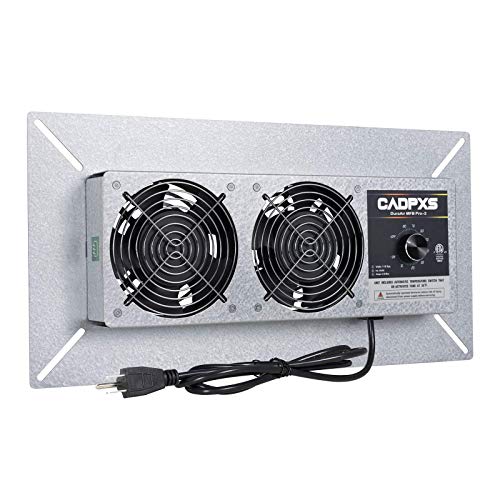
CADPXS Crawlspace Fan, Humidistat
Inside Each Recommended Option
Concrete foundations in flood-prone areas need an opening that lets rising water move in both directions, relieving hydrostatic pressure, or pressure created by surrounding water. The 1540-520 uses an internal float to release its cover as water enters, while its insulated core and weather stripping help limit heat loss.
Unlike the stud-mounted 1540-570 reviewed next, this 16-by-8-inch model is surface-mounted over a foundation opening. That approach suits masonry walls, and the T316L stainless steel body gives you a durable-looking material choice for exposed exterior installation.
Where It Delivers
- Bi-directional opening allows floodwater to enter and leave the enclosure rather than trapping pressure against the foundation.
- Each vent provides 200 square feet of stated flood coverage, making the number of openings easier to calculate.
- Marine-grade T316L stainless steel suits coastal exposure and harsh outdoor conditions.
- Surface mounting preserves the wall surface and offers a practical retrofit route.
Practical Considerations
- Confirm that a 16-by-8-inch opening and the surrounding wall area will accommodate the surface-mounted flange.
- A proper perimeter seal matters; Hurribond or equivalent adhesive and a sealing kit complete the installation.
Feature Snapshot
Right Fit For
You benefit most from this model when your home has masonry foundation walls and you need an insulated flood opening rather than an attic exhaust fan.
Another Choice May Suit
The Smart Vent Wood Wall Flood Vent 1540-570, Insulated better fits a wood-frame foundation with studs spaced 16 inches on center.
A wood-frame foundation rarely accepts a surface-mounted concrete vent without extra site work, so the 1540-570 is designed around a different installation. Its flange fits between wall studs positioned 16 inches on center, a common framing measurement that can make opening cuts and attachment more predictable.
Pre-drilled corner slots simplify fastener placement, while the insulated core and weather stripping help reduce unwanted heat transfer. For your foundation, the honest read is that framing compatibility matters more than any other specification.
Useful Strengths
- Stud-width design targets a 16-inch-on-center layout instead of requiring a surface flange.
- Four pre-drilled corner slots simplify alignment during installation.
- The insulated core helps limit heat transfer through a closed enclosure.
- Float-operated construction provides two-way water movement to relieve pressure.
Points To Note
- Actual stud spacing can vary, so measure several openings before cutting the wall.
- You will need suitable fasteners and careful sealing around the flange to complete the enclosure.
Made For
This vent makes the most sense for a wood-frame foundation built with regularly spaced 16-inch studs and a need for flood openings with insulation.
A Better Fit Elsewhere
The Smart Vent Insulated Flood Vent 1540-520, 16 x 8 better serves a concrete foundation where surface mounting is more practical.
The 1540-510 brings a different purpose to a foundation opening because it combines flood relief with everyday ventilation. A bimetal coil, a temperature-sensitive element made from two bonded metals, gradually operates the louvers as temperatures change. The louvers remain closed around 35°F and fully open around 75°F.
Compared with the insulated 1540-520, this model adds temperature-responsive airflow rather than emphasizing a closed, insulated enclosure. It fits a crawlspace or enclosed foundation area that needs ventilation during mild weather while retaining a protected opening during colder conditions.
Strengths Worth Knowing
- Combines two-way flood relief with natural ventilation in one enclosure.
- Temperature-operated louvers avoid requiring continuous electrical power.
- The 35°F closed and 75°F open thresholds give you a clear seasonal adjustment point.
- T316L marine-grade stainless steel provides a rugged exterior material.
Less-Strong Areas
- The fixed temperature response offers less control than a powered fan with remote settings.
- You gain the most benefit only where foundation openings can be arranged to support regular airflow.
The Numbers That Matter
Who Will Love This
You benefit most when your crawlspace needs both flood openings and passive seasonal ventilation without another powered device.
Consider Something Else When
The Geelife 12-Inch Solar Roof Fan better fits an attic where you want adjustable powered airflow instead of a foundation-mounted flood vent.
Hot air collecting beneath a roof deck calls for extraction rather than another foundation opening, and the Geelife 12-inch fan brings both solar power and manual control. Its 40-watt panel supplies a 12-inch fan with an airflow rating of 1,800 cubic meters per hour, while the remote offers three speed settings for changing conditions.
A built-in sensor starts the fan at 25°C, making the unit useful in attics, garages, and other enclosed roof spaces. The cold-rolled steel housing and brushless DC motor also make it more substantial than a lightweight plastic turbine, although the roof opening still needs proper preparation.
Notable Upsides
- Three remote-controlled speeds let you match airflow to the space and your tolerance for noise.
- The 25°C automatic start provides a useful trigger for hot-weather ventilation.
- A 1,800 cubic-meter-per-hour airflow rating targets more vigorous air movement.
- Solar power reduces dependence on a conventional electrical connection.
- Cold-rolled steel suits a rooftop environment better than a thin plastic shell.
Details To Watch
- The solar panel needs a location with useful sunlight exposure.
- The 12-inch opening and rooftop installation require a properly prepared roof penetration.
Quick Facts
The Right Fit
You benefit most from this fan in a hot attic, garage, or similar roof enclosure where solar power and remote control make daily adjustments convenient.
Swap It Out When
The Zohisin 8W Solar Roof Vent Fan, DC Brushless better suits a compact garage or warehouse where a smaller opening and lower-power solar system make more sense.
The Zohisin fan takes a more compact approach than the 12-inch Geelife model, using an 8-watt monocrystalline solar panel and a brushless DC motor to move 360 cubic feet per minute. Its roughly 9.45-inch square housing suits smaller roof penetrations, which can be useful in garages, warehouses, and utility structures.
The alloy-steel body, 2,250-RPM motor, and two listed opening options give you several installation dimensions to compare against your roof. The honest tradeoff is simpler control than the Geelife, but you gain a compact solar setup designed for straightforward exhaust.
What Makes Sense
- Compact 9.45-inch-square body reduces the space required for the roof opening.
- An 8-watt monocrystalline panel provides a relatively restrained solar footprint.
- The brushless motor runs at 2,250 RPM for continuous roof ventilation.
- Listed openings of about 4.33 and 6.3 inches offer some fitting flexibility.
Factors To Consider
- The 360-cubic-foot-per-minute rating is lower than the Geelife fan’s stated output.
- You must match the housing depth and listed opening to the existing roof penetration.
- Solar performance depends on the panel receiving unobstructed daylight.
Core Details
Built With In Mind
You benefit most from this fan in a compact garage, warehouse, or workshop where a smaller roof opening and basic solar exhaust meet your needs.
Look Elsewhere When
The Geelife 12-Inch Solar Roof Fan better fits an attic where stronger airflow, a remote, and automatic temperature-based starting matter more.
Moving air without wiring or a solar panel is the central appeal of this roof cap. Wind turns the spinning vent, drawing stale air from the attic and releasing it outdoors. Compared with the powered Geelife and Zohisin fans, the banapoy offers a simpler mechanical approach with fewer operating controls to manage.
Thickened 304 stainless steel and a one-piece body suit a roof-mounted component exposed to rain and wind, while the included clamp helps secure the cap to a compatible opening. For a straightforward attic exhaust, less hardware can be a genuine advantage.
A Favorable Mix
- Wind-driven operation needs no electrical connection or solar panel.
- 304 stainless steel provides a rust-resistant exterior material.
- The one-piece construction avoids the visual and mechanical complexity of a powered housing.
- An included clamp supports attachment to a compatible roof opening.
Worth Bearing In Mind
- Airflow depends on wind reaching the cap, so calm conditions can limit ventilation.
- You need to verify the fit of the cap and clamp against the existing roof opening.
Best Suited To
You benefit most from this cap in a straightforward attic with an existing vent opening and a preference for wind-powered exhaust.
Where A Sibling Pick Shines
The CADPXS Crawlspace Fan, Humidistat better suits a damp enclosed area where you need powered airflow controlled by humidity levels.
A crawlspace that stays damp after rain needs controlled air exchange rather than a roof turbine, and the CADPXS fan pairs two blowers with a built-in humidistat. The humidistat is a humidity-sensing switch that can operate the fans according to a chosen relative humidity level, abbreviated as RH.
Its setting range runs from 20% to 80% RH, giving you control over when the fans operate. The 220-cubic-foot-per-minute airflow, 18-by-9-by-2-inch body, and grounded 6.56-foot cord make this a powered indoor option for a damp crawlspace rather than an attic roof accessory.
The Value In It
- The humidistat lets the fans respond to moisture rather than run continuously.
- A wide 20% to 80% RH adjustment range accommodates different moisture levels.
- Dual fans provide a combined airflow rating of 220 cubic feet per minute.
- The grounded power cord adds a clear connection method for a wired installation.
Trade Offs
- You need a nearby grounded outlet or another suitable grounded power connection.
- The 6.56-foot cord may not reach the nearest outlet in a larger crawlspace.
- The 18-by-9-inch opening needs to match your enclosure or vent placement.
Key Facts
Whose Shelf It Belongs On
You benefit most from this fan in a humid crawlspace where an outlet is accessible and automatic humidity-based operation will save attention.
Not Your Match When
The banapoy Roof Vent Cap better fits a conventional attic opening where wind-driven ventilation and no electrical connection are the priorities.
Matching Ventilation Equipment to the Space
The right ventilation system starts with the space you need to ventilate. An attic, crawlspace, and foundation wall face different moisture and airflow conditions, so one type of vent cannot handle every job equally well.
Powered, Solar, and Passive Airflow
Powered fans give you direct control over airflow, while solar fans reduce dependence on household wiring. A passive wind cap needs neither electricity nor a temperature control, making it simple but dependent on moving air. Choose the operating method that matches your climate and the location of the unit.
Foundation Openings Serve a Different Purpose
Foundation flood vents are designed to let water move through an enclosure and relieve pressure against the wall. They are not intended to replace an attic exhaust fan. Your decision starts with the foundation material, opening size, and framing arrangement.
Size and Installation Control the Fit
Measure the existing opening, surrounding clearance, and available power before ordering. Roof fans need a suitable roof penetration and solar exposure, while the CADPXS crawlspace fan needs room for its opening and a grounded connection. A little measuring can prevent the most common installation mismatch.
Common Mistakes Worth Avoiding
Choosing a roof fan for a foundation flood opening wastes time because the two products serve different purposes. Confirm that your project involves attic airflow, crawlspace moisture, or foundation flood relief before comparing models.
The second common error is ignoring the opening dimensions. A 12-inch fan, a 4.65-inch solar housing, and an 18-by-9-inch crawlspace fan cannot be treated as interchangeable. Measure the available area, roof clearance, and cable route before making a final decision.
What Paying More Pays Off
A higher-cost model may add meaningful controls, a larger airflow rating, automatic temperature sensing, or a more substantial housing material. The Zohisin 8W Solar Roof Vent Fan, DC Brushless favors compact solar operation, while the Geelife 12-Inch Solar Roof Fan adds a remote, temperature sensor, and a larger airflow figure.
Extra spending makes more sense when your space needs stronger air movement, convenient remote operation, or automatic humidity control. A basic passive or compact model remains sensible for straightforward ventilation where those conveniences offer little practical gain.
Frequently Asked Questions for Attic Ventilation System
Do I need a powered fan for attic ventilation?
A powered fan provides more consistent airflow than a wind-driven cap. Solar and wired models can also offer temperature sensors, remote controls, or humidistats that adjust operation to changing conditions.
Are foundation flood vents the same as attic vents?
No. Foundation flood vents allow water to move through an enclosure and relieve pressure, while attic vents remove warm or stale air from above the living space.
How large should an attic ventilation fan be?
The opening must match the fan or housing, with additional room for installation. A larger fan can move more air, but roof clearance, solar exposure, and structural space still determine whether it is practical.
Are solar roof vent fans suitable for garages?
Yes, a solar roof fan can suit a garage, workshop, or warehouse with a suitable roof opening and good sunlight exposure. Its capacity should match the enclosure and the amount of heat and moisture you expect to remove.
What does a crawlspace humidistat do?
A humidistat measures relative humidity and controls the fan according to its setting. It allows the airflow to operate in response to moisture rather than requiring continuous manual control.
Final Verdict
The Smart Vent 1540-510 stands out for combined flood relief and seasonal ventilation, while the Geelife 12-inch fan offers the most convenient controlled roof airflow. The banapoy cap and Zohisin fan suit simpler ventilation setups, and the CADPXS unit addresses moisture in an enclosed crawlspace. Match the device to the space, opening, and power source before deciding.