
A gas valve that looks right can still be wrong for your setup. The real decision depends on whether you need a manual isolation point, an electrically controlled fuel valve, a timed grill shutoff, or alarm-triggered closure. This guide covers each approach for gas lines, outdoor cookers, fuel hoses, DIY fuel systems, and connected safety controls.
How The Shortlist Stacks Up

U.S. Solid 3/4" Brass Electric Solenoid Valve 110V
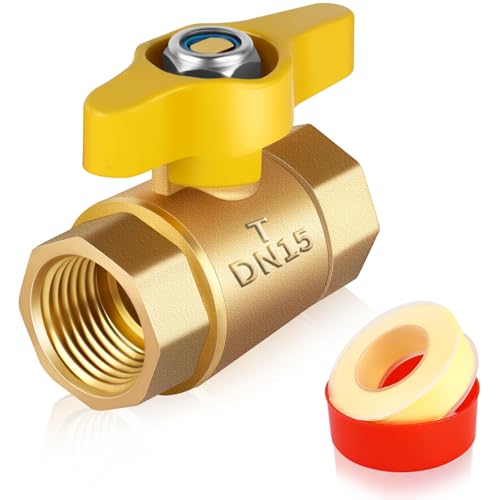
Boltigen 1/2-Inch Brass Gas Ball Valve with FIP

Horiznext 3/8-Inch Brass Fuel Valve

Fire Magic 1-Hour Gas Shut-Off Valve

LVLAI CHEN Mechanical Gas Timer 20/40/60

LVLAI CHEN 3-Hour Gas Shut-Off Valve

Psytfei 12VDC Automatic Gas Shut-Off Controller
More Details On Our Top Picks
This electrically controlled valve suits fuel, air, and industrial fluid lines where rapid remote flow control matters. A solenoid is a coil-operated mechanism, and this normally closed design stays closed without electrical power, opening only when energized.
The 3/4-inch brass body and Viton seal make it a practical fit for gasoline, diesel, kerosene, natural gas, oils, and air. For your fuel-transfer project, the nearly instant response is more useful than the manual handle found on the Boltigen 1/2-Inch Brass Gas Ball Valve with FIP.
Real Benefits
- Brass construction tolerates demanding fuel and air applications better than an ordinary plastic fitting.
- The Viton seal resists heat, oils, lubricants, gasoline, and diesel in the listed applications.
- Opening and closing occurs in less than one second once the coil receives power or loses it.
- Normally closed operation returns the line to a closed state after a power interruption.
- The valve suits welding projects and systems operating at higher temperatures.
Trade Offs
- It is not intended for continuous operation beyond eight hours in a single cycle.
- Brass chemistry makes it unsuitable for drinking-water or potable-water projects.
Quick Facts
Made For
You benefit most from this valve when controlling diesel, gasoline, natural gas, or air in a properly wired industrial or DIY fuel system.
Look Elsewhere When
The Boltigen 1/2-Inch Brass Gas Ball Valve with FIP suits you better when you need simple manual gas-line isolation without electricity.
A quarter-turn ball valve gives you a direct mechanical way to stop gas flow, making this model a practical replacement or addition to an existing line. Unlike the U.S. Solid electric solenoid, it needs no coil, wiring, or control signal.
For a plumber, appliance installer, or capable homeowner, the 1/2-inch brass body provides a familiar connection format. The FIP designation means female iron pipe thread, so you can compare it directly with the size and thread pattern of your gas line before ordering.
What Works In Its Favor
- The quarter-turn handle allows quick, direct operation without a powered control.
- Brass construction suits gas distribution and plumbing work.
- The 1/2-inch FIP-to-FIP layout fits common threaded gas-line layouts.
- No electrical connection simplifies installation around a basic gas appliance.
Points To Note
- This is a manual shutoff, so it does not close automatically when a timer expires or an alarm sounds.
- The listed operating range is 32°F to 125°F, which matters for exposed outdoor locations.
Feature Snapshot
Right Fit For
This valve suits professionals and homeowners adding a convenient manual isolation point to a compatible 1/2-inch gas line.
Another Choice May Suit
The Fire Magic 1-Hour Gas Shut-Off Valve serves you better when you want an outdoor cooking system to close its gas flow on a preset timer.
For a compact fuel hose or irrigation line, the important detail is the 3/8-inch hose-barb connection. A barb is a ridged fitting that grips the inside of a compatible hose, with the included clamps tightening that grip around the valve.
This two-pack gives you a spare for another line or for a second section of the same installation. Compared with the U.S. Solid 3/4" Brass Electric Solenoid Valve 110V, it serves smaller hose connections and requires no electrical control, which can make it easier to position in a tight workshop space.
Strong Points
- Brass construction works well for fuel, oil, gas, and outdoor irrigation lines.
- The 3/8-inch barb accepts compatible hose and includes clamps for tightening the connection.
- Two valves give you more flexibility during a multi-line repair.
- The compact body can fit where a larger threaded valve has little room.
Small Caveats
- Your hose needs a 3/8-inch inner diameter for a proper barb fit.
- This manual valve provides no timed or alarm-triggered closure.
- Confirm the hose material and intended fluid before choosing this connection.
Best Suited To
This option suits you when repairing a compatible 3/8-inch fuel, gas, oil, or outdoor irrigation hose connection.
Reach For A Different Pick When
The Psytfei 12VDC Automatic Gas Shut-Off Controller fits you better when your gas line needs automatic closure following an alarm signal.
The Fire Magic timer brings automatic closure to an outdoor cooking setup without requiring the 110V wiring used by the U.S. Solid electric solenoid. Set it for one hour, and the valve stops gas flow when that interval expires.
Model 3092B supports natural gas and propane systems with up to 100,000 BTUs of capacity. A BTU is a British thermal unit used to express heat output, so the appliance rating becomes the key compatibility check for your grill or outdoor kitchen burner.
The Good Stuff
- Automatic one-hour shutoff removes the need to return at a precise time.
- Natural gas and propane support covers two common outdoor fuel types.
- The 100,000-BTU capacity accommodates a substantial cooking appliance.
- Its purpose fits Fire Magic outdoor kitchen and grilling equipment.
Things To Consider
- The one-hour interval may be shorter than the cooking time required for large cuts.
- Your appliance must remain within the listed fuel type and 100,000-BTU capacity.
Core Details
Who Should Grab It
This timer suits you with a Fire Magic outdoor cooking appliance operating within the listed capacity and needing a one-hour automatic cutoff.
Swap It Out When
The LVLAI CHEN 3-Hour Gas Shut-Off Valve suits you better when your propane or natural gas cooking session needs a longer automatic timing window.
This mechanical timer gives you more control over the shutdown interval than the Fire Magic 1-Hour Gas Shut-Off Valve. You can select 20, 40, or 60 minutes, and the valve closes the gas supply when the selected period ends.
The stainless steel timer box makes it a sensible fit for a grill-side installation where the housing may be exposed to soot and weather. Unlike an electric timer, its mechanical setting does not depend on a wall outlet or control wire running back to the appliance.
Where It Excels
- Three timing choices let you match the interval to shorter or longer cooking tasks.
- The mechanical control works without an electrical outlet.
- The stainless steel box suits an outdoor grill-side environment.
- Automatic closure reduces the need for repeated manual shutoff checks.
Practical Considerations
- The 60-minute maximum may not suit slow cooking that continues for several hours.
- You should confirm the gas-line connection and appliance compatibility before installation.
Built With In Mind
This timer suits you when your outdoor cooking schedule needs a selectable 20-, 40-, or 60-minute shutdown without a powered control.
Where A Sibling Pick Shines
The LVLAI CHEN 3-Hour Gas Shut-Off Valve serves you better when long smoking or grilling sessions require up to three hours of timed gas control.
Longer cooks need more room on the clock, and this valve gives you one, two, or three hours before automatic closure. That range suits brisket, ribs, and extended outdoor grilling sessions where a one-hour timer would expire too soon.
The spring-driven mechanism operates without electricity, which can simplify remote grill setups. Compared with the LVLAI CHEN Mechanical Gas Timer 20/40/60, you trade short preset intervals for a broader range centered on extended cooking.
The Helpful Details
- Three-hour timing suits long smoking and grilling sessions.
- One- and two-hour settings provide shorter options for lighter cooking tasks.
- The spring-driven mechanism needs no electrical outlet.
- Both propane and natural gas systems are supported.
Where It May Fall Short
- The minimum interval of one hour may still be excessive for a quick sear.
- You should verify the connection arrangement and fuel type before adding it to your grill.
Technical Highlights
The Right Fit
This valve suits you with a propane or natural gas grill that needs automatic closure after one to three hours of cooking.
Consider Something Else When
The Boltigen 1/2-Inch Brass Gas Ball Valve with FIP suits you better when you want direct manual isolation instead of timed automatic closure.
This controller takes a different approach from every timer in the shortlist. A 12-volt alarm signal closes the main valve, making it suitable for a monitored gas pipeline, cylinder, or liquid-control installation connected to an alarm system.
The semiconductor sensor is a solid-state detection component designed for fault detection and intelligent control. You also gain an electric-and-manual clutch, which lets you operate the valve by hand during a power outage or maintenance, although your installation still needs a suitable 12V supply.
Notable Gains
- The main valve closes automatically when an alarm condition is received.
- The semiconductor sensor supports fault detection and control functions.
- Manual clutch operation provides access during outages or maintenance.
- The flame-retardant housing adds insulation and limits radio interference.
- Its control role suits pipeline, cylinder, and alarm-linked installations.
Possible Compromises
- You need a compatible 12VDC power source and alarm wiring.
- It is a specialized controller rather than a simple hose-mounted shutoff.
The Main Details
Whose Shelf It Belongs On
This controller suits you when a monitored gas system needs 12VDC alarm-triggered closure with a manual operating alternative.
Not Your Match When
The Horiznext 3/8-Inch Brass Fuel Valve serves you better when you need a simple manual hose connection without powered control wiring.
What Matters Before You Select a Gas Shutoff
Start by separating manual isolation from automatic closure. A manual ball valve gives you direct control, a solenoid responds to electrical power, a mechanical timer follows a preset duration, and an alarm controller reacts to a signal. Your operating scenario determines which mechanism fits.
Match the connection first
Threaded valves require matching size and thread type, while hose-barb valves need compatible hose inside diameter. A 1/2-inch FIP valve cannot connect directly to a 3/8-inch barb line, and a grill timer also needs a compatible inlet arrangement. Measure the existing connection and note whether it is threaded or barbed before ordering.
Define the triggering event
A one-hour Fire Magic timer addresses a predictable outdoor cooking session, while the LVLAI CHEN 3-Hour Gas Shut-Off Valve supports longer intervals. The Psytfei controller serves an alarm-driven system, and the U.S. Solid solenoid reacts to electrical actuation. Choose the trigger your setup actually needs instead of assuming every automatic valve behaves the same way.
Check fuel, power, and environment
Confirm whether your line carries natural gas, propane, diesel, gasoline, air, or another listed fluid. Electric models need a matching supply, while mechanical timers avoid that requirement. Outdoor installations also deserve attention to temperature limits, housing material, and the space available around the connection.
Think beyond basic closure
A simple valve may be enough for manual isolation, but automatic systems add timing, sensing, wiring, or installation complexity. Match the added control to the operating problem. More elaborate hardware only creates value when your setup needs that specific trigger and includes the expertise to install and maintain it.
Common Sense Checks Before Installation
Pitfalls Shoppers Hit
The most common mistake is focusing on shutoff capability without checking the connection. Thread size, thread type, hose diameter, fuel type, and voltage all affect fit, and an attractive housing cannot compensate for a mismatched inlet.
Why Top Tier Costs More
Higher-specification valves can add faster electrical response, broader fuel compatibility, fault detection, or manual operating access. That added hardware matters for industrial fuel handling and monitored systems, while a simple manual valve or mechanical grill timer can be more appropriate for a straightforward installation.
Frequently Asked Questions
Are all automatic gas shut-off valves the same?
No, they use different trigger mechanisms, including electrical actuation, timed mechanical closure, and alarm signals. Each works best within its specified power, fuel, and connection requirements.
Does a manual gas ball valve shut off automatically?
No, a manual ball valve closes only when you operate its handle. Automatic closure requires a solenoid, timer, or alarm-linked controller.
Can one timer fit both propane and natural gas grills?
Some models support both fuel types, including the LVLAI CHEN 3-Hour Gas Shut-Off Valve. You should still verify the valve configuration, connector, and appliance requirements before installation.
What does normally closed mean for a solenoid valve?
Normally closed means the valve remains closed while its coil lacks electrical power. The flow path opens only when the specified electrical supply energizes the coil.
What matters most when choosing a gas shutoff valve?
Connection compatibility comes first, followed by the required triggering method. Fuel type, voltage, operating temperature, appliance capacity, and installation space then determine which model fits your setup.
Final Verdict
Your best fit depends on the job: a manual valve isolates a line, a timer handles outdoor cooking, and an electrical controller responds to power or alarm signals. Match the connection and trigger before comparing housing details, and select a qualified installer for pressurized gas work. The right valve is the one that fits your system and operating plan without unnecessary complexity.