
A summer storm knocks out the power just as rainwater starts pooling in your basement. Your primary sump pump needs electricity, leaving you with a narrow window to protect finished walls, stored belongings, and the rest of the home below ground.
A backup battery system can take over when utility power stops, but the right setup depends on your pump’s electrical demands and the complexity you want to manage. Some options focus on automatic transfer, others add remote monitoring, and one is a complete primary-and-backup pump combination.
The Leading Options At A Glance

OLTEANP 2500W Sump Pump Backup System with Pure Sine Inverter

ZETAWALE 2000W Sump Pump Battery Backup

OLTEANP 1500W Sump Pump Backup System with Pure Sine Inverter

OLTEANP 2000W Sump Pump Backup System with Pure Sine Inverter
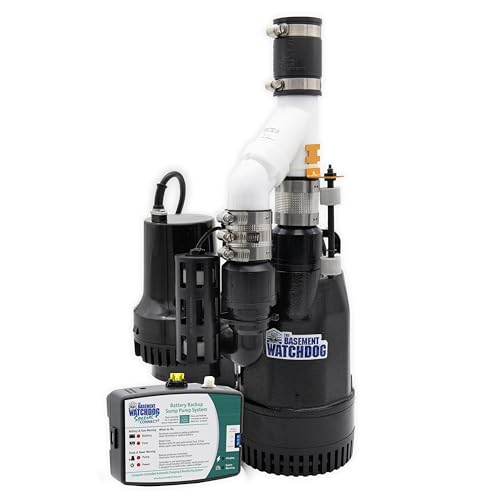
Basement Watchdog CITS-50 Preassembled Primary & Battery Backup Pump System with WiFi

GOLDENMATE 600VA/360W Lithium UPS, Gray
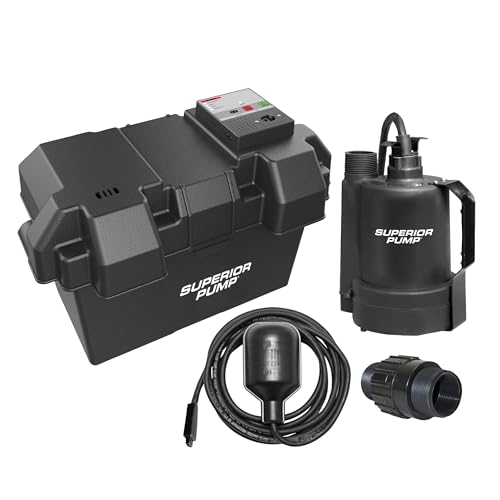
Superior Pump 92900 12V Backup Sump Pump
The Picks, Examined More Closely
The OLTEANP 2500W model gives a conventional AC-powered sump pump a higher inverter ceiling than the other OLTEANP systems in this list. Its pure sine wave output provides a smooth alternating-current waveform, while the automatic transfer switch moves the load to battery power after utility power stops.
That combination suits a homeowner with a larger pump or a finished basement where water needs prompt removal. The LCD remote adds visibility away from the pit, though you still need to confirm that the pump’s running and startup demands fit the inverter and electrical connections.
Good Reasons To Consider
- The 2500W rating provides more headroom than the 1500W and 2000W OLTEANP options.
- Automatic transfer keeps the pump operating without manual switching during an outage.
- The 25A charging rate supports faster battery replenishment during normal power.
- An LCD remote helps you check system status without standing beside the sump pit.
- Compatibility with 12V deep-cycle batteries suits common sump-pump power arrangements.
Small Caveats
- Confirm the pump’s startup surge, running draw, plug, and required recharge time before installation.
- The remote display and larger electrical package need adequate space near the sump pit.
Quick Facts
Who It Suits Best
This system suits homeowners with a higher-output sump pump who value remote status checks during outages.
Where Another Pick Suits Better
Basement Watchdog CITS-50 suits households wanting a preassembled primary pump and battery backup with integrated monitoring.
A basement that takes on water during storms is the setting for the ZETAWALE 2000W system. It keeps the pump supplied from the utility while charging its battery, then changes the power source automatically after an outage interrupts the grid connection.
The focus here is straightforward backup operation rather than an expanded control package. It makes sense for a standard AC sump pump in a home that needs dependable transfer without a separate remote display, provided the pump’s electrical needs remain within the system’s rating.
What Stands Out
- Automatic switching avoids manual intervention when utility power fails.
- Battery charging occurs during normal electrical service, preparing for the next outage.
- The 2000W rating sits between the smaller 1500W model and the 2500W OLTEANP system.
Points To Note
- Check startup current carefully, since inverter capacity alone does not guarantee pump compatibility.
- Plan the location around cable length, ventilation, and access to the battery and pump connections.
Feature Snapshot
Made For
This system fits homeowners with a conventional sump pump who prioritize automatic outage transfer and straightforward operation.
Consider Something Else When
OLTEANP 2000W Sump Pump Backup System with Pure Sine Inverter better serves you when remote monitoring and a more detailed feature set matter.
The lower 1500W rating makes this OLTEANP system a practical possibility for a sump pump with a more modest electrical load. It still provides pure sine wave output, 25A charging, automatic transfer, and a remote LCD, so the basic outage-control functions are not stripped away.
Compared with the 2500W model, the central decision is power headroom. Depending on your pump’s motor size and starting requirements, this lower-capacity version may suit a smaller installation, but checking the pump nameplate remains essential before you commit.
The Helpful Details
- Pure sine wave output provides smooth AC power for a compatible sump pump.
- Automatic transfer keeps water moving without a manual switch during the outage.
- The 25A charger helps restore battery charge once normal power returns.
- Remote status access is useful when the controller sits outside easy view.
Trade-Offs To Consider
- The 1500W ceiling offers less margin than the 2000W and 2500W alternatives.
- Deep-cycle battery compatibility requires matching the battery type and charging arrangement.
- Remote status access is useful when the controller sits outside easy view.
Right Fit For
This system suits owners of a lower-demand sump pump who want remote monitoring and automatic transfer without a larger inverter.
Not Your Match When
OLTEANP 2500W Sump Pump Backup System with Pure Sine Inverter suits you better when startup demand or power headroom is the priority.
The OLTEANP 2000W system lands between the 1500W and 2500W versions while retaining the same core feature set. Pure sine wave output, 25A charging, automatic switching, an LCD remote, and 12V deep-cycle compatibility make it a practical middle ground for a standard home sump pump.
For a household that wants monitoring without moving to the largest inverter, that balance is the honest advantage. The 2000W figure still needs to be compared with your pump’s startup draw, and the remote controller needs a practical mounting point near the pit.
Standout Benefits
- Offers a 2000W output class without dropping the pure sine wave inverter.
- Remote LCD monitoring reduces the need to visit the sump pit for status checks.
- Automatic transfer supports uninterrupted pumping during a power interruption.
- The 25A charging specification supports efficient battery replenishment.
Some Limits To Know
- It offers less capacity margin than the 2500W OLTEANP system.
- Installation still depends on proper pump compatibility, battery setup, and controller placement.
Technical Highlights
Who Will Love This
This model appeals to homeowners wanting a moderately sized inverter, remote status, and fast charging in one package.
A Better Fit Elsewhere
OLTEANP 2500W Sump Pump Backup System with Pure Sine Inverter better fits a pump setup that needs more inverter headroom.
Rather than adding backup power around an existing pump, the Basement Watchdog CITS-50 brings the primary and battery backup functions together. Its factory arrangement and plumbing reduce assembly work, while the 1/2 HP copper-wound PSC motor uses a permanent split capacitor design suited to continuous-duty pumping.
The monitoring controller tracks pump, power, and battery conditions, and the system supports WiFi through an add-on module. This makes it the most integrated choice here for a planned sump-pit installation where a homeowner wants both pumps and status monitoring in one coordinated setup.
Real Benefits
- The preassembled and preplumbed design reduces assembly work at installation.
- A copper-wound 1/2 HP PSC motor provides a defined primary pumping component.
- Controller monitoring covers pump, utility power, and battery status.
- WiFi capability adds remote visibility through the add-on module.
- Combining primary and backup pumps creates a more unified installation.
Practical Considerations
- The pit layout must accommodate the complete preassembled system and its discharge plumbing.
- Confirm the 1/2 HP pump matches your basin depth, discharge height, and drainage plan.
Core Details
Best Suited To
This system suits homeowners planning a new primary-and-backup sump installation with room for a complete preassembled setup.
Another Choice May Suit
OLTEANP 2000W Sump Pump Backup System with Pure Sine Inverter suits you better when you need to retain an existing pump.
A home office or finished basement can lose more than a sump pump during an outage. The GOLDENMATE 600VA/360W unit adds a small reserve for computers, network equipment, and other low-power electronics, but it is not designed to run a sump pump.
Its uninterruptible power supply, or UPS, switches connected equipment to an internal lithium iron phosphate battery. Five outlets, a metal housing, and a stated service life of more than 10 years with over 3,000 charge cycles make it a useful supplemental power device, just not a substitute for a pump-specific backup system.
Why It Works Well
- Provides a battery-backed outlet for smaller electronics during outages.
- The lithium iron phosphate battery supports the stated 10-plus-year service life.
- More than 3,000 stated charge cycles suit repeated backup use.
- Five AC outlets accommodate several low-power devices.
- Metal housing gives the unit a more substantial housing than a typical plastic power strip.
Where It May Fall Short
- The 360W output is not suitable for powering a conventional sump pump.
- Use it for electronics continuity rather than basement water removal.
Built With In Mind
This unit suits households that need a compact lithium power reserve for a router, computer, or other low-power electronics.
Reach For A Different Pick When
Superior Pump 92900 12V Backup Sump Pump suits you better when your priority is removing water during an outage.
The Superior Pump 92900 takes a different approach from the inverter-based systems: it is a battery-powered submersible pump in its own right. It moves up to 1,380 gallons per hour and lifts water as high as 25 vertical feet, giving you a separate pumping option that does not depend on an AC inverter.
A tethered float switch starts and stops the pump according to the water level, so you do not need a separate control box to operate it. The 10-foot power cord and tough thermoplastic body make it a practical direct-pumping choice for a sump pit with a suitable 12V battery arrangement.
Where It Excels
- Handles up to 1,380 gallons per hour for substantial water removal.
- Lifts water up to 25 feet vertically, covering deeper sump installations.
- The tethered float switch provides automatic start and stop operation.
- Thermoplastic construction suits harsh, damp pump environments.
- A 10-foot cord provides more placement flexibility within a sump pit.
Details To Watch
- Check pit depth and discharge height against the stated 25-foot lifting limit.
- Confirm the 1-1/4-inch or 1-1/2-inch NPT discharge connection matches your plumbing.
- The 10-foot cord must reach the intended battery and power arrangement.
The Numbers That Matter
The Right Fit
This pump suits homeowners with a 12V battery setup who want direct backup pumping rather than an AC-powered inverter system.
Where A Sibling Pick Shines
OLTEANP 2500W Sump Pump Backup System with Pure Sine Inverter suits you better when your existing AC pump needs automatic backup power.
What to Match Before You Buy
Start with the pump’s electrical requirements. A standard AC sump pump needs backup power that can reproduce its operating load and handle the higher current drawn at startup, while a 12V DC pump calls for a different kind of battery arrangement. Record the pump’s running watts, startup requirements, voltage, plug, and discharge details before selecting an inverter or standalone pump.
Battery type changes how the system works over time. Deep-cycle batteries are designed to provide repeated charge and discharge cycles, making them a practical match for outage protection. The battery’s reserve, charging requirements, and the sump pump’s duty cycle determine useful runtime, so a larger inverter does not automatically mean longer operation.
Automatic transfer is valuable during a storm because it removes the need to locate a switch after the lights go out. An automatic transfer switch moves connected equipment between utility power and battery power, but it still has to be wired to a compatible sump pump and supported battery system. Remote monitoring adds another layer of convenience, particularly in basements where the controller is not in plain sight.
Finally, consider the installation as a whole. Check the available space beside the pit, cable reach, ventilation, drainage height, and plumbing connections before ordering. A complete preassembled system can simplify a planned installation, while an inverter-based option may suit a household that already has a suitable primary pump.
Confirm the Power Type
AC-powered pumps require an inverter, whereas a 12V DC pump can run from a compatible battery arrangement. The pump’s nameplate and existing wiring reveal which route applies, and replacing the wrong type can leave you with an unnecessary system.
Account for Startup Demand
Running power alone does not tell the whole story. A motor can draw more current when it starts, so compare that requirement with the inverter’s capacity and allow suitable margin for the connected load.
Check the Charging Path
Automatic charging during normal power is useful, but the charger still needs a compatible battery type. Review the battery voltage, chemistry, connection, and recharge requirements before completing the installation.
Plan for Monitoring
An LCD remote or WiFi module helps you learn what is happening in the basement without making a trip to the pit. These controls are useful additions, but they work best alongside a pump and battery setup that fits the physical space.
Mistakes Worth Dodging
The most common error is judging only by inverter wattage. Startup demand, pump type, and battery configuration determine whether the setup can actually perform its job, so check the pump nameplate before ordering.
Another mistake is confusing a compact UPS with a sump-pump system. A small lithium UPS protects low-power electronics, while basement water removal requires a pump, battery, and transfer equipment sized for the task.
The Upgrade Payoff
Higher-tier systems can add remote status, faster charging, larger inverter output, or a complete primary-and-backup pump arrangement. Those additions matter most when a larger pump needs more capacity, the controller is difficult to reach, or you want fewer separate components in the sump pit.
A more capable system also makes sense when your pump’s startup requirements leave little room under a smaller inverter. The extra capability is less useful when the existing pump is modest and the installation is straightforward.
Frequently Asked Questions
Do I need a backup battery for a sump pump?
A backup battery provides continued water removal after utility power fails, especially in flood-prone basements. It is most useful in homes where a stopped pump could damage finished spaces or stored belongings.
Can a battery backup system run my existing sump pump?
Many inverter-based systems can operate a compatible AC pump, but you must verify voltage, running power, startup current, and plug requirements. A 12V DC pump requires a different battery-powered approach.
Are deep-cycle batteries necessary for sump-pump backups?
Deep-cycle batteries suit repeated charging and discharging, which matches outage-protection use. Battery capacity and the pump’s power draw determine how long the system can run during an extended outage.
How long will a backup sump pump run during an outage?
Runtime depends on battery reserve, pump load, water conditions, and outage duration. A larger inverter rating adds power capacity, but it does not determine battery runtime by itself.
Can the GOLDENMATE 600VA/360W Lithium UPS run a sump pump?
No, that 600VA/360W UPS is intended for smaller electronics rather than sump-pump motors. Choose a pump-specific system or a compatible 12V battery backup pump for water removal.
Closing Thoughts
The right backup system starts with your existing pump, not the feature list. Match the power type and startup demand first, then decide whether automatic transfer, remote monitoring, or a complete pump combination fits your basement and installation plans. That decision keeps the focus on dependable water removal rather than unnecessary complexity.