
A home barometer can make changing weather easier to anticipate, especially when you want to plan garden work, watch pressure trends, or keep an eye on conditions outside without checking a phone. The right console depends on how much detail you want, whether Wi-Fi access matters, and whether wind or rainfall measurements justify adding an outdoor sensor array.
Quick View Of The Lineup
A Quick View Of The Lineup
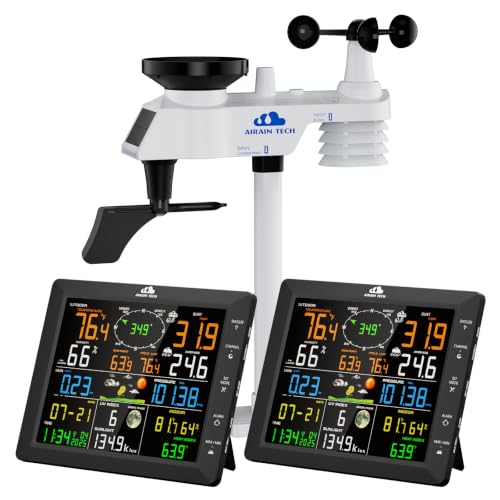
AIRAIN TECH Wireless Weather Station with Dual Displays

LIORQUE Wireless Indoor-Outdoor Weather Station

AIRAIN TECH Wireless Weather Station with Rain Gauge
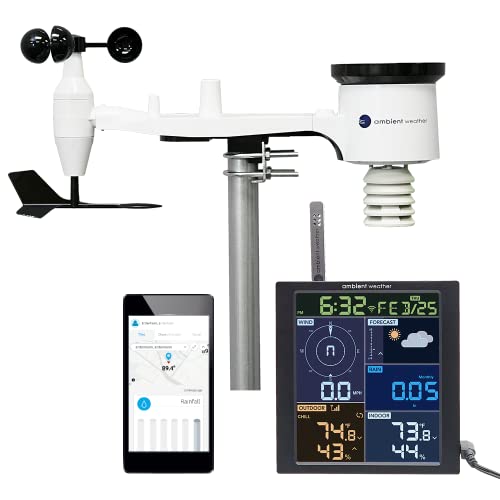
Ambient Weather WS-1965 Wi-Fi Weather Station

Newentor Wireless Indoor-Outdoor Thermometer
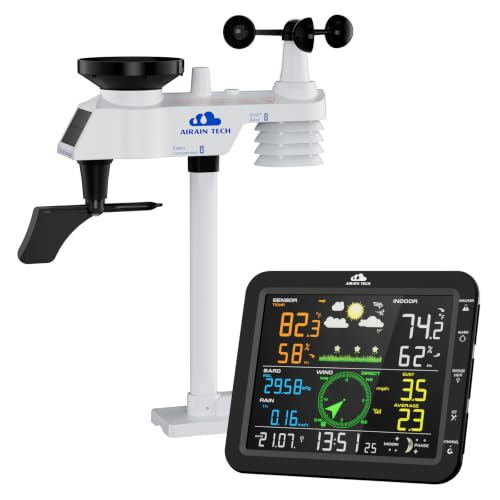
AIRAIN TECH Wireless Weather Station with Rain Gauge
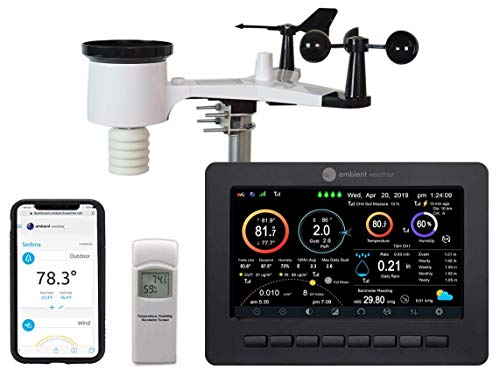
Ambient Weather WS-2000 Smart Weather Station
More Details On Our Top Picks
Two displays give this AIRAIN TECH station a practical advantage over the single-screen designs elsewhere in the lineup. The larger 8.5-inch console puts the main readings in easy view, while the second display can make additional details easier to check from another position in a kitchen or garden room.
For most backyards, the outdoor sensor package is the reason to consider it. Barometric pressure, rainfall, wind, indoor conditions, and an atomic clock cover the needs of someone who wants one console to handle home comfort and outdoor planning.
A Few Strong Suits
- Dual displays reduce the need to scroll through one crowded screen.
- The outdoor package measures rain, wind speed, and wind direction.
- Temperature readings span -40°F to 140°F with stated accuracy of ±2°F.
- Wind chill and dew point calculations add useful context for outdoor plans.
- The 8.5-inch display suits a wall, desk, or covered outdoor area.
Practical Considerations
- The outdoor components require suitable placement away from direct exposure and obstructions.
- Its feature density may make the interface more complex than a basic indoor-outdoor station.
At A Glance
Made For
You will get the most from this model in a home that values separate, glanceable displays and broad outdoor measurements.
A Better Fit Elsewhere
The Ambient Weather WS-1965 Wi-Fi Weather Station suits you better when remote access and smart-home automation matter more than dual displays.
The LIORQUE station focuses on the basic routine of checking conditions in two places. Its wireless outdoor sensor and indoor display suit a kitchen, office, or porch where you mainly want temperature and humidity without a large collection of separate instruments.
Power placement also feels flexible. An adapter supports continuous viewing with adjustable brightness, while battery operation turns the screen off after a brief button press, which can reduce visual clutter and energy use.
A Favorable Mix
- Wireless remote sensing removes the need for a cable between the indoor and outdoor units.
- Four brightness levels make the display easier to tune for day or night.
- Adapter and battery options let you decide between continuous viewing and a cleaner display.
A Few Limitations
- Barometric pressure is not identified in the available feature list, so confirm that readout before choosing it for pressure tracking.
- The listed sensor package is narrower than the rain and wind systems offered by several other picks.
Right Fit For
This model suits you best when indoor-outdoor temperature monitoring and simple power choices matter more than a full backyard instrument suite.
Look Elsewhere When
The Newentor Wireless Indoor-Outdoor Thermometer is a better fit when you want a larger color display with forecasts, barometric pressure, and records in one console.
This AIRAIN TECH model balances a compact 6.5-inch color console with a fairly complete outdoor system. Rainfall, wind, barometric pressure, and indoor readings come through one wireless setup, making it a sensible middle ground between a basic station and the dual-display model.
For a garden or patio, the mix of pressure trends, forecast information, moon phase, and an atomic clock gives you several ways to make sense of daily conditions. The smaller screen may take a little more attention than the 8.5-inch alternative, depending on where you place it.
The Practical Payoff
- Rain and wind readings support decisions about watering, outdoor work, and patio use.
- The color LCD presents the main conditions on a manageable 6.5-inch screen.
- An atomic clock keeps time corrections automatic.
- Wind chill and dew point readings provide useful context when temperatures fall.
Trade-Offs To Consider
- Several outdoor instruments need proper placement and a clear path for wind and rain readings.
- The display is smaller than the AIRAIN TECH dual-display station.
- Wireless operation depends on keeping the console and outdoor sensor within range.
Quick Facts
Who It Suits Best
You will appreciate this station in a garden setting where one compact console needs to cover pressure, rain, wind, and household conditions.
Where A Sibling Pick Shines
The AIRAIN TECH Wireless Weather Station with Dual Displays suits you better when maximum readability across two separate screens matters more than console size.
Wi-Fi changes how a weather station can be used, and the Ambient Weather WS-1965 takes that route. Its all-in-one outdoor array measures temperature, humidity, pressure, wind, and rainfall, while the color console keeps the readings close at hand.
For a connected home, remote access is the decisive benefit. You can set weather-based alerts and connect data to services such as IFTTT or Google Home, which is more flexible than relying only on readings shown on the physical display.
What It Does Well
- Wi-Fi supports remote monitoring instead of limiting you to the console.
- The integrated sensor array combines several backyard measurements in one package.
- Sixteen-second updates keep changing conditions visible with less delay.
- Smart-home integration lets you create condition-based routines and alerts.
Details To Watch
- You need a suitable Wi-Fi connection and compatible smart-home services for connected features.
- Placement remains important for accurate wind and rainfall measurements.
Feature Snapshot
Built With In Mind
This station is built for you when you want remote weather access, automated alerts, and a connected home rather than a standalone console.
Another Choice May Suit
The Ambient Weather WS-2000 Smart Weather Station suits you better when UV and solar radiation readings would add value to your outdoor monitoring.
The Newentor console is built around information you can use every day rather than a large outdoor instrument system. A color LCD combines indoor and outdoor temperature, humidity, barometric pressure, high and low records, time, and an alarm in one display.
Its weather forecast and moon phase add a bit more context, while the single outdoor sensor keeps the setup easier to manage. In a kitchen or home office, that balance can be more useful than carrying wind and rain hardware you never check.
A Strong Showing
- The color display presents several household readings clearly in one place.
- Daily high and low records help you compare indoor comfort across the day.
- Customizable alerts make it easier to notice important changes.
- Alarm, snooze, forecast, and moon phase functions broaden the console beyond temperature alone.
Less Ideal Details
- The single outdoor sensor provides less detail than the rain-and-wind packages in this lineup.
- Remote viewing is not part of the stated feature set.
The Right Fit
You will like this station most in a kitchen, bedroom, or office where pressure trends, comfort records, and household features matter more than remote access.
Consider Something Else When
The LIORQUE Wireless Indoor-Outdoor Weather Station is a better fit for you when adjustable brightness and flexible power operation are your main priorities.
The 7.5-inch display gives this AIRAIN TECH station a strong readability advantage over the more compact units in the group. You can check pressure, indoor conditions, wind, and rain without moving through several small screens, which helps during changing weather.
Its Swiss temperature and humidity sensors are specified across a broad range, with ±2°F temperature accuracy and ±5% humidity accuracy. For most homes, the practical question is whether the outdoor array earns its additional installation work compared with a basic indoor-outdoor model.
The Value In It
- The 7.5-inch display offers clear visibility for several simultaneous readings.
- Rain, wind, and pressure measurements provide a useful backyard weather profile.
- Wide temperature and humidity ranges suit seasonal monitoring.
- Wind chill and dew point calculations add useful planning context.
- Moon phase and forecast information round out the daily display.
Some Limits To Know
- Outdoor installation requires a location that exposes the sensors to representative conditions.
- The console has no Wi-Fi connectivity, so remote viewing requires a separate solution.
Core Details
Whose Shelf It Belongs On
This station belongs in a home office, covered patio, or utility room where you want a large local display and a complete outdoor sensor suite.
Reach For A Different Pick When
The Ambient Weather WS-1965 Wi-Fi Weather Station suits you better when remote access and automated home routines are central to your setup.
The Ambient Weather WS-2000 goes further than most of the standalone stations by adding UV and solar radiation measurements. That makes it more relevant for people who track sunlight exposure, plant conditions, or the changing intensity of summer weather.
The TFT color console also supports imperial and metric units with calibration available for the measurements. Wi-Fi connectivity gives you a path to remote data, while the integrated outdoor array handles wind, rain, temperature, and humidity in one package.
Benefits That Matter
- UV and solar radiation readings extend the station beyond standard temperature monitoring.
- The integrated array combines wind, rainfall, temperature, humidity, and light information.
- Imperial and metric support makes the console adaptable to different household preferences.
- Calibration options provide a way to adjust readings against your local reference.
- Wi-Fi connectivity supports remote data access.
Potential Compromises
- The full sensor array requires careful outdoor placement and a compatible network connection.
- Several advanced measurements may exceed what a basic indoor comfort check needs.
Important Details
Made For
You will get the most from this model in a garden or weather-focused home that benefits from UV, solar, rainfall, and wind measurements.
Swap It Out When
The Newentor Wireless Indoor-Outdoor Thermometer suits you better when you need household records and comfort readings without a full outdoor array.
What To Prioritize Before Buying A Home Barometer
Pressure Trend Versus Forecast Display
Barometric pressure is the atmospheric pressure recorded by the station. A pressure trend shows whether that value is rising, falling, or holding steady, which can help you notice changing weather without expecting a precise event prediction. Check that the display explains the trend clearly.
Indoor And Outdoor Sensor Placement
Indoor temperature and humidity readings depend on where the console sits. Avoid direct sunlight, heaters, vents, and kitchen steam, since each can distort the result. Outdoor sensors also need an open location that represents conditions around your home.
Wireless Range And Connectivity
A wireless connection gives you freedom in placement, but walls and floors can reduce range. Wi-Fi models need a stable network and compatible services for remote access. Standalone stations avoid that setup and work directly from the console.
Screen Size And Daily Readability
A large display helps with frequent checks, especially for wind, rain, and pressure details. Smaller color screens can still work well on a desk. Consider night visibility, button controls, and how much information appears on each screen.
Outdoor Instrument Scope
Rain gauges, wind sensors, UV readings, and solar radiation sensors serve different purposes. A basic indoor-outdoor station may suit a kitchen, while a garden or weather-focused home benefits from a broader outdoor array.
Common Mistakes Worth Avoiding
Mistakes Worth Dodging
Choosing by feature count alone can leave you with instruments you rarely use. Focus on the readings you need, the space available for the sensors, and the placement of the console. A pressure-focused home may need much less hardware than a garden exposed to direct sun and wind.
Why Top Tier Costs More
Higher-tier models add capabilities such as Wi-Fi, larger displays, more sensors, and calibration controls. The upgrade pays off when you want remote monitoring, automated routines, detailed outdoor records, or a screen you can read from across a room. A basic indoor-outdoor model remains sensible for simpler routines.
Frequently Asked Questions
What Is A Barometer For Home Use?
A home barometer measures atmospheric pressure and often shows its trend over time. It can help you notice changing weather conditions around the house, especially when paired with temperature, humidity, wind, and rainfall readings.
Do I Need Wi-Fi For A Home Weather Station?
You need Wi-Fi for remote viewing, smart-home routines, and connected alerts. A standalone station works without it and keeps all readings on its console, making it a simpler choice for local monitoring.
Is A Larger Weather Station Display Better?
A larger display can make several readings easier to check at once. Its value depends on viewing distance and available space, so consider where the console will sit before deciding between compact and large screens.
Where Should An Outdoor Weather Sensor Go?
Place the outdoor sensor in an open area that represents the conditions around your home. Keep it away from obstructions, direct roof runoff, and heat sources that could distort wind, temperature, or rainfall readings.
Can A Home Barometer Replace A Forecast?
A barometer shows pressure trends and related local readings, which can provide useful context. It does not replace official forecasts or explain every weather event, so use it as one part of your planning information.
Final Verdict
Your best fit depends on what you need to monitor. The Newentor offers a focused household console, the Ambient Weather models add connected features, and the AIRAIN TECH stations provide broader outdoor measurements with large, readable displays. Choose based on your space, sensor needs, and desire for remote access.