
A bedroom divider wall can turn one crowded room into two functional spaces without permanent construction. Curtains work well for lightweight, flexible privacy, while folding screens provide a sturdier visual boundary for dorms, apartments, home offices, and shared sleeping areas.
Your Options, Compared

Sanceor Inherent Flame-Retardant Hospital Room Divider Curtain 5 x 8 ft Beige

HOMCOM 3-Panel Folding Divider
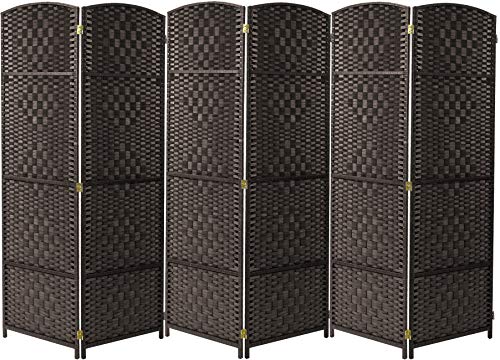
Sorbus 6-Panel Double-Hinged Diamond-Weave Room Divider, 6 ft Tall, Espresso

Sorbus 8-Panel Mesh Divider

Sanceor Flame-Retardant Hospital Curtain 5 x 8 ft Blue with Mesh Privacy
Sanceor 15 x 8 ft Beige Flame-Retardant Hospital Curtain with Grommet

Sanceor 9 x 8 ft Brown Flame-Retardant Hospital Curtain with Grommet
Taking A Closer Look At The Options
A fabric partition makes more sense than a rigid screen when your priority is simple privacy with minimal visual weight. This beige 5-by-8-foot curtain uses inherent flame-retardant material and includes a mesh upper section, making it suitable for separating a sleeping area from a desk, bed, or treatment space.
For most apartments, the 5-foot width is a practical starting point, although wider openings may need overlapping panels. The grommet heading gives you a straightforward hanging point, and the included hooks reduce the need for additional curtain hardware.
The Case For It
- The 8-foot drop gives you a full-height-looking division while remaining easy to reposition.
- Mesh privacy softens visibility, which suits a shared room better than a completely solid barrier.
- The beige finish blends naturally with light-colored bedding and neutral furnishings.
- Flame-retardant fabric serves facilities and homes that value specialized material properties.
Small Caveats
- A single 5-foot panel may not cover a broad opening without leaving a visible edge.
- You need a suitable overhead support, and the fabric can move as people pass through.
Key Specs
Made For Shared Rooms
You benefit most in a bedroom, dorm, clinic, salon, or small apartment where flexible privacy matters more than a permanent wall.
A Better Fit Elsewhere
The HOMCOM 3-Panel Folding Divider suits you better when you prefer a freestanding decorative screen that does not depend on ceiling hardware.
The HOMCOM divider separates a sleeping zone from a workspace without drilling into the wall, which makes it especially useful in rented apartments. Its natural wood finish and palm-leaf styling give the room a decorative accent rather than making the partition feel purely functional.
Unlike the Sanceor curtain, this screen stands by itself. The detachable top and bottom sections can also create two separate screens, so you can divide more than one area or fold the structure for storage. You may find that arrangement particularly useful in a studio.
Features That Help
- Three connected panels create a wider partition than a single freestanding board.
- Detachable top and bottom sections support different room configurations.
- The tropical palm motif adds pattern without demanding a full room renovation.
- No ceiling track is needed, making setup and repositioning more straightforward.
Practical Considerations
- Its open footprint requires enough floor space to unfold the panels.
- Folded sections still need a storage place when the divider is not in use.
Feature Snapshot
Built With Apartments In Mind
This divider fits you best when you need movable privacy in a studio, home office, apartment, or compact living room.
Consider Something Else When
The Sanceor Inherent Flame-Retardant Hospital Room Divider Curtain 5 x 8 ft Beige offers a lighter boundary for people who prefer hanging privacy over a freestanding screen.
The espresso screen brings a warmer, furniture-like finish to a room divider than the neutral curtain options. Diamond double-weaving adds texture and visual weight, so this partition works well when you want the divider to become part of the decor rather than disappear into the room.
Six double-hinged panels let you change the screen’s angle and coverage. The 6-foot height is a meaningful step up from many low folding screens, although the top will remain open in a room with taller ceilings.
A Few Highlights
- Six panels offer a broad boundary for separating a guest sleeping area.
- Double hinges provide more placement options than a fixed three-panel board.
- The espresso color and woven pattern complement darker wood furniture.
- At 6 feet tall, the screen creates a noticeable division without reaching the ceiling.
Details To Watch
- You may need two screens or a carefully placed one to divide a particularly wide sleeping zone.
- The textured design is more visually prominent than a mesh partition, which may suit some rooms better than others.
Technical Highlights
Where It Belongs
This screen suits you best in a living room, guest room, studio, or open-plan home where a decorative freestanding divider is welcome.
Look Elsewhere When
The Sorbus 8-Panel Mesh Divider suits you better when you want a wider configuration that preserves more light and visual openness.
Eight panels make the Sorbus mesh screen a practical fit for a studio where a bed and desk share the same footprint. You can fold it into a narrower shape near a wall or extend it across a larger portion of the room, depending on the furniture arrangement.
Compared with the Sorbus 6-Panel Double-Hinged Diamond-Weave Room Divider, this model has two additional panels and uses open mesh construction. The result feels visually lighter, which can work better in a compact apartment where a solid-looking screen might make the room feel enclosed.
What Pays Off
- Eight hinged panels offer greater coverage than a conventional three-panel divider.
- Mesh allows light and some visual detail to pass through the boundary.
- The 6-foot height provides useful separation for desks and sleeping zones.
- Black mesh coordinates easily with metal furniture and dark office accessories.
Worth Noting
- Open mesh offers less visual screening than a dense curtain or woven screen.
- The extended shape needs sufficient floor space when you unfold all eight panels.
Right Fit For Studio Living
You benefit most in a studio, dorm, home office, or apartment where a light visual boundary and adjustable coverage are the main priorities.
Where A Sibling Pick Shines
The Sorbus 6-Panel Double-Hinged Diamond-Weave Room Divider, 6 ft Tall, Espresso suits you better when privacy and decorative texture matter more than an open mesh appearance.
Blue brings a clearer visual accent to the Sanceor curtain line, while the mesh section softizes the boundary without closing the room off completely. It is a practical divider for a shared bedroom, a salon, or a clinic area where you want separation with a lighter appearance.
The 5-by-8-foot panel matches the scale of the beige Sanceor option, so your main decision comes down to color and the presence of mesh privacy. For a coordinated home, blue can stand out more clearly against neutral walls, depending on your furnishings.
Practical Pluses
- Mesh privacy provides a softer screen than a completely solid curtain.
- The blue color creates a noticeable accent in an otherwise neutral room.
- A single 8-foot panel can divide a bed, treatment table, or compact work area.
- Flame-retardant fabric suits clinical, salon, and institutional environments.
Less Ideal Details
- A wider room may require another curtain to create continuous coverage.
- The hanging hardware and ceiling support must match the grommet style and panel weight.
Core Details
Who Will Love This
This curtain is a strong match for shared bedrooms, treatment spaces, salons, and dorms that need a colorful but nonpermanent divider.
Reach For A Different Pick When
The Sanceor 9 x 8 ft Brown Flame-Retardant Hospital Curtain with Grommet gives you more width when a 5-foot panel leaves too much of the room exposed.
A 15-foot curtain panel changes the scale of a room divider, allowing one continuous span where a 5- or 9-foot panel would leave more of the opening visible. This makes the beige Sanceor model relevant to larger bedrooms, clinic areas, and temporary sleeping zones.
You still receive the same 8-foot curtain height and grommet-based suspension used by the narrower versions. The trade-off is installation: a wider panel needs a long, straight track and evenly distributed support to hang properly.
Strengths Worth Knowing
- The 15-foot width can cover a broad sleeping or treatment area with one panel.
- Beige fabric stays visually neutral in clinical or residential settings.
- Flame-retardant material serves facilities with specialized fabric needs.
- The 8-foot length gives more vertical separation than a low folding screen.
Trade-Offs To Consider
- You need enough uninterrupted track length to accommodate the full panel width.
- A wider curtain takes more space to open, pull aside, and store.
For Larger Shared Areas
This panel suits you best in a large bedroom, dormitory, clinic, salon, or temporary care area that needs wide coverage.
Swap It Out When
The HOMCOM 3-Panel Folding Divider fits you better when you want a freestanding partition that can be folded away without operating a ceiling track.
The 9-foot width places this brown curtain between the compact 5-foot Sanceor panels and the 15-foot wide option. That middle range works well for separating a bed from a desk, creating a dressing area, or dividing a room without making the partition look excessively broad.
Brown gives you a warmer alternative to beige or blue, especially with wood furniture and neutral walls. The panel is sold on its own, so you can judge whether one curtain provides enough coverage or plan a coordinated pair for a wider opening.
The Upside
- The 9-foot width covers more of a room opening than a 5-foot curtain.
- Warm brown coordinates easily with wood tones and earthy decor.
- A single-panel format keeps the room boundary clean and uncomplicated.
- Flame-retardant fabric works well in medical, dormitory, and salon settings.
Where It May Fall Short
- One panel may still leave an opening exposed in a wide sleeping area.
- The deep brown shade may feel stronger than the neutral colors in your room.
Quick Facts
Made For Warm, Practical Rooms
This curtain suits you best in a bedroom, dorm, clinic, salon, or treatment space with warm furnishings and a medium-width separation need.
Another Choice May Suit
The Sanceor Flame-Retardant Hospital Curtain 5 x 8 ft Blue with Mesh Privacy fits you better when you want greater visual openness and a brighter accent color.
Match the Divider to Your Space
Start with the room layout
Measure the opening, nearby furniture, and walking paths before choosing a format. A folding screen needs room to unfold, while a curtain needs a straight overhead track and enough width to create the intended coverage.
Decide how much privacy you need
A solid fabric or tightly woven screen creates a clearer visual boundary. Mesh curtains and screens soften the view while keeping the room visually open, which works well for shared bedrooms and studios.
Match the style to the room
Natural wood and palm leaves create a warm, decorative accent, while espresso diamond weaving feels more substantial. Blue, beige, and brown curtains offer different levels of contrast against walls, bedding, and furniture.
Practical Details That Shape the Choice
Mistakes Worth Dodging
Choosing by color alone can leave you with the wrong scale, so measure first. Check ceiling support and floor clearance as well, since a curtain and a freestanding screen require different space to operate.
What Separates Specialized From Basic
Specialized curtains use flame-retardant material and specialized privacy construction, while higher panel counts create broader folding coverage. The added material and engineering matter when a facility, dormitory, or open-plan room needs a more specific boundary.
Frequently Asked Questions
Is a curtain or folding screen better for a bedroom?
A curtain suits you better when you want flexible, lightweight privacy that can be drawn aside. A folding screen suits you better when you prefer a freestanding decorative barrier that can be repositioned across different areas.
Do bedroom divider curtains block all light?
Curtains with mesh privacy sections allow some light and visual detail through, depending on the construction. A tightly woven folding screen or solid fabric panel creates a more distinct visual boundary.
What does flame-retardant material mean?
Flame-retardant material is designed to slow ignition or reduce burning behavior under heat exposure. You should still follow applicable building, workplace, and facility requirements when selecting a divider.
How wide should a bedroom divider be?
Choose a width that covers the section you want to conceal while accounting for gaps at the sides. Two coordinated panels can provide broader coverage, but each opening also needs a suitable track and support system.
Which divider works best in a small room?
The HOMCOM 3-Panel Folding Divider fits compact rooms well because you can change its configuration and fold it away. The Sorbus 8-Panel Mesh Divider offers a wider boundary while maintaining a light, open appearance.
Final Verdict
The best bedroom divider wall depends on your room, privacy needs, and tolerance for installation. Curtains provide adaptable, lightweight separation, while folding screens bring more structure and decorative character. Measure the space first, then choose the format that works with your furniture and daily movement.