
A document drawer beside the desk is convenient until a fire, flood, or break-in turns that ordinary storage into a liability. The right home safe balances usable capacity, dependable access, and protection suited to the room, whether you need to secure documents, jewelry, cash, or a firearm.
Capacity and fire resistance deserve different amounts of attention. A compact model can sit discreetly in a bedroom closet, while a larger safe needs a deliberate location and a realistic plan for moving it. Reviewing these eight options helps you narrow the field without paying for features your routine will never use.
A Snapshot Of The Selections

WASJOYE Biometric Safe Box 5.0 Cu Ft

Steelwater AMSWFB-450 2-Hour Safe
SentrySafe SFW205GQC Gray Steel Digital Safe
Steelwater AMSWFB-450 2-Hour Safe
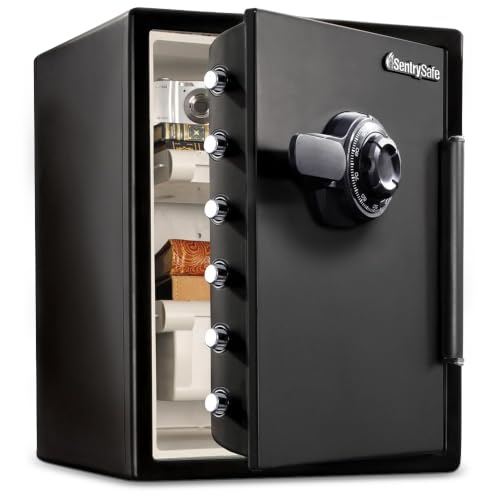
SentrySafe SFW205CWB Black Dial Floor Safe

ToruKeep 8.0 Cu Ft Biometric Heavy-Duty Safe

Psisuvry 1.3 Cu Ft Digital Fire Safe Box

Psisuvry 1.8 Cu Ft Digital Fireproof Safe
More Details On Our Top Picks
A jewelry tray and several document folders quickly fill a small safe, so the WASJOYE’s 5.0-cubic-foot volume makes it a practical middle ground for a home office or bedroom. Its fingerprint reader suits a household that prefers quick access without fumbling for a dial, although you should measure the intended cabinet or closet space first.
Unlike the simpler Psisuvry boxes later in this list, the WASJOYE combines fingerprint access with a programmable code, key override, and Type-C emergency entry. That makes it a stronger fit for mixed-use storage, assuming everyone who needs access can be registered reliably.
Key Advantages
- Fingerprint reader stores up to 20 prints for regular household access.
- Five cubic feet accommodates document stacks alongside jewelry.
- Key and code overrides provide backup entry routes.
- A removable shelf lets you divide bulky and flat contents.
Things To Consider
- The listed dimensions require a substantial storage location rather than a small drawer.
- Electronic access means keys, codes, and fingerprints need coordinated family management.
Key Specs
Who It Suits Best
This safe suits households storing both valuable documents and frequently accessed jewelry who want fingerprint entry plus mechanical and electronic fallbacks.
Where Another Pick Suits Better
Choose the SentrySafe SFW205GQC instead when a keyed floor-safe format and interior lighting suit your documents better than biometric entry.
The Steelwater AMSWFB-450 focuses on a narrow but serious need: secure firearm storage with a two-hour fire rating. Its 1.25-inch active locking bolts and glass relocker are aimed at resisting forced-entry techniques, making it more purpose-specific than the general document safes in this roundup.
The cabinet format can suit a home office or secure room, but placement matters in practice. You gain little from locating it beside an easy-access doorway, so think through the route from the room to its final position before arranging installation.
Noteworthy Benefits
- A two-hour rating provides a longer stated fire-protection window than several residential models.
- Two active locking bolts reinforce the door against prying attempts.
- A glass relocker adds another barrier against drilling or punching.
Practical Considerations
- The specialized construction makes more sense for firearm and related-value storage than for loose household papers.
- Confirm the cabinet fits your intended secure-storage location and that its placement meets applicable local rules.
Made For
This model is made for firearm owners who prioritize a stated two-hour fire rating and multiple mechanical barriers over fingerprint convenience.
Consider Something Else When
Choose the SentrySafe SFW123GDC when you also need a defined waterproof rating, programmable keypad, and room for documents.
Reaching for documents after dark is easier with an interior light, which gives the SFW205GQC an advantage over the dial-based SentrySafe later in the list. Its digital keypad also suits shared access better than a single mechanical combination, provided everyone uses the code consistently.
Fire and water protection make this a sensible residential safe for records, digital media, and small valuables. The gray steel body and pry-resistant hinge bar add physical security without the biometric learning curve attached to the WASJOYE.
Well-Handled Touches
- Interior lighting helps you locate papers and small items.
- Water protection adds useful coverage in flood-prone rooms.
- Door tray and pocket keep smaller items organized.
- A key rack keeps backup keys with the safe.
Small Caveats
- A floor-safe format takes up a fixed location and may not suit a shelf or closet with limited depth.
- Shared keypad access calls for clear code practices in a busy household.
Feature Snapshot
Right Fit For
This safe fits households that want a floor-level document safe with digital access, interior lighting, and both fire and water protection.
Not Your Match When
The ToruKeep 8.0 Cu Ft Biometric Heavy-Duty Safe offers more capacity and a removable partition for bulkier office storage.

Water exposure is often overlooked when choosing a home safe, yet it can damage paper records and electronics quickly. The SentrySafe SFW123GDC adds a stated 24-hour water-protection level under eight inches of water, giving it broader emergency coverage than the similarly compact Psisuvry options.
Its alloy-steel exterior, programmable keypad, and one-hour fire classification make it a practical choice for irreplaceable documents. The exterior is nearly 20 inches tall, so measure furniture openings before deciding on a home office or bedroom position.
Good Reasons To Consider
- The stated water protection suits basements and flood-exposed storage areas.
- Programmable keypad entry supports regular use without a mechanical dial.
- Alloy steel provides a rigid body around your documents.
Trade Offs
- Its 1.23-cubic-foot interior holds less than the SentrySafe floor safes in this roundup.
- Document folders may need careful stacking to use the narrow interior efficiently.
Technical Sheet
Best Suited To
This model suits you well if you keep irreplaceable papers in a compact space and place greater importance on water protection than biometric entry.
Look Elsewhere When
Choose the Psisuvry 1.8 Cu Ft Digital Fireproof Safe when a larger internal volume matters more than the stated fire and water classifications.
The SFW205CWB takes the mechanical route, using a dial combination rather than a keypad or fingerprint reader. That simplicity can be valuable in a home office where you want dependable access without managing electronics or remembering a personal code.
Its 2.05-cubic-foot capacity equals the SFW205GQC, but the black finish and dial give this model a different character. Six one-inch bolts and a pry-resistant hinge bar support physical security for documents and small valuables.
The Helpful Details
- A mechanical dial avoids electronic access and power-management concerns.
- The 2.05-cubic-foot interior holds a useful document collection.
- Six large bolts reinforce the door against prying.
- Fire and water classifications suit general home storage.
Points To Note
- You must remember and privately record the combination.
- The dark finish blends into dim storage areas more than the gray SFW205GQC.
Who Will Love This
This safe suits anyone who prefers a straightforward mechanical lock and wants substantial home document capacity without fingerprint hardware.
A Better Fit Elsewhere
The SentrySafe SFW205GQC is a better fit for shared access because its digital keypad and interior light make entry and item retrieval more convenient.
Eight cubic feet changes the scale of home storage, giving you room for hanging files, archive boxes, and valuables that would overwhelm the 2.05-cubic-foot SentrySafe models. A removable partition helps divide the large interior into useful sections.
Fingerprint access handles routine retrieval, while the keypad, two physical keys, and Type-C emergency connection provide several alternate routes. At a listed 120 pounds, however, this is a stationary safe, and planning its final location before delivery will make a meaningful difference.
Real Benefits
- The large interior supports records, archives, and mixed valuables.
- One-touch fingerprint access suits frequent use.
- Multiple backup methods reduce dependence on one entry credential.
- A 240-degree door swing improves access to the interior.
Details To Watch
- The 120-pound weight calls for at least two people and a clear delivery path.
- Type-C emergency access needs a compatible cable and power source nearby.
Quick Facts
Built With In Mind
This safe is built for a home office managing extensive files, boxed records, and frequent access through fingerprint entry.
Skip It When
Choose the Psisuvry 1.3 Cu Ft Digital Fire Safe Box instead when a light, discreet safe must fit inside a drawer, closet, or under-bed space.
A small safe can be more practical than a large one in a bedroom, dorm, or hotel-style room where floor space is limited. The Psisuvry 1.3-cubic-foot box measures 9.84 inches high and deep by 13.78 inches wide, giving you a more discreet storage footprint than the floor-oriented SentrySafe models.
SPCC steel forms the body, while a digital keypad, spare keys, and a removable shelf cover the essentials for cash, jewelry, passports, and identity documents. It works best for a focused collection rather than a full archive.
A Favorable Mix
- The compact dimensions support discreet placement.
- SPCC steel gives the body a rigid enclosure.
- Digital and keyed entry provide two access styles.
- The removable shelf separates smaller valuables.
Some Limits To Know
- The 1.3-cubic-foot interior is better for essentials than large files.
- Confirm that your chosen drawer, shelf, or cabinet can handle the weight and leave the door room to open.
The Right Fit
This model fits you well if you want a light, compact safe for passports, cash, jewelry, and everyday identity documents.
Another Choice May Suit
The Psisuvry 1.8 Cu Ft Digital Fireproof Safe offers more internal room for flat documents and a thicker reinforced door.
The 1.8-cubic-foot Psisuvry safe adds useful capacity to the compact format, making it a middle ground between the 1.3-cubic-foot model and the larger SentrySafe floor safes. It suits an apartment, home office, or bedroom where you need more than a cash box without dedicating eight cubic feet.
Physical construction is the distinguishing point: three 20-millimeter locking bolts, a 45-millimeter reinforced door, concealed hinges, and a powder-coated finish support regular use. The digital keypad and spare keys give you familiar access options, while the removable shelf helps organize papers.
Useful Highlights
- Three locking bolts reinforce the door against prying.
- The thick reinforced door adds substantial rigidity.
- Concealed hinges complicate access to internal fasteners.
- Powder coating resists scratches, stains, and surface rust.
Trade-Offs To Consider
- Its reinforced construction contributes more weight than the smaller Psisuvry box.
- Keep spare keys in a separate, secure place rather than beside the safe.
At A Glance
Whose Shelf It Belongs On
This safe belongs in a small apartment or office where you need a reinforced cabinet, digital keypad, and room for important flat documents.
Reach For A Different Pick When
Choose the ToruKeep 8.0 Cu Ft Biometric Heavy-Duty Safe instead when your records require much more space and fingerprint access.
What Matters Before You Commit to a Home Safe
Start with the contents you need to protect
A small jewelry box, a document binder, and an archive cabinet create completely different storage demands. Measure the items before judging cubic-foot capacity, because a nominal volume does not reveal how many letter folders, binders, or document boxes will fit without crushing their contents.
Match protection to the likely emergency
Fire, water, and theft are separate concerns, and each safe addresses them differently. A longer fire rating helps in a house fire, while a stated water-protection level becomes more relevant in a basement or flood-exposed room. Confirm the protection claims and dimensions that correspond to your actual location.
Treat access as part of the security plan
Biometric entry is convenient, a keypad suits shared access, and a mechanical dial avoids electronics entirely. Consider who needs access, how many backup credentials you can manage, and whether a forgotten code or unavailable fingerprint would leave you with a reliable way inside.
Leave room for the safe itself
Large floor safes need a fixed location, while heavy cabinets need a clear delivery path. Check door-swing clearance, nearby furniture, and the route from the entry point to the final position before choosing a model that may be difficult to move.
Two Details That Change the Choice
Wrong Turns To Avoid
Do not compare capacity without comparing the items you intend to store, because shelves and usable dimensions often matter more than the headline volume. Avoid placing a heavy safe above eye level or where it could obstruct an exit, and make sure the chosen room suits its fire and water-protection claims.
What Separates Premium From Basic
A higher-tier model may add a longer fire rating, stronger locking hardware, larger usable capacity, or multiple access methods. That extra construction earns its place when you protect irreplaceable documents, need shared access, or cannot replace damaged records easily.
Frequently Asked Questions
What size fire safe is best for a home?
The right size depends on the objects and documents you plan to store. Compact safes suit jewelry and essential papers, while larger floor or cabinet models accommodate binders, boxes, and archives.
Is a fireproof home safe also waterproof?
Not necessarily. Fire resistance and water protection are separate attributes, so review the stated ratings for each safe and select one that addresses the emergency most likely in your location.
Are biometric safes easier to use than keypads?
Biometric safes offer faster entry for registered users, while keypads make shared access more practical. You should also consider backup keys, code management, and what happens when a scanner cannot recognize a fingerprint.
Where should a home safe be placed?
Choose a dry, secure location with enough clearance for the door and a practical route for moving the safe. Basements may call for water protection, while closets and offices work well for smaller document safes.
Are larger home safes harder to secure?
A larger safe can hold more and may use heavier construction, but size alone does not determine security. Review the locking bolts, door reinforcement, fire rating, access system, and your local storage requirements.
Final Verdict
The right fire safe for home balances the room, the contents, and the access method. Match the capacity to your documents, favor longer fire ratings for irreplaceable records, and consider water protection for lower or flood-prone spaces. Your most frequently used pick should also be one you can open confidently, secure consistently, and position without disrupting the room.