
A finished basement can turn toilet installation into a difficult plumbing project, especially when a conventional waste line sits beyond convenient reach. A macerating toilet system grinds waste and pumps it toward the sewer, making it useful for basement bathrooms, additions, and other awkward layouts. The right choice depends on pump reach, inlet connections, flush design, seat comfort, and the space available for installation.
An Overview Of The Picks

DeerValley DV-1F0437 ADA Toilet
Simple Project 750W PRO Toilet

Simple Project 600W Toilet
Simple Project 500W Toilet

Simple Project 1000W Toilet

Simple Project 600W Unit
A Deeper Look At The Lineup
The DeerValley DV-1F0437 brings a compact, modern look to a bathroom that has a conventional waste route. Its rimless one-piece body measures 26.77 inches deep, 14.5 inches wide, and 26.6 inches tall, giving you useful dimensions to compare against the space behind the bowl.
Unlike the Simple Project systems that pump waste from difficult basement locations, this toilet focuses on everyday bowl performance, accessible seating, and easy maintenance. The 17.5-inch seat height suits users who benefit from a higher sitting position, while the elongated bowl provides a more relaxed posture.
Strengths Worth Knowing
- Dual flushing offers a 1-gallon option for routine use and a 1.28-gallon option for heavier waste loads.
- The 1000g MaP score and dual nozzles support consistent bowl clearing without relying on a macerating pump.
- The soft-close, quick-release seat reduces abrupt closing and makes removal easier during cleaning.
- A thickened polypropylene seat adds support and a comfortable elongated surface.
- The smooth ceramic surface and rimless profile leave fewer exposed areas to scrub around the bowl.
Practical Considerations
- Its 12-inch rough-in requirement must match your existing floor and waste-line layout.
- The 26.6-inch overall height calls for clearance above the toilet, including the raised seat position.
Feature Snapshot
Built With In Mind
This toilet suits households seeking accessible seating, a dual-flush design, and straightforward cleaning in a bathroom with conventional plumbing.
Another Choice May Suit
The Simple Project 600W Unit fits more closely when a basement bathroom needs a pump to carry waste toward the available sewer connection.
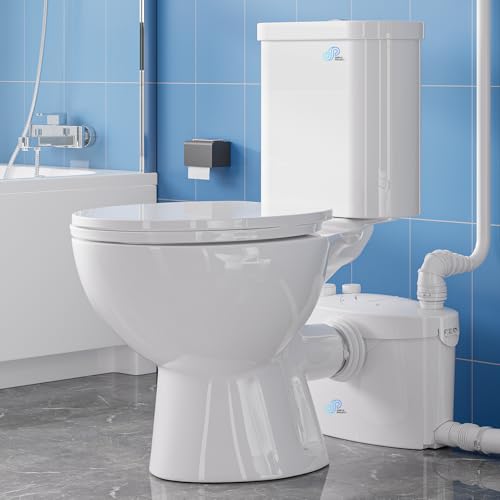
Basement bathrooms often place the sewer line below the floor or farther to one side than a standard toilet can accommodate. The Simple Project 750W PRO Toilet answers that placement problem with a 750W macerator pump and stainless steel grinder blades that process waste before moving it through the plumbing route.
Compared with the DeerValley DV-1F0437 ADA Toilet, this system trades the familiar one-piece bowl design for pumping capability. Its stated reach of 360 feet horizontally and 36 feet vertically gives you concrete limits to compare against the distance from your bathroom to the waste connection.
A Favorable Mix
- The 750W motor provides a higher stated power rating than the 500W and 600W alternatives in this lineup.
- Stainless steel blades break down waste before the pump moves it toward the sewer line.
- Four water inlets let a shower, sink, or other fixture share the macerating system.
- The generous horizontal and vertical reach supports more flexible basement layouts.
Things To Consider
- The listed pumping distances depend on the route, pipe arrangement, and available connection point.
- Four inlets may exceed what a simple half-bath requires, so count connected fixtures before ordering.
- Installation still requires coordination with local waste and water lines.
Made For
This system is a practical match for a finished basement bathroom with several fixtures and a sewer connection that requires a long pumped run.
Look Elsewhere When
The Simple Project 1000W Toilet offers a higher motor rating for installations that prioritize greater pumping power over a more moderate setup.
A shared basement washroom needs enough pumping capacity for the toilet and nearby fixtures without turning every flush into a major plumbing event. The Simple Project 600W Toilet combines a 600W macerator pump with four water inlets, allowing waste water from a shower, laundry area, or wash basin to enter the same system.
Compared with the Simple Project 750W PRO Toilet, the motor rating is lower, but the shared-inlet layout and quiet-operation focus suit a compact room where several fixtures need one waste route. You still need to confirm that your pipe run falls within the system’s capabilities.
Positive Takeaways
- Four inlets make it easier to combine a toilet with other basement bathroom fixtures.
- The rear outlet arrangement suits many installations where the waste connection sits behind the unit.
- The 600W motor provides a midrange power option for typical pumped waste lines.
- Quiet operation is a sensible priority in a room used as a bathroom or laundry area.
Minor Gripes
- Four inlets may be unnecessary for a standalone basement toilet.
- You should have the complete pipe route measured before installation.
Quick Facts
Right Fit For
This model suits shared basement washrooms where a shower, sink, or laundry fixture will connect to the toilet system.
A Better Fit Elsewhere
The Simple Project 500W Toilet may suit a simpler room that needs four inlets and an extension pipe without the 600W motor rating.
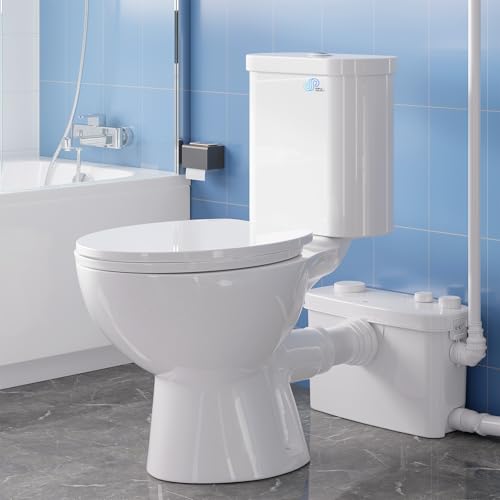
Not every basement project needs the highest motor rating available. The Simple Project 500W Toilet provides a 500W macerator pump, an extension pipe, and four water inlets, giving you a flexible way to connect a toilet with other bathroom fixtures.
Unlike the Simple Project 600W Toilet, this lower-powered model lists a 1.6-gallon flush and includes an extension pipe, while retaining four inlet connections. That combination may feel more relevant in a residential bathroom addition where the pipe route is already well planned.
Practical Pluses
- The included extension pipe gives you more flexibility when positioning the toilet.
- Four inlets support showers, sinks, and other fixtures sharing the waste system.
- The 1.6 GPF flush gives you a specific water-use figure to compare with dual-flush models.
- The quiet-oriented design can be useful near a bedroom, office, or recreation area.
Points To Note
- The 500W motor rating is lower than the 600W, 750W, and 1000W options in the lineup.
- Your total pipe run, vertical rise, and number of connected fixtures still determine whether the layout works.
- A 1.6 GPF flush uses more water per full flush than the DeerValley model’s lower-volume option.
Who It Suits Best
This system fits homeowners planning a multipurpose basement bathroom with an extension pipe and several fixture connections.
Swap It Out When
The Simple Project 750W PRO Toilet makes more sense for a longer or more demanding waste route where greater motor power is needed.
For a basement with a demanding waste route, motor power becomes more important than a compact feature list. The Simple Project 1000W Toilet uses a 1000W macerator pump and is listed for pumping up to 40 feet, with an extension pipe and four water inlets included in the system.
Compared with the Simple Project 500W Toilet, this model doubles the stated motor wattage and presents a quieter operating approach. In your view, that extra capacity matters most when the toilet sits far from the available sewer connection or shares a pump with multiple fixtures.
The Upside
- The 1000W motor is the highest stated rating in this collection.
- An included extension pipe adds routing flexibility during installation.
- Four inlets support a combined toilet, shower, sink, or laundry arrangement.
- Quieter operation suits basements near living spaces where pump noise would be noticeable.
Trade Offs
- Its higher power rating does not replace a careful check of pipe length, bends, and rise.
- Four inlets and an extension pipe may be more equipment than a single-fixture bathroom needs.
Technical Highlights
Built For
This model suits installers who want substantial pump power for a basement layout with a long waste route and multiple connected fixtures.
Reach For A Different Pick When
The Simple Project 600W Unit may be more proportionate for a basement bathroom with a shorter route and only three fixture connections.
Some basement bathrooms need a pump with generous reach but only three fixture connections. The Simple Project 600W Unit pairs a 600W macerator with stated pumping distances of 295 feet horizontally and 30 feet vertically, plus three water inlets for a toilet and nearby fixtures.
Compared with the Simple Project 1000W Toilet, this model uses a lower motor rating but provides a longer stated horizontal reach. That makes it worth comparing against your actual room geometry, especially when a basement extends beyond the normal sewer connection point.
Why It Works Well
- The stated 295-foot horizontal reach supports long waste-line layouts.
- A 30-foot vertical rating provides useful elevation for lower sewer connections.
- Three inlets suit a toilet with a sink and shower without adding a fourth connection.
- The one-piece construction can simplify the visible bathroom design.
Where It May Fall Short
- Its 600W motor is lower-rated than the 750W and 1000W alternatives.
- Three inlets may be limiting for a bathroom with more than three waste-producing fixtures.
- You must still verify the route, pipe diameter, and local installation requirements.
Core Details
Made For
This unit suits basement bathrooms with three connected fixtures, a long horizontal run, or a sewer connection positioned below the finished floor.
Consider Something Else When
The Simple Project 750W PRO Toilet is the stronger fit for a route requiring a higher motor rating or a wider range of fixture inlets.
What Matters Before You Order A Pumped Toilet
Start with the pipe route, because even a capable macerator has limits. Measure the horizontal distance to the sewer connection, note every vertical rise, and count the bends along the path. A rough-in measurement also matters for a conventional toilet, so check the floor flange before selecting the DeerValley model.
Match The Pump To The Layout
Motor wattage describes the pump’s power rating, while the listed pumping distances show the intended reach. Compare those figures with your longest waste run rather than relying on the largest number in the lineup. The Simple Project 600W Unit offers the longest stated horizontal reach here, while the 1000W model carries the highest motor rating.
Count The Connected Fixtures
Four inlets give a basement system room to serve a toilet, sink, shower, or laundry area. Three inlets may suit a more compact arrangement, but each extra connection adds another point to plan. Match the inlet count to your actual bathroom rather than paying for unused connections.
Compare Flush And Comfort Features
A dual-flush toilet gives you separate 1-gallon and 1.28-gallon choices, while the 1.6 GPF macerating option offers a fixed full-flush volume. Seating comfort can matter just as much, particularly with the DeerValley DV-1F0437 ADA Toilet and its 17.5-inch seat height. Consider accessibility, bowl shape, cleaning access, and the space around the unit together.
Lessons That Prevent Costly Plumbing Changes
Mistakes Worth Dodging
Do not estimate pipe reach from the basement size alone. Measure the actual route, include vertical changes, and count bends before choosing a pump. Confirm the number of inlets, rough-in dimensions, outlet position, and local plumbing requirements so the equipment matches the room instead of forcing the room to match the equipment.
The Upgrade Payoff
A higher motor rating can help on a long or elevated waste route, but extra power does not solve every installation problem. The Simple Project 1000W Toilet makes the most sense when your measured layout justifies the higher rating. A shorter route with three fixtures may align better with the 600W option and leave unused capacity out of the design.
Frequently Asked Questions
What Is A Macerating Toilet?
A macerating toilet uses a grinder and pump to break down waste and move it through a waste line. This setup makes bathroom installation possible in locations that are difficult to reach with conventional gravity drainage.
Do Macerating Toilets Work In Basements?
They are specifically suited to many basement bathrooms, including rooms with a sewer connection below the floor. You need to confirm that the route remains within the pump’s stated reach and local requirements.
How Many Inlets Does A Basement Toilet Need?
The number depends on the fixtures sharing the system. Three inlets can cover a toilet, sink, and shower, while four provide another connection for a laundry area or additional fixture.
Is A Higher Motor Rating Always Better?
A higher rating can suit a longer or more demanding route, but pipe length, elevation, and bends still matter. A lower-rated pump may be more proportionate for a shorter installation with fewer connected fixtures.
Can A Macerating Toilet Replace A Standard Toilet?
Yes, in a suitable location with the required waste and water connections. A standard toilet remains the simpler option when gravity drainage works and no other fixtures need to share a macerating system.
The Takeaway
A power flush toilet makes the most sense when your plumbing layout leaves no practical route for a conventional toilet. Choose the motor and reach to match the measured pipe path, then count inlets against the fixtures you actually plan to connect. For a standard bathroom with suitable drainage, the DeerValley DV-1F0437 ADA Toilet offers the more familiar route with accessible seating and a dual-flush design.