
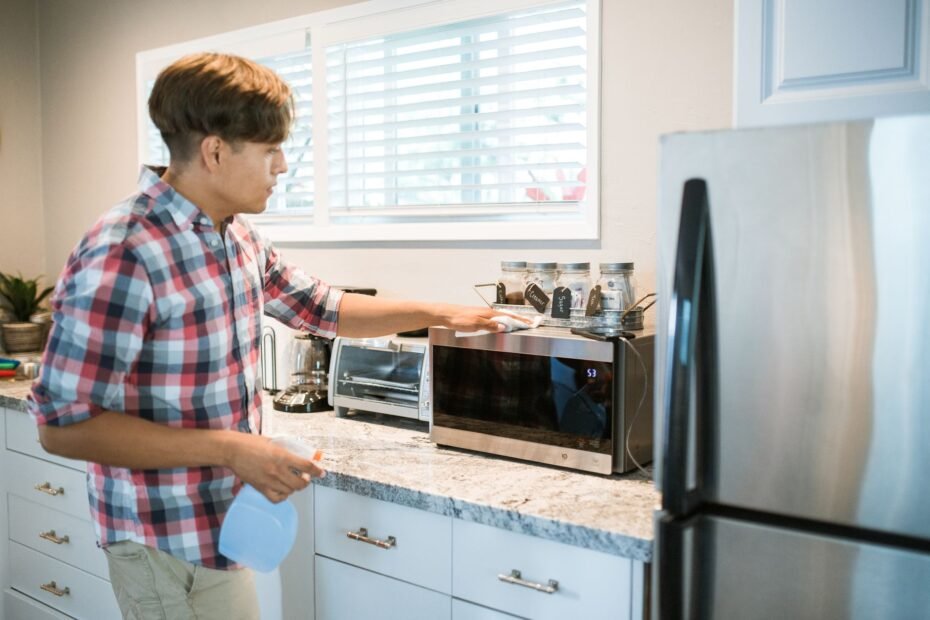
A thick baking soda paste, water, dish soap, and gentle wiping loosen grease gradually without harsh cleaners. You can finish leftover paste with white distilled vinegar, keeping moisture away from heating elements and the broiler.
The steps below suit fresh spills, black splatters, greasy racks, and cloudy-looking glass, with clear limits for surfaces that need appliance-manual guidance.
A Mild Method Matches the Type of Oven Mess
Fresh cheese splatter sits near the surface, but black grease hardens through repeated heating cycles. Your cleanup method needs to match that difference. Warm water and dish soap lift loose residue, while dark baked-on film needs moisture and extended contact time.
| Mess type | Mild approach | What happens |
|---|---|---|
| Fresh spill | Warm water, dish soap, and a nonabrasive sponge | Residue lifts with a few careful wipes |
| Light brown film | Steam from an oven-safe dish of water | Moisture loosens the film before wiping |
| Blackened grease | Baking soda oven cleaning paste left overnight | Several wipes or another spot application may be needed |
Dwell time replaces caustic spray in a natural oven cleaner routine. Baking soda offers mild abrasion, water softens dry residue, and an oven-safe scraper lifts material after it loosens. Your tradeoff is time: gentle materials need more wiping, yet you control where each material goes.
Use the least force needed to lift residue. A plastic oven-safe scraper and damp nonabrasive sponge protect enamel far better than steel wool or a metal blade.
A smooth surface beneath a damp cloth is a better sign than a completely uniform color. Heat can leave staining behind after grease has lifted, especially on an older oven floor.
Safety Checks Protect Oven Components
Extended contact time works only on a fully cooled oven. Shut the appliance off, wait for the cavity to cool, and remove the oven racks before water or paste reaches the interior. Clear space around the appliance for towels, a bowl, and the rack soak.
- Cool the cavity Wait until every interior surface feels cool before your hands, cloth, or paste enter the oven.
- Remove the racks Set racks aside for soaking instead of scrubbing them inside the cavity.
- Open airflow Use kitchen ventilation or an open window around old grease odors.
- Cover your hands Wear gloves when damp wiping or dish soap irritates your skin.
- Check the manual Read appliance directions for coated interiors, specialty glass, and a self-cleaning oven cycle.
Heating elements, the broiler, vents, sensors, and chipped enamel need a dry margin around them. Keep baking soda paste, vinegar mist, and excess water off those parts. Your appliance manual takes priority where a finish or component has separate care directions.
With vulnerable parts protected, the paste can work on baked-on residue without adding avoidable cleaning risk.
Stop before scrubbing a chipped surface or exposed element. Moisture can enter areas that are not meant for routine hand cleaning.
The Baking Soda Paste Softens Carbonized Grease
A thick paste stays on greasy areas
A paste that clings works better than a watery slurry that runs into seams. Put baking soda in a bowl and add water one spoonful at a time until it resembles thick frosting. Arm & Hammer baking soda works here, though plain bicarbonate from a pantry container does the same task.
- Clear dry crumbs Wipe out loose crumbs with a microfiber cloth so paste touches greasy residue.
- Mix slowly Add small amounts of water until the baking soda paste clings without dripping.
- Spread with care Cover greasy walls, floor areas, and the inner door while avoiding protected components.
- Leave the paste Give blackened grease 8 to 12 hours to absorb moisture and soften.
- Lift softened residue Remove paste with a damp nonabrasive sponge and rinse the cloth several times.
Short scraping passes limit wear
Stubborn patches respond better to short passes than hard scrubbing. Hold a plastic oven-safe scraper at a low angle and push loosened residue toward the center of the oven floor. You can repeat the paste on one dark patch rather than coating the entire cavity again.
Black grease rarely disappears in one sweep. Your sign of progress is a surface that feels smooth under a damp cloth, even where faint staining remains. Color alone does not show that greasy residue is still present.
This baking soda oven cleaning paste works because water moves into dry grease during the 8-to-12-hour rest. The softened layer then releases under light pressure instead of forceful abrasion.
Vinegar, Steam, and Soft Tools Finish the Interior
Vinegar removes leftover baking soda
After the paste is mostly wiped away, a light spray of white distilled vinegar helps lift remaining residue. Mist a small amount onto remaining paste, allow the brief fizz to settle, then wipe with a clean damp cloth. You avoid a chalky film that can dry onto the enamel.
Baking soda and vinegar neutralize each other when mixed in one bowl. The bubbling spends much of their separate cleaning action before either material reaches the oven surface. Your cleanup works better when baking soda softens grease alone and vinegar follows during the final wipe.
Steam loosens light food residue
Light splatters need less labor than carbonized grease. Set an oven-safe dish of water inside a warm oven for a short steam session, turn the oven off, and allow the cavity to cool before wiping. Steam loosens food residue, while a nonabrasive sponge supplies gentle friction.
Lemon juice can leave a fresh scent, but it does not replace baking soda paste on dark carbonized spots. Skip abrasive pads, powdered scouring products, and metal tools inside the oven. Bon Ami and similar powders can scratch coated surfaces unless the appliance manual permits them.
Separate Rack Soaking and Glass Wiping Avoid Scratches
A soak loosens rack grease
A bathtub or utility sink gives greasy oven racks room to soak. Fill it with warm water and dish soap, place an old towel beneath the racks, and leave them submerged for several hours. A nylon scrub brush then reaches rack corners without metal grinding against metal.
- Line the tub Place an old towel beneath your racks to protect porcelain or acrylic surfaces.
- Use warm water Heat helps dish soap loosen the greasy layer on rack bars.
- Scrub after soaking Use a nylon brush or nonabrasive sponge after grease feels soft under your fingers.
- Rinse each rack Remove soap residue with clean water before putting racks back in place.
- Dry every corner Towel-dry bars and joints so water does not sit in the rack frame.
To clean oven racks naturally, keep the rack bath separate from the oven cavity. Fixed oven components cannot sit in soapy water, and drenching them can harm electrical parts. A few drops of mild dish soap, including castile soap such as Dr. Bronner’s, are enough for the rack bath.
Gentle wiping protects door glass
The oven glass door can have a coating or layered panels, so force can cause more trouble than grease. Start with a damp microfiber cloth. Use a thin baking soda paste only where your manufacturer permits it, then remove it with clean water rather than pushing moisture into door seams.
Cloudy marks between glass panes are not surface grime. Your next step is the appliance manual or a service professional, since prying open the door can disturb hinges, gaskets, or glass alignment.
Spot Treatment and Regular Wiping Limit Heavy Buildup
Repeat paste on isolated dark patches
A dark patch beside an oven wall can need two paste sessions after a casserole boil-over. Spread fresh paste on that one area, leave it overnight, and lift the softened layer with a damp sponge and plastic scraper. This is how to remove baked-on grease from an oven without harsh abrasives.
Burned fat can resemble damaged enamel. Stop scrubbing where the surface is chipped, flaking, bubbled, or rough beneath the residue. Your manual or a qualified service professional can sort out a damaged finish, a malfunctioning heating element, or a part that should stay dry.
Small wipe-downs stop grease from hardening
Spills become harder to lift after several heating cycles. Wipe the oven floor after it cools, clear splatters before the next bake, and wash the glass and racks every few weeks. Those short tasks reduce the thick carbonized layer that turns mild cleanup into an overnight project.
For how to clean an oven without harsh chemicals over time, steady cleanup beats aggressive scrubbing. A damp cloth after a pizza spill takes less effort than a deep scrub after six weeks of high-heat roasting. Your kitchen also avoids fumes linked to caustic oven sprays such as Easy-Off.
A Steadier Oven-Cleaning Routine
Several hours of resting time do most of the work in a mild oven-cleaning process. Give baking soda paste 8 to 12 hours on blackened grease, wipe with water and soft tools, and reserve vinegar for residue left behind. You do not need to grind at every dark mark.
A smooth surface with no greasy film matters more than a perfectly even color. Regular spill cleanup protects your oven finish better than a rushed abrasive scrub.
FAQ
What natural method cleans a dirty oven?
Baking soda paste is a useful mild option for a dirty oven because it stays in place and softens baked-on grease over 8 to 12 hours. You can follow with white distilled vinegar for leftover paste, then use a damp nonabrasive sponge and plastic scraper on stubborn residue.
Can baking soda and vinegar clean an oven?
Used one after the other, these household staples can clean an oven effectively. Spread baking soda paste, allow time for it to loosen grease, wipe away most of it, then mist vinegar onto the remaining residue. Mixing both materials together at the start weakens their separate cleaning roles.
How long should baking soda paste sit in an oven?
Leave baking soda paste in the cooled oven for 8 to 12 hours on blackened grease or burned-on food residue. A light film needs less time, but an overnight rest gives water time to move into dry grease. You should wipe the paste away before using the oven again.
How do you clean oven racks without harsh chemicals?
Soak oven racks in warm water and dish soap inside a tub or deep sink, with an old towel beneath them to protect the surface. After several hours, you can loosen grease with a nylon brush or nonabrasive sponge, rinse thoroughly, and dry each rack before reinstalling it.
Is it safe to use the self-cleaning oven cycle?
At extremely high temperatures, the cycle’s suitability depends on the instructions for your specific appliance. You should remove loose debris and follow manufacturer directions closely. Hand cleaning with baking soda paste gives you more control around residue, smoke, and sensitive interior finishes.
How do you clean oven glass without scratching it?
Start with a damp microfiber cloth and light pressure on the oven glass door. You can use a thin baking soda paste on surface marks where your manufacturer permits it, then wipe with clean water. Avoid steel wool, metal blades, and abrasive powders that can leave scratches.