
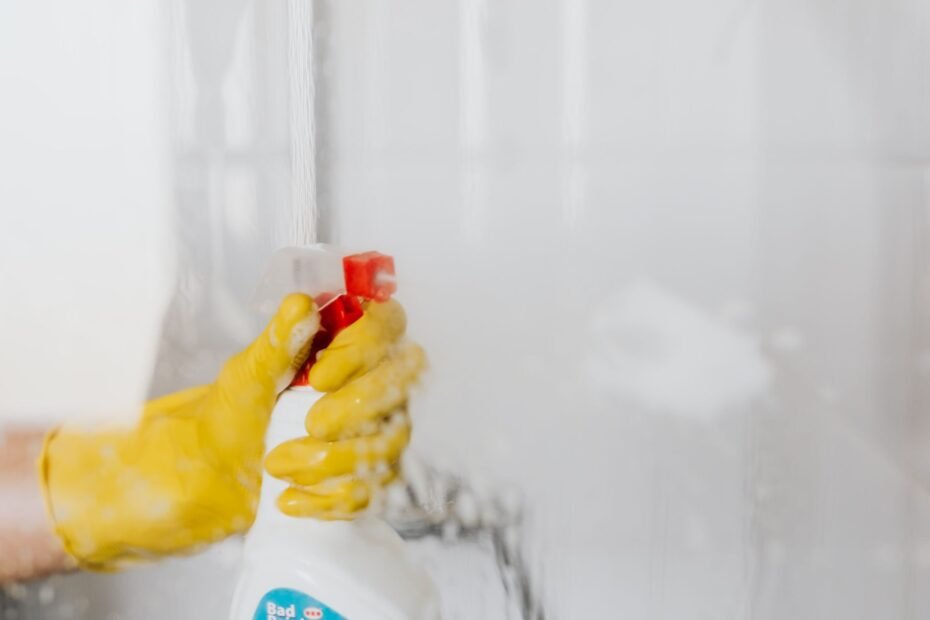
White vinegar or citric acid loosens dry mineral residue when held against it, followed by a rinse and microfiber wipe. The acid loosens calcium buildup and limescale, while dry rubbing can scratch glass or leave cloudy residue behind.
You can sort chalky deposits from soap scum, choose a method for the buildup level, and protect shower doors, windows, trim, and nearby stone.
Identify the Mark Before Choosing a Cleaner
White dots left after water dries are mineral deposits. Calcium, magnesium, and trace salts stay on the glass after evaporation, leaving rings, pale specks, or a dull veil across glass shower doors.
Your cleaner should match the material on the surface. Hard water stains feel chalky or crusted, while soap scum feels greasy, waxy, or slick. Near the lower edge of a shower door, both materials can sit in the same area.
A Short Vinegar Check Separates Deposits From Film
Dampen a small hidden corner with white vinegar for two to five minutes. Mineral buildup should soften, lighten, or smear under a microfiber cloth. That response points toward calcium buildup rather than ordinary dirt.
| What you see | What it suggests | Your next move |
|---|---|---|
| White dots or chalky rings | Surface calcium deposits | Start with white vinegar or citric acid. |
| Greasy gray film | Soap scum mixed with body oils | Wash with Dawn and warm water before acid contact. |
| Cloudiness that does not change | Glass etching or surface damage | Stop abrasive rubbing and inspect closely. |
| Fine lines that catch light | Scratches | Skip scrub pads and blade work. |
Etched glass behaves differently from a surface deposit. The haze stays after washing and acid contact, and it may feel rough under a fingertip. Your next move is restraint, since repeated abrasion can turn a small cloudy area into a larger scratched patch.
Once mineral residue is the likely cause, acidity can be scaled to the deposit rather than guessed.
Match Acid Strength to the Buildup Level
Mineral residue that changes during the vinegar check needs an acid soak before any rubbing. Mild acids loosen calcium-based deposits from bare glass, while baking soda does not dissolve limescale because baking soda is alkaline.
A severity check keeps you from using a harsh product on a light ring. Start with vinegar for fresh white spotting, move to citric acid for thicker scale, and reserve a labeled mineral cleaner for residue that remains after repeated acid cycles.
Buildup Level Sets the Starting Material
| Buildup level | Cleaning material | Practical limit |
|---|---|---|
| Light white spotting | White vinegar | Use a 5 to 10 minute wet contact period. |
| Thick or older scale | Citric acid solution | Work in small areas and rinse after each cycle. |
| Persistent deposits | Hard water stain remover for glass | Follow the product label and check a hidden area. |
| Faint residue after acid work | Baking soda paste | Polish lightly with minimal pressure. |
For light marks, straight white vinegar gives you a mild starting point. Citric acid mixed with distilled water according to package directions has more strength against established calcium buildup and leaves less vinegar odor.
Products such as CLR or Lime-A-Way target mineral scale, yet nearby materials matter as much as the glass. Keep acidic runoff away from marble, travertine, natural stone, grout, caulk, aluminum trim, chrome fixtures, and painted frames.
Never mix vinegar, citric acid, CLR, Lime-A-Way, or another acidic cleaner with chlorine bleach. The mixture can release dangerous chlorine gas.
Coated Glass Needs Extra Caution
Coated shower glass, window tint, and factory-coated panels need care instructions from the maker. Your acidic cleaner can harm a coating or discolor trim, even where bare flat glass tolerates the same material.
Rain-X causes water to bead on exterior glass, while some shower-door products leave a protective sealant layer. Check the surface before acid contact, since coating chemistry differs between products.
Use Wet Contact Before Scrubbing
Wet contact time does more work than pressure. A soaked cloth holds acid against the deposit, allowing calcium to loosen instead of sending liquid straight down the door and into the track.
You can remove hard water stains from glass with short, repeated soak cycles rather than one long rubbing session. Each rinse shows whether the cloudy layer has lifted or needs another controlled application.
Controlled Contact Loosens Mineral Scale
- Remove loose soil. Rinse dust and grit away with water so particles do not drag across your glass during wiping.
- Wet the stain. Press a vinegar-soaked microfiber cloth or paper towel against the marked area.
- Hold contact. Keep the cloth damp for 5 to 10 minutes, keeping adjacent trim dry.
- Wipe gently. Lift softened residue with a clean microfiber cloth or non-scratch scrub pad.
- Rinse fully. Flush dissolved minerals and cleaner away with clean water.
- Dry the glass. Buff the panel dry to reveal spots that need another cycle.
Your cloth should stay damp, not dripping. On a vertical shower panel, paper towels covered by a damp microfiber cloth can hold vinegar in place without flooding the frame.
Example: a chalky semicircle around a shower-door handle may fade after one soak, while the lower six inches stay cloudy. Repeat the soak on that lower band rather than pressing harder with a pad.
Persistent cloudiness after gentle soaking may signal scale that needs controlled escalation rather than more force.
Dry the panel after every cleaning pass. Water left on the glass can hide calcium deposits until the surface dries.
Escalate Old Mineral Scale Without Scratching Glass
Old shower scale responds better to repeated softening than aggressive scrubbing. Two or three acid-soak cycles can lift layered deposits that remain after one pass. Your patience protects the glass surface and nearby trim.
Commercial Mineral Cleaners Need Tight Control
A labeled mineral cleaner can help clean shower glass mineral buildup that vinegar barely changes. Read the dwell-time limit, wear gloves stated on the label, and rinse before cleaner dries on metal, caulk, or painted frames.
Bar Keepers Friend products differ by formula, so the label matters more than the brand name. A cleanser with abrasive particles can haze coated glass, while powder products do not belong on tinted or textured panels.
Baking Soda Works Only as a Light Polishing Aid
Baking soda paste belongs after acid contact, not before it. Mix a small amount with water, rub a tiny spot with light pressure, then rinse. Your goal is faint residue removal, not mineral dissolution.
- Skip steel wool. Metal fibers can scratch glass and leave marks that catch bathroom light.
- Skip harsh powders. Coarse scouring particles can haze a smooth panel beyond repair.
- Choose soft pads. A non-scratch scrub pad suits bare glass after a hidden-area check.
- Limit blade work. Razor blades belong on clean, flat, uncoated glass with water for lubrication.
- Stop at dulling. New haze on glass, coating, or trim means the method has gone too far.
A razor blade is not a cure for mineral haze. Keep it away from textured glass, coatings, tint, and any surface with an uncertain finish. Your blade angle must stay low, and the glass must stay wet.
Even careful mechanical removal cannot restore glass chemically etched rather than coated with mineral residue.
Recognize Etching Before Using Stronger Abrasion
Surface deposits sit on top of glass and can dissolve, while etching changes the glass itself. Acid contact exposes that difference because cleaned sections brighten while etched sections remain muted and cloudy.
Unchanged Haze Points to Surface Damage
After two or three careful soak-and-rinse cycles, inspect the panel in daylight from an angle. Clearer patches show removable buildup remains. Your unchanged cloudy patches point more strongly to etching, scratches, or a coating issue.
Example: an exterior window exposed to sprinkler spray for years can show a pale fan shape that remains after citric acid contact. That pattern can reflect mineral damage rather than leftover residue alone.
Stop using stronger abrasives on suspected etching. A glass-restoration service can judge polishing options, while severe visual damage can call for replacement evaluation. Your restraint keeps dullness from becoming visible scratch lines.
Hard water stains can etch glass after long exposure, but acid cannot rebuild damaged glass. Cleaning removes material sitting on the surface.
Reduce New Water Spots on Each Glass Surface
Dry glass has no standing water left to leave minerals behind. A brief squeegee pass after a shower reduces droplets that form white rings along a door’s lower edge.
Surface-Specific Habits Slow Mineral Return
- Squeegee shower panels. Pull water downward after bathing, then dry corners and tracks with a microfiber cloth.
- Wipe metal edges. Chrome and aluminum collect runoff that can spot or discolor around your glass.
- Redirect sprinklers. Move spray away from exterior windows so mineral-rich overspray does not dry on the pane.
- Dry interior splashes. Bathroom mirrors and kitchen glass stay clearer after prompt wiping.
- Rinse glassware. A distilled-water rinse and towel dry reduce spots on clear drinking glasses.
- Check water hardness. Heavy deposits across several fixtures point toward the household water source.
Your shower routine has more effect than a stronger cleaner. Water that pools in tracks, seals, and lower corners dries slowly, leaving a thick mineral rim that later needs acid contact.
For whole-house spotting, a water-softening system can reduce calcium and magnesium minerals before they reach fixtures. That route does not repair damaged glass, yet it can reduce how often you need to remove hard water spots from glass.
Bottom Line
The safest path starts with diagnosis, then gives acid time to loosen mineral deposits before rubbing begins. Your clearest glass comes from gentle soak cycles, full rinsing, and prompt drying. Unchanged haze calls for restraint rather than stronger abrasion.
FAQ
What removes hard water stains from glass?
White vinegar removes light calcium deposits, while citric acid works well on thicker buildup. Your strongest results come from holding the acidic cleaner against the stain for several minutes, then wiping and rinsing instead of scrubbing dry mineral crust.
Can vinegar remove hard water spots from shower glass and windows?
Vinegar can dissolve many mineral deposits on bare shower glass and plain window glass because its mild acid reacts with calcium residue. You should check a hidden area before contact near coatings, tint, aluminum trim, stone tile, or caulk.
How do you remove old, stubborn mineral deposits from glass without scratching it?
Rinse away grit, use two or three short acid-soak cycles, and wipe with a microfiber cloth between cycles. Your glass needs full rinsing and drying after each pass so you can see whether the remaining haze is scale or etching.
Is baking soda safe to use on glass shower doors?
Baking soda can serve as a gentle polishing aid on bare glass after acid contact. It does not dissolve calcium deposits, and coated shower doors, tinted glass, or textured panels need extra caution because rubbing can leave haze.
Can Bar Keepers Friend be used to remove hard water stains from glass?
Bar Keepers Friend products vary by formula, so the label and surface instructions control the choice. Your coated, tinted, or textured glass should not receive abrasive powder products, since particles can dull the finish.
What should you avoid using on glass to prevent scratches or damage?
Skip steel wool, coarse scouring powders, dry razor blades, and aggressive scrub pads. You should also keep acidic cleaners away from marble, travertine, grout, aluminum trim, chrome fixtures, painted frames, and uncertain coatings.